






Book Extract
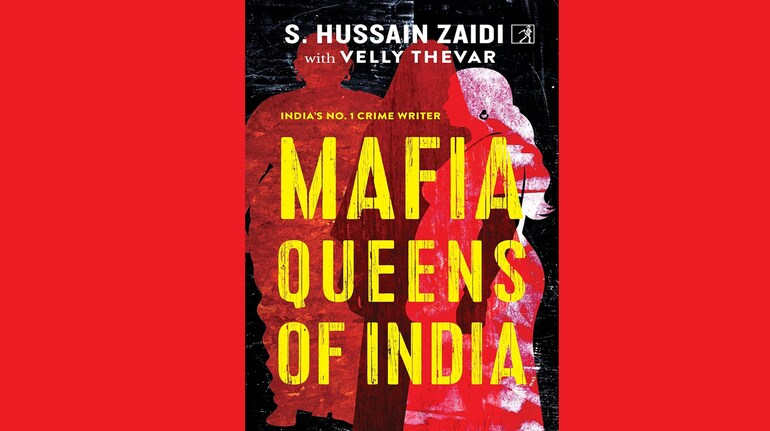
Excerpted with permission from the publisher Mafia Queens of India, S. Hussain Zaidi and Velly Thevar, published by Simon and Schuster.
******
Bandit of the Ravines: Kusuma
It was the late 1970s. The midday heat pressed on Kurauli village, Uttar Pradesh, located nine kilometers away from Tikri. Kurauli is where Kedar Nai lived. Inside his home, he found a gun pointed at his chest. The man holding the gun was Madho Mallah, a dacoit from the ravines of Chambal. While the gun was pointed at Kedar, Madho's gaze was fixed on Kusuma, who was married to Kedar. Dust clung to the air. A buffalo groaned in the next lane. No one else made a sound.
Kusuma Nain stood on the threshold of her house. Her hair was still damp from the morning wash. Kedar stood between her and Madho, but he knew he couldn't stop what was coming.
Kusuma had run away with Madho once, when they were thirteen. Her father had filed a case of kidnapping and dacoity and dragged her back home. Later, she was married off to Kedar before the gossip could stain the family name. Madho had vanished after his release from jail. Everyone thought he was either dead or buried somewhere in the ravines of Chambal. Now, in his search for Kusuma, he had reached Kurauli. And he was not asking.
Madho’s voice was calm. "I came for what's mine."
"She's my wife," Kedar said, half-pleading.
"She didn't choose you."
Madho Mallah didn't shout or threaten. The barrel stayed still. Born in the lower caste of Mallahs (boatmen), he had grown up ferrying sacks of grain across the river. His father rowed. His mother patched fishing nets under a kerosene lamp. But Madho had seen what power looked like in the hands of landlords and what silence sounded like when his people bled. He did not believe in the law of the land. He believed in taking what the world never offered. And if the world had taken his woman away from him, he would take her back.
So when Madho asked Kusuma to walk out with him, her feet didn't hesitate. She walked past her husband and stood beside the man she had once trusted with her life.
Kusuma followed Madho Mallah without asking where he was taking her. No one raised a hand to stop them. Kedar stood like a man hollowed out from the inside. In Kurauli, the sky remained quiet. The village had seen many things, but a woman walking away with a dacoit was rare. And it never ended well.
As they travelled towards Chambal, Kusma Nain placed her head on Madho's shoulder and reminisced about her early life. Tikri village had always been a place where a girl's shadow grew smaller the day she hit puberty. Kusuma was born in one of its tight, smoky lanes, daughter of Darn Nain, the village barber whose word mattered only when the zamindars needed their beards trimmed.
She had thick hair, sharper eyes, and a laugh that could carry across riverbanks. From the time she was ten, she would vanish toward the Yamuna with a clay pot and come back with nothing but stories. Madho Mallah would be waiting halfway, crouched beneath a neem tree with a slingshot dangling from his fingers.
They were neighbours. They grew up over the same mud trails, and shared the struggles of the lower castes. The only thing different was the way she looked at him. By thirteen, they had crossed lines most girls in Tikri didn't dare dream of.
"You'll marry me someday," Madho told her once, handing her a stolen guava.
She laughed. And one afternoon, she eloped with him. Some said they boarded a train from Kalpi. Others believed they crossed the Cbambal in a fishing boat with Madho's cousin waiting on the other side. But somehow, they reached Delhi.
Daru Nain lodged a police case. Not for elopement, but for kidnapping and dacoity. He added gold bangles to the list of stolen goods. The cops arrested Madho. Kusuma came back in three months, thinner but unbroken. Her eyes didn't drop. Her lips didn't tremble.
"If you want to stay in my house," her father told her, “then you'll do as I say."
She didn't reply. Within days, her father married he to Kedar Nai from Kurauli. There was no music at the wedding. Only whispers. Kusuma left her childhood behind and stepped into a new home. She cooked. She cleaned. But her defiance answered to no one. Kedar never raised his hand. Never: raised his voice either. He stayed out of her way. And Kusuma? She stayed silent.
Time passed quietly. Then Madho Mallah had returned with a rifle across his chest and a wound in his memory that never healed. And he was now taking Kusuma into the ravines where the dacoits lived.
By then, Madho was already part of Vikram Mallah's gang. In the Chambal badlands, Vikram's name carried the sharpness of a trigger. His men looted landlords, burnt down grain stores, and punished the upper-castes who thought of backward caste women as property. He belonged to the same Mallah caste as Madho, a boatman's son who chose the rifle over the oar.
Vikram had once answered to Lala Ram and Shriram Singh, two Thakur brothers who ran a caste-dominated gang. But when the brothers were jailed, Vikram moved up. He became a natural leader. He spoke less. Killed fast. Shared loot. He earned loyalty without asking for it.
Kusuma arrived in the gang through Madho, expecting rifles, raids, and restless nights. What she did not expect was another woman. Phoolan Devi, the woman who went on to become the famous Bandit Queen, had also come into the gang with her trademark defiance. The Thakurs of her village had sold her to Babu Gujjar, a dacoit with no patience and no soul. For days, she was assaulted in foll view of the gang.
One afternoon, as Gujjar forced himself on her in the open, Vikram raised his rifle and fired. A single shot split Gujjar's skull. Silence followed. Then five more bodies dropped. He walked up to Phoolan, and said, "No one touches you again. while I'm alive."
From that moment, the gang belonged to them both. She was taught how to fire, how to load, how to ride without reins. Kusuma saw the shift. She saw Vikram walking beside Phoolan. She saw the way he listened when Phoolan spoke.
"She's new," Kusuma muttered to Madho one night. "Why does she matter so much?"
Madho stared into the fire. "He saved her. That changes a man."
Kusuma didn't reply. But something inside her turned. Phoolan wasn't beautiful. She wasn't polished. But she carried her pain like a flag. Vikram watched Phoolan. The gang watched Vikram. And Kusuma watched all of them, her eyes burning hotter than the embers under the black kettle. In Chambal, rivalries didn’t need bullets to crack open. It just needed time.
****
Lala Ram and Shrirarm Singh had built their gang on caste hierarchy. hey were Thakurs, landowners turned bandits, and their leadership had never been questioned until Vikram Mallah began drawing men toward him. He came from the lower castes, but he was deadly with a rifle. He started small and rose fast. He didn't ask for respect as his birthright. He earned it. That made him dangerous.
When the Thakur brothers returned from jail, they found a different gang. Their hold had loosened. The Mallahs had multiplied. Men followed Vikram without hesitation. Lala Ram didn't speak of it at first. He watched and waited. Then he made his move. He invited Vikram to the northern gorge near Udiya hill. Vikram went. He took four men with him, including Madho.
"We need to settle this," Lala Ram said. Vikram nodded. "We do. But not with bullets."
Shots rang out minutes later. Vikram fell first. Two of his men died where they stood. Madho escaped with a graze to his arm. By dusk, the old order was restored. The Thakur brothers were back in charge. The Mallahs were scattered. And Phoolan was alone.
Phoolan stood with her rifle slung across her back. "I won't sleep with you."
"You'll learn." Lala Ram laughed. "She needs reminding," he told the others, "that we're still in charge."
She spat at his feet. That night, they tied her hands and dragged her across the sand to the village of Behmai. Shriram held her by the hair. Lala Ram stripped her down and threw her in front of the gang. They took turns. By morning, her body was swollen, her eyes dry. In a final act of humiliation, Lala Ram stripped her naked and ordered her to fetch water for him from the village well. The entire village watched, not knowing that their inaction would cost them dearly in days to come.
After her humiliation, Phoolan vanished. No one asked where she'd gone. The gang believed she had died somewhere in the forest, swallowed by the Chambal like so many others. She hadn't. She was healing in a mud hut in Bhind, nursed by a woman who had once been a midwife. Her body had been broken. Her spirit hadn't. The bruises had faded, but the wounds remained.
With Madho Mallah also dead, Kusuma became Lala Ram's woman. The battle lines were drawn again. Only now, a different war was about to begin.
When Phoolan reappeared in the ravines months later, she was carrying a rifle longer than her arm. A red bandanna was tied across her forehead. The girl who had been paraded naked in Behmai was gone. What returned was something else.
She had found an ally in Man Singh Mallah. He was young, perennially angry, and from her own caste. Side by side, they assembled a new gang. None of the men were polished. Experience wasn't their strength. Loyalty, however ran deep. Many had heard about what happened in Behmai. Vengeance burned in their veins.
For nearly a year, the looted Thakur-dominated villages across Kanpur Dehat and Jalaun. Police combed the forests but came back empty-handed. Phoolan moved like a shadow. Her targets were specific. She never touched women or children.
By early 1981, she had one village in mind. Behmai. The place where she had been dragged by her hair, stripped, beaten, raped. The village where no one had lifted a finger. On February 14th, Phoolan stood at the edge of Behmai with fourteen armed men. She had been tipped off that Lala Ram and Shriram were in Behmai and raided the village.
"Find both of them,' she told them. "Drag them out."
The men scattered to search. House to house. Room to room. Neither brother was there. They had vanished days earlier. The villagers begged. Men touched her feet. But she assembled twenty-two of them in a line.
One man sobbed, "We didn't do anything."
She spat in the dust. "All of you watched when they violated me."
Then she gave the order. Rifles cracked in quick bursts. Twenty-two men fell in under two minutes. Every one of them was a Thakur. Every one of them had watched her humiliation and done nothing. The earth soaked red. The silence after the firing was louder than the bullets. Behmai never recovered. The massacre shook the nation. For the first time, a woman from a backward caste had turned the caste system on its head; not through a petition, but through a firing squad. Phoolan Devi became the Bandit Queen. And every Thakur gang in Chambal wanted her dead.
The massacre prompted the resignation of V.P. Singh, the chief minister of Uttar Pradesh. Lala Ram and Shriram Singh were hiding in the southern ravines near Dholpur when, the heard. Phoolan had done what no woman in the ravines had ever dared. She had walked into a Thakur village and executed twenty-two men. No ransom, no message, no warning. Just death.
Kusuma was livid that evening, rolling tobacco. "She's become a problem," she said.
She knew Phoolan wouldn't stop. The massacre had made her immortal. Among the Mallahs and other backward castes, her name was spoken with reverence. For the Thakur gangs, it was a curse. Kusuma watched her own position shift. Once, she had been the only woman in the gang. Now, even in absence, Phoolan commanded more loyalty than she ever had. Plans were made in whispers.
"We'll finish what we started," Kusuma said. "One village at a time."
But before they could strike, Phoolan surrendered. In February 1983, she walked into the arms of the law wearing a red bandanna and a khaki uniform. She bowed to the image of Durga and the portrait of Gandhi. Her demands were clear: she would not be handcuffed, she would not face the death sentence, her family would receive protection, and she would serve her prison term in Madhya Pradesh, not Uttar Pradesh. The crowd that watched her surrender didn't see a criminal. They saw a woman who had taken blood for blood and lived to walk free.
Kusuma ground her teeth that night. "She surrenders, and they clap?"
"They call her a queen," said Lala Ram.
"We'll show them what a queen really looks like."
Three months later, Kusuma led her gang into Asta, a village of Mallahs. They lined up fifteen men. Not one was armed. She shot them one by one. When a woman ran with a child, Kusuma ordered the house set on fire. The village burned behind her as she left. Smoke rose high over the ravines. But her most audacious act was yet to come.
Kusuma abducted Retired Additional Director General of Police Hardev Adarsh Sharma, near Etawah while he was attending a relative's wedding. She demanded fifty lakh rupees as ransom. When the family failed to raise the amount, she ordered his execution. His body was dumped in a canal. Two days later, it floated to the banks of Achalda, bloated and disfigured. The killing shook the police. A senior officer murdered by a woman dacoit wasn’t something they could explain to Delhi.
Hunted, Kusuma vanished from the map. Her old allies, Lala Ram and Shriram, had grown wary. The police pressure was too high. They abandoned her. She found shelter where no one expected; from am Ashre Tiwari, better known in the ravines as Fakkad Baba.
Tiwari was a Brahmin-turned-bandit. His feud had started within his own family over land, over a woman, over betrayal. He'd taken up arms not for caste, but for personal vengeance. In the ravines, he built a gang of misfits and believers. After every raid he held sermons. Some found them absurd. Others listened.
Kusuma joined him in 1996.Tiwari gave her space. Unlike others, he didn't treat her as a mistress or a trophy. He treated her as an equal.
"She'll run the gang," he told his men. ''And no one questions her orders."
She earned loyalty fast. Her methods were brutal. She tortured hostages with burning rods, whipped them with chains, and branded their faces. But when the fire faded, something else stirred. Fakkad Baba would sit under the peepal tree after every looting run and read aloud from the Ramcharitmanas.
One evening, after a long silence, she asked, "Why do you still believe in gods?"
He looked at her. "Because I want to be forgiven."
She said nothing, but the next day, she asked one of the younger gang members to teach her how to write. She scratched her first word into the dust with a stick': Ram. The woman who once gouged out eyes was now writing the name of a god.
But she was still wanted by the cops. Her picture hung in police stations from Bhind to Banda. She carried over two hundred cases. Every time a cop was killed in th ravines, they guessed her name before they knew the facts-. Her heart still burned for recognition, no redemption. She had killed more than Phoolan, and ruled longer. But the-world only remembered the Bandi Queeen.
Fakkad Baba warned her."You can't force memory. You can only wait."
She nodded. It was 2004. She was nearly fifty. The rifles no longer sat comfortably on her shoulders. The police pressure had thickened. Her old wounds throbbed in the monsoon. Ram Ashre Tiwari, the man known as Fakkad Baba, had grown tired too.
Kusuma sent word through a pradhan to the superintendent of police in Bhind, Sajid Farid Shapoo. She asked for a meeting and spoke about surrender. They met again two days later, this time near Rawatpura. Kusuma had removed her rifle but kept a small knife hidden under her waistband. Shapoo saw it but didn't mention it.
Before leaving, she leaned close and whispered, "Tu saccha adhikari lagta hai. Maine tujhe bhai rnaana. Dhokha mat dena." (You are an honest officer. I consider you my brother. Don't betray me.)
A week later, Kusuma and Fakkad Baba surrendered in full view of the press and police.They walked barefoot. No garlands. No slogans. Just tired steps. The state booked her in over 200 cases across Uttar Pradesh, thirty-five in JYiadhya Pradesh. Three life sentences. One term of seven years. The files stacked higher than her shoulders. She served her time quietly, rotating through jails in Etawah, Gwalior, Bhind, Agra, Kanpur.
She turned away visitors in the beginning, keeping to herself without a word. But over time, something in her shifted. She requested paper, then asked for chalk. Soon, she began copying verses from the Ramcharitmanas by han8, letter by letter, as if each stroke could undo something. The same hands that once pulled triggers now wrote the name of Ram until the fingers cracked. In Etawah jail, the guards called her Didi. She spoke less, ate less, and spent her afternoons staring at the courtyard neem tree without saying a word.
Tuberculosis hit her in winter. She lost weight. Then sleep. By 2025, she was dying in a comer bed of a colonial-era hospital. There was no press. No crowds. No slogans. The woman who had lit fires across the ravines now passed away quietly, eating pills with lukewarm water. The news didn't spread far. But in Asta, the village she had once burned, firecrackers were burst. People wept, not in mourning but relief.
"She finally died," someone said. "God waited long enough."
Her body returned to Kurauli, the village she had abandoned in her youth. Kedar, the husband she had left behind, was still alive. He stood by the pyre. His hands shook slightly as he lit the flame. Shailendra, his son from his second wife, stood beside him. They didn't speak. She left the world in silence. Other bandits had taken different paths. Phoolan Devi had become a legend. Seema Parihar had joined a reality show on television. Putli Bai had died in a police encounter. Kusuma Nain wanted to be feared, followed, and finally remembered.
But memory does not obey bloodshed. In the end, her death brought no silence, only celebration. The woman who had once walked into Chambal, with a rifle and fire in her chest, died with pills in her throat, forgotten by history and erased from the hearts she once ruled with terror.
*******
S. Hussain Zaidi and Velly Thevar, Mafia Queens of India, Simon and Schuster, 2025. Pb. Pp. 236
In the history of the underworld, women have often been written off. Mafia Queens of India brings them back to the centre. The journey begins with a woman known only as “Cleopatra”. Once a trusted figure in Varadarajan Mudaliar’s empire, she lives in obscurity but still carries an aura of authority. Her guarded story unlocks a box of others: a gambling queen who carved her own dominion out of numbers, a drug trafficker who used the most ordinary disguises to fool the police, and a madam from Delhi’s G.B. Road who ran her brothel district with utter ruthlessness.
Each tale shows how audacity could be wielded just as effectively by women as by the men who overshadowed them. We travel to the ravines of Chambal where a bandit seeks revenge against those who’d wronged her. In another part of the country, a ponzi scheme dressed in the garb of religion, derails the lives of millions. In colonial Amritsar, a family is hunted by British troops and a woman’s revenge threatens to bring down an empire.
Told with the pace of a thriller and the intimacy of eyewitness reporting, Mafia Queens of India is a portrait of women who broke the rules, rewrote them, and sometimes paid the ultimate price. The myriad tales in these pages are a grim reminder that, in the dark shadows of the mafia, the most dangerous figures are not always the ones you expect to be.
These are women who ruled rackets, outsmarted dons, and bent entire systems to their will.
Velly Thevar is a Mumbai-based journalist. As an investigative reporter she has exposed many scams and cover-ups and has extensively documented the life and times of the Mumbai mafia in various publications that she has worked with including The Afternoon, Bombay Times and The Telegraph.
S. Hussain Zaidi is a veteran investigative, crime and terror reporter with a career spanning decades. His previous books include Mafia Queens of Bombay, Dongri to Dubai, Byculla to Bangkok, Mumbai Avengers and Eleventh Hour, some of which have been adapted into popular Bollywood films. Hussain Zaidi lives with his family in Mumbai.
In the Acknowledgements to the book, he writes:
Mafia Queens of India is one of the most challenging books of my career. Well, every book is a challenge and quite and arduous task. I really sweat and really go through a tough time when I start a new project. Being a journalist for three decades, I thought writing comes to me naturally and easily, but actually, it’s not true. It is a major challenge for me, and a barrier that I have to surmount to finish the race. Much of the credit goes to my co-author.
With great pleasure, I announce that for the first time in my literary career, I have co-authored a book with Velly Thevar, to whom I’ve been married for thirty years. I have always been a big fan of husband-wife teams working in tandem, and in my field my friend Adrian Levy is very lucky to have an equally intrepid wife, Catherine Scott, as a co-author. This time I got my wish.
I have learnt so much from Velly in journalism, and in life, that her name should have been mentioned before mine on the cover of this book. But because I’ve reinvented myself as an author of multiple books, it has given me an edge over her in this sphere. The publishing think tank feels that the book will sell more if my name is listed first, and that is the only reason I’m taking the first lead on the cover. It was my honour to write this book with Her Highness, Velly Thevar.”
Discover the latest Business News, Sensex, and Nifty updates. Obtain Personal Finance insights, tax queries, and expert opinions on Moneycontrol or download the Moneycontrol App to stay updated!
Find the best of Al News in one place, specially curated for you every weekend.
Stay on top of the latest tech trends and biggest startup news.




