






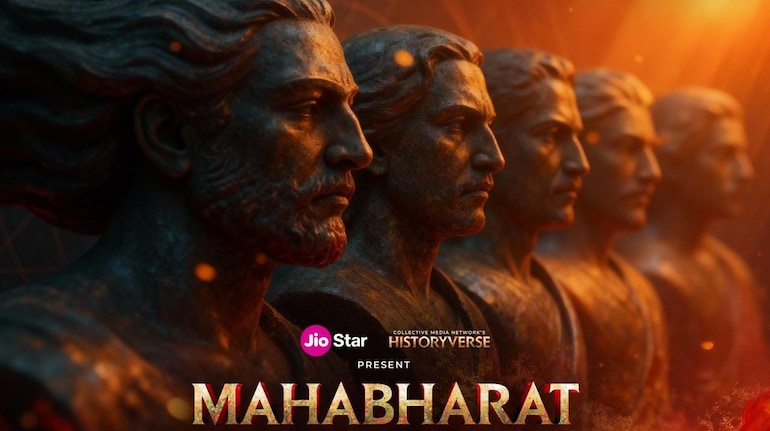

Artificial intelligence will not replace filmmakers — but it will fundamentally change how films are made. That is the clear message from Collective Artists Network, one of the first companies in India to adopt AI in filmmaking, which has already delivered the country’s first AI-led show and is now developing AI-driven content at scale.
“Let me address three common questions,” said Rahul Regulapati, Partner at Collective and CEO of Galleri5, the AI-powered visual content and creator marketing platform acquired by Collective in 2024. “Will AI replace filmmakers anytime soon? Absolutely not. The future is hybrid. Can you just put in a script and get a finished movie instantly? No. Can you simply use ChatGPT or a cloud tool to generate a full-fledged film? Again, no.”
Instead of replacement, Regulapati argues, the industry will see AI-native applications purpose-built for cinema. That is where Collective is placing its bet — through what it calls an AI Cinematic Studio that integrates artificial intelligence into traditional filmmaking workflows rather than attempting to substitute them.
“Those viral social media clips showing AI-generated scenes are heavily post-produced,” he said. “Real filmmaking will remain hybrid.”
AI as infrastructure, not disruption
Regulapati likens AI to infrastructure. “I live in Bengaluru — the roads aren’t great. If roads improve, you travel faster. AI is like that for filmmakers. Instead of spending two years and $100 million on a film, you could potentially do it in months at a fraction of the cost. It reduces friction and expands creative possibilities.”
The company’s view is that AI is not about shrinking crews but accelerating output. Under its upcoming slate, Collective is producing Hanuman, directed by National Award-winning filmmaker Rajesh Mapuskar. “We are not replacing him. The director, Director of Photography (DOP), writers — they’re all there. We still have 50–100 people working on a film,” said Vijay Subramaniam, Founder and Group CEO of Collective Artists Network.
“What’s changing is how quickly we can produce it. Instead of one film every year or two, we believe we can do one a month. That’s the disruption.”
Subramaniam acknowledged concerns raised by actors such as Abhishek Bachchan about AI’s implications. But he sees the shift as evolutionary rather than existential.
“Every technological shift creates fear initially,” he said. “Factory workers feared the assembly line. Retailers feared e-commerce. Courier services feared email. But evolution also creates opportunity.”
He pointed to how music production evolved. “When recording technology improved, 50-member orchestras were replaced by digital sound patches. Today, composers like A.R. Rahman or Pritam don’t always record full live orchestras. The industry adapted. Similarly, AI can become an advantage. It could even allow actors to continue earning and creating work later in life. Instead of insecurity with evolution, I believe in security through evolution.”
Upskilling, he added, will be essential — much like the transition from film to digital or from television to OTT.
Solving India’s scale problem
For Collective, the bigger opportunity lies in scale. Regulapati believes AI-enabled workflows can finally make globally ambitious productions viable in India.
“Traditionally, making something on the scale of Game of Thrones in India would be unrealistic due to budget constraints,” he said. “With AI-enabled workflows, that may now be possible. What used to take three years could potentially be done in six months. Costs drop significantly.”
Subramaniam said that at a first-principles level, India has now solved the scale problem that historically limited it compared to Hollywood. “Now it’s about engineering, Research and Development (R&D) and execution,” he said.
Regulapati added that the convergence of gaming engines, 3D environments and AI is accelerating at breakneck speed. “It’s not far-fetched to imagine Indian productions delivering global-scale experiences soon.”
Building a cinematic operating system
At the centre of Collective's strategy is Galleri5 AI Studio — described as a cinema-native production technology platform and a production-grade operating system for film and television. Unlike off-the-shelf AI tools, the platform orchestrates the entire workflow — from script and world-building to final master delivery.
The studio brings together generative systems, Low-Rank Adaptation (LoRA) driven character architecture, controlled shot pipelines, 3D/VFX integration, lip-sync, upscaling, quality control and delivery into a single production environment calibrated for theatrical and broadcast output.
Galleri5 has already deployed the system at scale. Mahabharat: Ek Dharmayudh is currently airing on Star Plus and JioStar. Meanwhile, Chiranjeevi Hanuman – The Eternal, produced by Star Studios 18, recently released its teaser on IMAX screens using Galleri5’s infrastructure.
“Cinema requires precision, repeatability and control. Off-the-shelf AI doesn’t solve that. Orchestration does,” said Regulapati. “We built an operating system where technology bends to filmmaking, not the other way around.”
Under its Historyverse banner, Collective Studios — powered by Galleri5 infrastructure — is developing a slate including Hanuman, Krishna, Shiva and Shivaji. The company has at least four theatrical releases and over ten shows in the pipeline and aims to eventually allow filmmakers to subscribe to its platform while retaining their intellectual property.
Subramaniam believes India must move beyond experimenting with tools and start building systems. “For India to lead in the next era of storytelling, we have to think beyond tools and start building operating systems,” he said.


Discover the latest Business News, Sensex, and Nifty updates. Obtain Personal Finance insights, tax queries, and expert opinions on Moneycontrol or download the Moneycontrol App to stay updated!
Find the best of Al News in one place, specially curated for you every weekend.
Stay on top of the latest tech trends and biggest startup news.







