|
Moneycontrol » News » Budget Sector Comment ![]() Budget impact on textile sector: EYPublished on Wed, Jul 08, 2009 at 18:30 | Source : Moneycontrol.com Updated at Wed, Jul 08, 2009 at 18:37
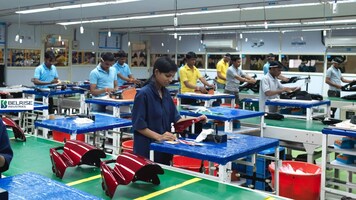
From textile industry perspective, the request of the Ministry of Textiles of reviving the textile industry with initiatives of short term (such as rationalisation of fiscal duty structure), medium term (such as increasing momentum of Technology Upgradation Fund Scheme (TUFS), Scheme for Integrated Textile Parks) and long term (such as macro initiatives of improvement on infrastructure, labour and so on) seems to be partly addressed in the Budget proposals of 2009-10. The industry request of rationalisation of the fiscal structure is partly addressed for the cotton textiles sector, wherein optional duty payment at the 4 percent ad valorem is being restored. This restoration would enable manufacturers to avail and utilize CENVAT credit. In addition, the tax holiday benefit for Export Oriented Units (EOUs) is extended to one more year upto March 31, 2011. However, the other demands of the industry such as exemption from levy of Service tax, Customs duty under Section 3 (5) of Customs Tariff Act, tax-holiday on exports are not addressed. From medium term and long term perspective, the budget proposals in favour of the industry includes; proposals to set up two more mega handloom clusters, one each in Tamil Nadu and West Bengal, and one more powerloom mega cluster in Rajasthan, in addition to the two mega handloom clusters at Varanasi and Sibsagar and two mega powerloom clusters at Erode and Bhiwandi approved in the last budget. In addition, a major highlight of the proposals is a substantial hike in the allocation for the TUFS for the sector. Due to inadequate allocations in the past, there had been a backlog of more than one year in the disbursement of assistance under the scheme. Further, the procedural relaxation for exporter of goods, exempting Goods Transport Agents and Commission Agents from the ambit of Service tax and dispensing with Pre-audit requirements for claiming refund of Service tax on specified list of services is one of the reformatory steps and needs to be welcomed. However, on a long term, the request of the industry to lay down a plan for implementation of a comprehensive Goods and Service tax (GST) that would eliminate multiple taxes and simplify the procedures, seems lacking initiative and the same would require immediate attention and action of the FM. In addition to the above, the following are some of the other budget proposals impacting textile sector: Increase in the rate of excise duty from 4% to 8% on manmade fiber and yarn; Restoration of the optional levy excise duty of 8 % ad valorem beyond the fiber/ yarn stage; Increase in the rate of optional excise duty from 4% to 8 % on textile items manufactured from natural fibers other than cotton such as silk, wool, and so on. Increase in the excise duty rate of some important textile intermediates from 4% to 8%. Reduction in the basic customs duty from 15% to 10% on waste of wool and waste of cotton. To sum-up, though the budget has some positive for textile sector, but it appears that the majority of proposals are short term initiatives of rationalisation of fiscal structure, however with lack of reforms in the tax administration and policy initiatives, whether these proposals could contribute to the mandate of 'continuity, stability and prosperity' of textile sector in global market is doubtful. M Harisudhan is a senior tax professional with Ernst & Young, India.
PREVIOUS STORY NEXT STORY Trending NewsBusiness News
|
NewsVideos
Interviews
![]() May 25 2012, 22:00 | Source: CNBC-TV18 ![]() May 25 2012, 15:54 | Source: CNBC-TV18 ![]() Subscribe to Moneycontrol Newsletters |
|||||||