






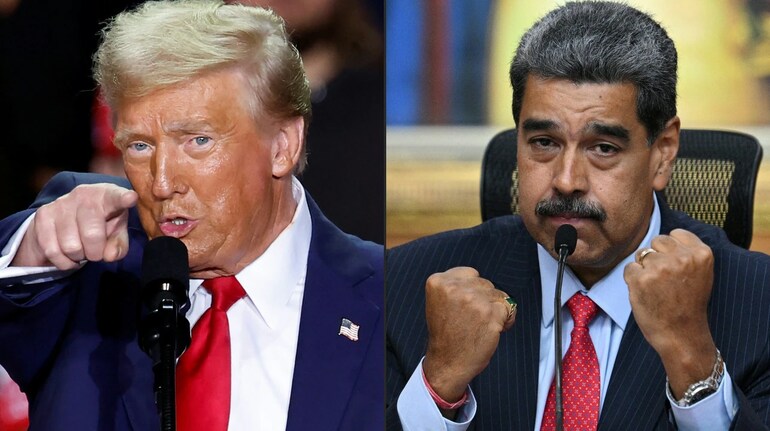

Venezuela’s vast oil potential is unlikely to translate into higher crude production anytime soon, analysts told Reuters, even after U.S. President Donald Trump signalled that American oil giants could pour billions into the country following the dramatic capture of President Nicolás Maduro by U.S. forces.
Despite holding some of the world’s largest estimated oil reserves, Venezuela’s output has steadily deteriorated over decades. The decline accelerated after the government took control of oil assets in the 2000s, prompting several foreign companies -- including Exxon Mobil and ConocoPhillips -- to exit amid disputes and arbitration battles.
Energy experts caution that investment alone will not be enough. Any foreign firm returning would face a mix of safety risks, decaying facilities, unresolved legal concerns surrounding Maduro’s capture, and uncertainty over whether the political situation can stabilize in the long run.
American oil companies, analysts say, are unlikely to re-enter Venezuela unless they are assured of financial returns and basic security guarantees. “American firms won't return until they know for sure they will be paid and will have at least a minimal amount of security,” said Mark Christian of CHRIS Well Consulting, adding that sanctions relief would also be a prerequisite.
Legal reforms would also be required. Venezuela’s oil sector was nationalized in the 1970s, and decades later foreign operators were compelled to shift into joint ventures controlled by state oil company PDVSA. While firms such as Chevron agreed to those terms, others walked away and pursued compensation claims abroad.
Some analysts believe a recovery is possible -- but only if everything aligns. “If Trump et al can produce a peaceful transition with little resistance, then in five to seven years there is a significant oil-production ramp up as infrastructure is repaired and investments get sorted out,” said energy strategist Thomas O'Donnell. He noted that Venezuela’s heavy crude remains compatible with U.S. Gulf Coast refineries.
However, the risks are substantial. “A botched political transition that has a feeling of U.S. dominance can lead to years of resistance,” O'Donnell warned, pointing to the presence of armed civilian and guerrilla groups in the country.
Chevron currently stands alone among U.S. oil majors operating in Venezuela. Francisco Monaldi of Rice University said the company would be well positioned if an oil-sector opening materializes, while others would likely remain cautious. “Other U.S. oil companies would be paying close attention to political stability and would wait to see how the operational environment and contract framework unfolded,” he said.
Once a cornerstone of OPEC, Venezuela produced as much as 3.5 million barrels per day in the 1970s, accounting for more than 7% of global output at the time. Production slipped below 2 million bpd in the 2010s and averaged roughly 1.1 million bpd last year, about 1% of the global total.
Among companies that exited, ConocoPhillips may have the strongest incentive to return. “The company that probably will be very interested in going back is Conoco, because they are owed more than $10 billion, and it's unlikely that they will get paid without going back into the country,” Monaldi said. Exxon could also consider a return, though its financial exposure is smaller.
ConocoPhillips, however, declined to speculate. “ConocoPhillips is monitoring developments in Venezuela and their potential implications for global energy supply and stability. It would be premature to speculate on any future business activities or investments,” a spokesperson said.
Chevron currently ships about 150,000 barrels per day from Venezuela to U.S. refineries and has worked carefully to preserve its foothold amid shifting U.S. policy. CEO Mike Wirth said last month that discussions with the Trump administration emphasized the value of maintaining a long-term American presence in the country.
The company said its priority remains employee safety and asset protection. “We continue to operate in full compliance with all relevant laws and regulations,” a Chevron spokesperson said. Exxon declined to comment.
Meanwhile, oil markets are expected to see little immediate impact. OPEC and its allies are set to meet on Sunday and are widely expected to keep production policy unchanged after pausing output increases earlier this year amid concerns of oversupply.
Ed Hirs of the University of Houston said recent developments in Venezuela are unlikely to influence U.S. fuel prices in the near term, noting that most Venezuelan crude currently flows to Cuba and China. He also pointed to past U.S. interventions in oil-rich nations that failed to yield economic benefits. “Trump now joins the history of U.S. presidents who have overthrown regimes of oil-rich countries. Bush with Iraq. Obama with Libya. In those cases, the United States has received zero benefit from the oil. I’m afraid that history will repeat itself in Venezuela,” Hirs said.
Chevron-chartered tankers were among the few vessels to leave Venezuelan ports in recent weeks, following Trump’s December announcement of a blockade targeting sanctioned ships. Venezuela exported roughly 921,000 bpd in November, most of it bound for China.
One possible short-term gain, analysts say, could come if Venezuelan crude resumes flowing to the U.S. Gulf Coast -- benefiting refiners such as Valero. For now, however, exports appear to be moving in the opposite direction.
With inputs from ReutersDiscover the latest Business News, Sensex, and Nifty updates. Obtain Personal Finance insights, tax queries, and expert opinions on Moneycontrol or download the Moneycontrol App to stay updated!
Find the best of Al News in one place, specially curated for you every weekend.
Stay on top of the latest tech trends and biggest startup news.





