The Arctic experienced its warmest and wettest year on record between October 2024 and September 2025, according to a comprehensive assessment released by the US National Oceanic and Atmospheric Administration. The findings underline how climate change is accelerating faster in the polar region than anywhere else on the planet, the Financial Times reported.
Surface air temperatures across the Arctic were the highest since records began in 1900. NOAA said the region has warmed at more than twice the global average rate since systematic monitoring began two decades ago. Each of the past ten years now ranks among the warmest ever recorded in the Arctic.
The report comes as the global average temperature rise has already crossed 1.5 degrees Celsius above pre-industrial levels, a threshold long viewed as a critical danger point by climate scientists.
Permafrost melt and the rise of “rusting rivers”
One of the most striking changes documented in the study is the transformation of rivers across Arctic Alaska. As permafrost thaws, iron and other metals trapped in frozen soils are being released into waterways, turning more than 200 rivers shades of orange.
Researchers describe the phenomenon as “rusting rivers”, a visible sign of deep chemical changes taking place beneath the surface. Scientists warn that the process threatens water quality, fish populations and communities that rely on these rivers for drinking water and subsistence.
Abagael Pruitt, a postdoctoral researcher at the University of California, Davis, said the trend is expected to continue as warming intensifies, with long-term consequences for aquatic ecosystems and local livelihoods.
Why Arctic warming matters globally
Scientists often refer to the Arctic as the planet’s refrigerator because its ice and snow reflect sunlight back into space, helping regulate global temperatures. As that reflective surface shrinks, more heat is absorbed, amplifying warming not just locally but worldwide.
Matthew Druckenmiller of the National Snow and Ice Data Centre said the Arctic’s rapid changes have global implications, from rising sea levels driven by ice melt to disruptions in atmospheric circulation that influence weather far beyond the polar region.
The report also highlights growing concern over “Atlantification”, a process in which warmer, saltier Atlantic waters are pushing further into the Arctic Ocean. This shift is eroding sea ice from below and weakening ocean layers that once insulated the Arctic from lower latitudes.
Sea ice and glaciers in retreat
Winter sea ice reached its lowest maximum extent in the 47-year satellite record this year, NOAA said. The oldest and thickest multi-year ice has declined by more than 95 percent since the 1980s and is now largely confined to areas north of Greenland and the Canadian Arctic archipelago.
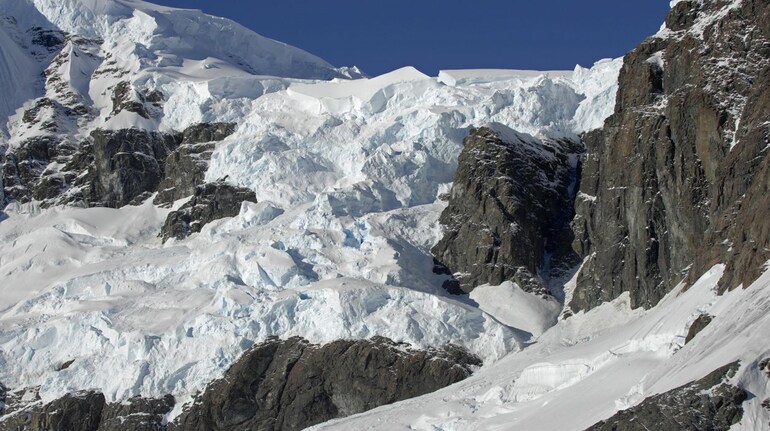
Glaciers in Arctic Scandinavia and Svalbard also recorded their largest annual net ice loss on record between 2023 and 2024, reinforcing concerns that cryosphere decline is accelerating across the region.
Science under pressure
The report’s release comes at a time of uncertainty for US climate monitoring. NOAA has faced job cuts and the cancellation of research projects, while several satellites critical to tracking sea ice are scheduled for decommissioning in 2026. A long-running dataset tracking tundra greening will also no longer be updated because of funding constraints.
NOAA officials said the findings were produced without political interference, but warned that reduced monitoring capacity could compromise future assessments.
What emerges from the data is a stark picture: the Arctic is changing faster than scientists once anticipated, and the effects are no longer confined to the top of the world.
Discover the latest Business News, Sensex, and Nifty updates. Obtain Personal Finance insights, tax queries, and expert opinions on Moneycontrol or download the Moneycontrol App to stay updated!
Find the best of Al News in one place, specially curated for you every weekend.
Stay on top of the latest tech trends and biggest startup news.