






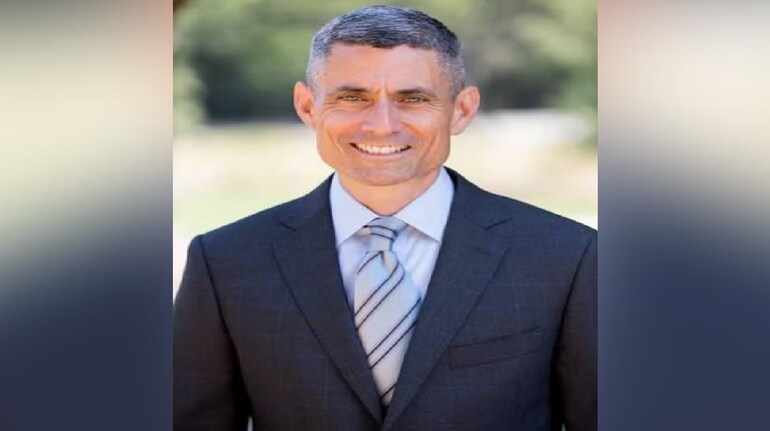
A planned visit by Paul Kapur, the United States Assistant Secretary of State for South and Central Asia, to Bangladesh in early March is being viewed as more than a routine diplomatic engagement. The announcement, made by Bangladesh’s Foreign Ministry on Monday, comes at a moment of renewed political and strategic movement between Dhaka and Washington.
The visit was highlighted during a meeting between US Ambassador Brent Christensen and Foreign Minister Khalilur Rahman in Dhaka.
“The U.S. Ambassador in Dhaka, Mr. Brent Christensen, paid a courtesy call on Foreign Minister Dr. Khalilur Rahman at the latter's office today. During the meeting, both sides underscored the longstanding partnership between Bangladesh and the United States, built on mutual respect, shared democratic values, and a commitment to peace and development,” the statement said.
While diplomatic language often stresses continuity, the broader context suggests that Kapur’s trip could mark a deepening of ties across several fronts.
Trade and defence in Focus
According to the Foreign Ministry, both sides reviewed cooperation in trade, investment, defence and security, development partnership, immigration and people-to-people exchanges.
“The upcoming visit of the U.S. Assistant Secretary Paul Kapur for South and Central Asia to Bangladesh in early March was also featured in the discussion,” it added.
The timing is notable. Bangladesh recently signed a trade agreement with the United States and has agreed to expand imports from the US, including aircraft for Bangladesh Airlines. Those imports have already begun and are expected to help narrow the trade gap between the two countries.
At the same time, Washington has signalled interest in stronger defence cooperation. In a congratulatory message to Bangladesh’s new Prime Minister Tarique Rahman, US President Donald Trump noted that if Bangladesh fully completes the defence agreements currently under discussion, it would be able to purchase advanced military equipment from the United States.
Two agreements — the General Security of Military Information Agreement (GSOMIA) and the Acquisition and Cross-Servicing Agreement (ACSA) — are presently being negotiated. If finalised, they would pave the way for closer military cooperation and access to more sophisticated American defence systems.
Against that backdrop, Kapur’s visit appears closely tied to both economic and security recalibration.
The Rohingya question
The Rohingya crisis also formed part of the diplomatic conversation. The Foreign Minister expressed appreciation for continued US humanitarian support and sought sustained political backing for the safe and sustainable repatriation of displaced Rohingya to Myanmar.
The issue remains central to Bangladesh’s foreign policy agenda, and continued American involvement carries diplomatic and financial weight.
A significant moment after political transition
Before meeting the Foreign Minister, Ambassador Christensen also paid a maiden courtesy call on State Minister for Foreign Affairs Shama Obaed Islam, discussing matters of mutual interest.
Taken together — trade realignment, defence negotiations, humanitarian cooperation and a newly formed government in Dhaka — Kapur’s visit is being regarded as particularly significant. It comes at a time when Bangladesh is recalibrating its external partnerships, and when the United States appears keen to reinforce its strategic engagement in South Asia.
For both sides, the visit is less about ceremony and more about setting the direction of the relationship in the years ahead.
(With ANI inputs)
Discover the latest Business News, Sensex, and Nifty updates. Obtain Personal Finance insights, tax queries, and expert opinions on Moneycontrol or download the Moneycontrol App to stay updated!
Find the best of Al News in one place, specially curated for you every weekend.
Stay on top of the latest tech trends and biggest startup news.




