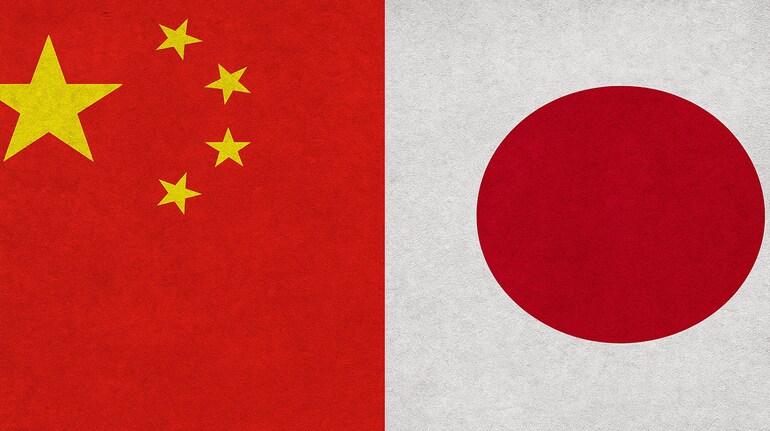
A fierce diplomatic row has erupted between China and Japan after Japanese Prime Minister Sanae Takaichi suggested that a Chinese attack on Taiwan could warrant a military response from Tokyo. The remarks triggered retaliatory statements, inflammatory social-media posts from Chinese officials, and a rare summoning of ambassadors by both sides, deepening tensions between Asia’s two largest economies.
What the Japanese PM said
Addressing parliament on 7 November, Prime Minister Takaichi said that an armed assault on Taiwan could justify Japan deploying troops under the country’s “collective self-defence” framework.
“If an emergency in Taiwan entails battleships and the use of force, then that could constitute a situation threatening the survival (of Japan), any way you slice it,” she said.
Her comment marked an unusually explicit position for a sitting Japanese leader on Taiwan’s defence.
China’s immediate backlash
Beijing condemned the remarks as “egregious” and swiftly escalated its response.
China’s Vice Foreign Minister Sun Weidong summoned Japanese ambassador Kenji Kanasugi to issue “serious demarches” over Takaichi’s comments.
The foreign ministry warned: “If anyone dares to interfere with China’s unification cause in any form, China will surely strike back hard.”
A Chinese political commentator labelled Takaichi an “evil witch,” while the Chinese consul general in Osaka wrote on X that the “dirty neck that sticks itself in must be cut off” — a post that was later deleted following widespread outrage.
Japan's diplomatic response
Japan also summoned China’s ambassador, Wu Jianghao, to lodge a formal protest over the threatening social-media post.
Foreign Minister Toshimitsu Motegi called the remarks “highly inappropriate,” adding: “We strongly urge the Chinese side to continue taking appropriate measures to ensure that this does not affect the broad direction of Japan-China relations.”
Japan’s ruling party even passed a resolution calling for the Chinese envoy involved to be declared persona non grata.
Tokyo says its Taiwan policy is ‘unchanged’
Amid the escalating row, Japan moved to clarify its stance. Chief Cabinet Secretary Minoru Kihara said Japan’s position on Taiwan “remains unchanged,” stressing that:
“Peace and stability in the Taiwan Strait are important not only for Japan's security but also for the stability of the international community.”
He reaffirmed that Japan seeks a “peaceful resolution… through dialogue,” consistent with the 1972 Japan-China Joint Communique, which underpins bilateral relations and acknowledges Beijing’s One China principle.
Kihara said Japan’s envoy had explained the intent behind Takaichi’s remarks to Beijing and “strongly urged China to take appropriate action” after the violent rhetoric directed at the prime minister.
Why Taiwan matters so much
Taiwan lies just 100km from the nearest Japanese island and is central to Japan’s security calculus. A major conflict in the Taiwan Strait could directly impact Japanese territory, sea lanes, and supply chains.
Security legislation passed in 2015 allows Japan to exercise “collective self-defence” if an attack on a partner nation threatens Japan’s survival — a legal basis Takaichi referenced in her remarks.
A history of strategic ambiguity
Past Japanese prime ministers have avoided direct statements about defending Taiwan, opting instead for strategic ambiguity. Takaichi, a long-time China hawk and ally of former PM Shinzo Abe, has previously visited Taiwan and advocated stronger security ties with the island.
China, meanwhile, insists Taiwan is part of its territory and has not ruled out the use of force to achieve unification.
Why the row matters
The clash comes at a delicate moment for regional stability. China and Japan are major trading partners but remain divided by historical grievances, territorial disputes, and competing strategic ambitions.
With both sides summoning ambassadors and nationalist rhetoric surging online, the diplomatic temperature has risen sharply — and neither government shows any intention of backing down.
(With inputs from agencies)
Discover the latest Business News, Sensex, and Nifty updates. Obtain Personal Finance insights, tax queries, and expert opinions on Moneycontrol or download the Moneycontrol App to stay updated!
Find the best of Al News in one place, specially curated for you every weekend.
Stay on top of the latest tech trends and biggest startup news.