






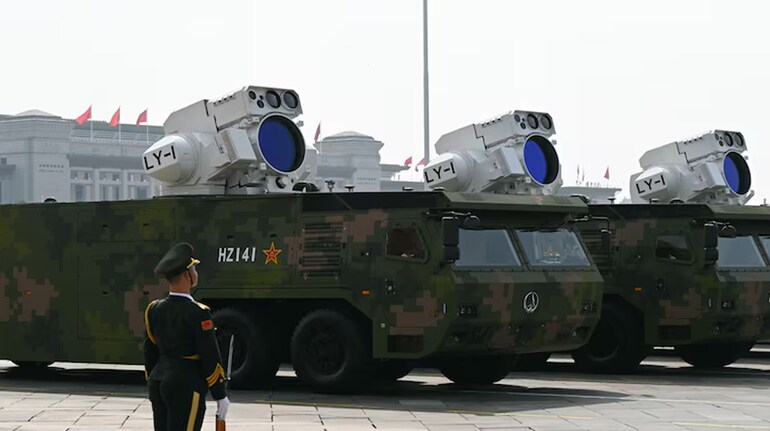
Chinese-manufactured weaponry, long presented as a cost-effective alternative to Western arsenals, is facing growing scrutiny after reported battlefield setbacks in recent conflicts. From India’s Operation Sindoor dismantling Pakistani defences, to the US raid that captured Venezuela’s Nicolás Maduro, and US-Israeli strikes targeting Iran’s air shields, Beijing’s systems have repeatedly come under pressure. Equipment once described as “battle-tested innovation” is now criticised for weak software support, design shortcomings and limited real-world combat proof.
In Pakistan, Chinese-dependent forces allegedly saw BrahMos missiles hit YLC-8E “anti-stealth” radars and HQ-9 batteries. In Venezuela, JY-27A radars and HQ-9 systems reportedly failed to detect US forces during the extraction. Similar concerns emerged in Iran, where HQ-9B units are said to have struggled under stealth attacks. The pattern suggests systemic vulnerabilities rather than isolated faults.
Operation Sindoor: Penetrating Pakistan’s Chinese-led defences
On 7 May 2025, India launched Operation Sindoor in retaliation for the Pahalgam terror attack that killed 28 civilians. The Indian Air Force conducted precision strikes on nine Pakistani military sites, including bases at Chunian, Rafiqui, Murid and Sukkur, along with terror camps linked to Jaish-e-Mohammed. BrahMos supersonic cruise missiles and air-launched munitions were used without crossing the Line of Control, marking a swift 23-minute operation.
The mission underscored India’s SEAD capability and tested Pakistan’s air defence network, which is heavily reliant on Chinese systems. Pakistan, sourcing around 82 per cent of its arms from China, deployed the YLC-8E anti-stealth radar at Chunian Air Base. Beijing had claimed the radar offered long-range detection, enhanced sensitivity against stealth aircraft and strong resistance to jamming. However, it reportedly failed to prevent missile strikes.
The HQ-9 surface-to-air missile system, modelled on Russia’s S-300, allegedly struggled with integration and electronic interference, limiting its effectiveness. Pakistan’s drone response using Wing Loong-II platforms was reportedly intercepted by Indian Akash-NG and MRSAM systems. A recovered PL-15E missile further raised concerns over propulsion and guidance performance.
The operation highlighted weaknesses in stealth detection and system coordination while demonstrating BrahMos’ low-altitude precision and multi-sensor targeting capability.
Venezuela: Maduro raid exposes radar blind spots
In January 2026, the United States launched “Operation Absolute Resolve”, a midnight raid in Caracas that captured Nicolás Maduro from his fortified residence without firing a shot.
Delta Force personnel inserted via stealth MH-60M Black Hawk helicopters carried out the extraction despite layered Chinese and Russian air defence systems — raising questions over their operational effectiveness.
Venezuela invested more than $2 billion in Chinese military equipment, yet its air defence network reportedly failed to detect the intrusion.
The backbone — Chinese JY-27A “meter-wave” anti-stealth radars — allegedly did not register the approach. Designed to detect F-22 and F-35 aircraft, the systems were reportedly overwhelmed by electronic attack from EA-18G Growlers using ALQ-99 pods and advanced jamming tools.
HQ-9 and HQ-12 missile batteries reportedly remained inactive amid signal disruption.
Russian-supplied S-300PMU-2 systems also failed to alter the outcome. Reports indicate over 60 per cent of Venezuela’s 22 Chinese radars had already been offline due to spare-part shortages and limited technical support.
Corrosion, unstable power supply and insufficient operator training reportedly reduced readiness levels.
Recovered components included intact HQ-9 guidance modules. Preliminary analysis suggested weaknesses in radar processing software and delayed fire-control responses under heavy electronic interference.
Trump’s remarks amid rising tensions
In his 2026 State of the Union address, President Donald Trump referenced perceived weaknesses in rival military technologies.
Speaking about the Venezuelan operation, Trump described a “major military installation protected by thousands of soldiers and guarded by Russian and Chinese military technologies” and asked rhetorically, “How did that go for them?”
The comment came amid heightened tensions with Iran and reflected confidence in US operational dominance. Although Iran was not explicitly mentioned, the statement aligned with broader warnings over nuclear expansion and missile threats.
Iran: HQ-9B tested under fire
Ongoing US-Israeli strikes have further exposed alleged limitations in Chinese-supplied systems.
Iran acquired the HQ-9B in 2025 after Russian S-300 batteries reportedly underperformed against Israeli F-35 operations. Marketed as China’s advanced long-range surface-to-air missile system, it promises a 260km engagement range with active radar homing.
However, during recent strikes, the HQ-9B reportedly failed to intercept stealth aircraft and stand-off munitions such as AGM-158C LRASM missiles.
Analysts argue its seeker technology and rocket propulsion struggled against advanced electronic countermeasures like AL-322 jamming systems. Radar coverage gaps allegedly allowed F-35 jets to approach within about 50 nautical miles undetected.
Sea-skimming Tomahawk missiles reportedly exploited blind spots created by fixed launch configurations at low altitude.
Integration problems further complicated defence coordination. Iran’s command system reportedly lacked seamless data linking between Bavar-373 units and short-range Pantsir-S1 batteries. Reaction times were said to reach around 20 seconds — slower than the roughly six seconds attributed to US Patriot systems.
US forces reportedly recovered fragments showing software vulnerabilities and propulsion inconsistencies.
Credibility under question
China remains the world’s third-largest arms exporter, but repeated battlefield exposure has raised concerns over reliability.
Emphasis on export volume over prolonged combat testing appears to have left key systems vulnerable to jamming and anti-radiation missiles. Weak integration between layered defences and limited after-sales support further undermine confidence.
Maintenance problems have compounded the issue. Venezuela faced spare-part shortages; Pakistan and Iran reportedly struggled with training gaps and logistical constraints.
With Russia’s defence industry stretched by the Ukraine war, scrutiny over Chinese systems is intensifying. Future buyers may demand upgrades and stronger guarantees — yet without proven resilience under fire, trust could remain fragile.
Discover the latest Business News, Sensex, and Nifty updates. Obtain Personal Finance insights, tax queries, and expert opinions on Moneycontrol or download the Moneycontrol App to stay updated!
Find the best of Al News in one place, specially curated for you every weekend.
Stay on top of the latest tech trends and biggest startup news.




