






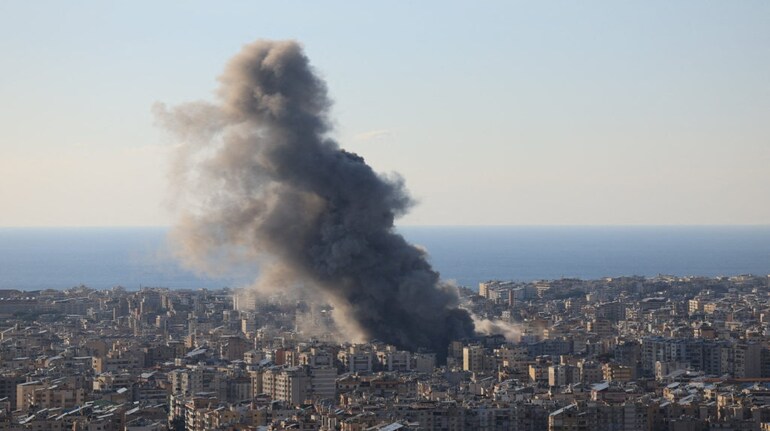
A week into the war with Iran, the United States and Israel have launched one of the most extensive bombing campaigns in recent decades. According to Western officials and satellite analysis cited by multiple international reports, roughly 4,000 targets across Iran have been struck since the start of the conflict.
The strikes have come from air, sea and long-range missile attacks. The pattern of targets suggests a broad strategic objective. Washington and Tel Aviv are attempting to weaken Iran’s ruling structure, destroy key military capabilities and dismantle parts of the country’s nuclear program.
At the same time, Iran continues to fire missiles and drones toward Israel and regional locations where American forces are deployed, the New York Times reported.
Decapitation strikes against leadership
The opening phase of the campaign focused heavily on Iran’s political and military leadership. Israeli aircraft launched precision strikes on a leadership compound in central Tehran where senior national security officials had gathered.
Among those killed in the attack was Iran’s Supreme Leader Ali Khamenei. Several other senior figures in the country’s defence establishment were also reported killed during the initial strikes.
Those casualties included commanders linked to the Islamic Revolutionary Guard Corps as well as senior defence officials involved in directing Iran’s military strategy.
The aim of such strikes is to disrupt the chain of command and create confusion within the government’s security structure. Despite the loss of senior officials, however, Iran’s governing system remains in place and the country’s armed forces continue operating.
Security forces and intelligence networks
Another major focus has been Iran’s internal security apparatus. Facilities belonging to the Islamic Revolutionary Guard Corps and the Basij militia have been targeted repeatedly.
These organisations play a central role in maintaining domestic control inside Iran and in supporting military operations abroad.
Israeli officials say dozens of aircraft were used in some strikes against compounds linked to the Guards in Tehran. Buildings associated with intelligence agencies and detention centres have also been hit in an effort to weaken the institutions that enforce state authority.
Missile launchers and air defences
The campaign has also concentrated on Iran’s missile and air defence systems. Israeli military officials say more than 300 missile launchers and roughly 150 air defence units have been destroyed or disabled.
Strikes on air bases, missile depots and underground storage facilities are intended to limit Iran’s ability to continue launching ballistic missiles.
Control of the airspace is critical for the continuation of the bombing campaign. By reducing Iran’s defensive capabilities, the United States and Israel can operate aircraft with less risk.
Naval targets and shipping routes
Operations at sea have targeted Iran’s naval capabilities as well. US forces say dozens of Iranian vessels have been destroyed, including a submarine and several support ships.
In one case, an Iranian warship operating in the Indian Ocean was reportedly sunk after being hit by a torpedo launched from an American submarine.
These attacks are aimed at reducing Iran’s ability to threaten shipping in the Strait of Hormuz, the narrow waterway through which about one fifth of the world’s oil exports pass.
Strikes on nuclear infrastructure
Another critical component of the campaign involves Iran’s nuclear program. The Natanz nuclear facility, widely regarded as the centre of Iran’s uranium enrichment effort, has been struck multiple times.
Satellite imagery indicates that entrances to underground halls at Natanz were destroyed in the latest strikes. These areas house centrifuges used to enrich uranium.
Other facilities connected to nuclear research have also been targeted. Israeli officials say one previously undisclosed underground site near Tehran was destroyed because it was believed to be linked to efforts to integrate enriched uranium with missile systems.
A conflict still unfolding
Despite the scale of the strikes, the outcome of the war remains uncertain. Iran continues to launch missiles and drones while its security forces remain largely intact.
US President Donald Trump has said the campaign will continue until Iran accepts what he called unconditional surrender.
For now, the bombing campaign illustrates a strategy aimed at systematically weakening the Iranian state’s leadership, military capabilities and strategic weapons programs. Whether those objectives can be achieved quickly remains unclear.
Discover the latest Business News, Sensex, and Nifty updates. Obtain Personal Finance insights, tax queries, and expert opinions on Moneycontrol or download the Moneycontrol App to stay updated!
Find the best of Al News in one place, specially curated for you every weekend.
Stay on top of the latest tech trends and biggest startup news.




