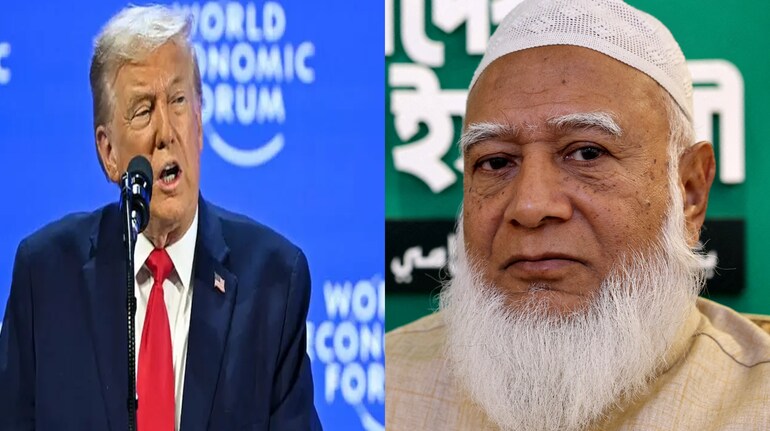
At a time when the United States positions itself as a champion of democracy and regional stability, reports of Washington’s outreach to Jamaat-e-Islami in Bangladesh have raised alarms across South Asia. Analysts warn that cultivating ties with an Islamist party with a violent history and deep ideological links to Pakistan represents a dangerous strategic miscalculation, one that could undermine secular forces and destabilize the country further.
By signalling openness to Jamaat-e-Islami, the US risks sidelining more mainstream actors, including the Bangladesh Nationalist Party (BNP), weakening an already fragile secular balance. Observers note that a Jamaat-influenced political outcome could imperil minority communities and domestic stability while opening India’s eastern flank to renewed Pakistani interference and terrorist networks. Experts argue that urgent US intervention is needed to prevent long-term damage.
Recent revelations about American diplomatic manoeuvring have provoked significant controversy. According to The Washington Post, US diplomats met with Jamaat leaders in Sylhet ahead of Bangladesh’s February 12 elections, where the party is expected to perform strongly. A leaked audio recording detailed what appears to be a normalisation strategy, with a US diplomat stating that Bangladesh has “shifted Islamic” and adding, “We want them to be our friends.”
The diplomat dismissed concerns over Jamaat’s ideological aims, asserting, “I simply do not believe that Jamaat can impose sharia.” Analysts describe this as either naïve or dangerously irresponsible, given Jamaat’s historical hostility to secular constitutional norms. The same official suggested economic pressure would be enough to curb any excesses, stating, “If Jamaat were to seize all the Catholic schools in Bangladesh, they would have 100% tariffs put on them the next day.”
The remarks also trivialised the threats facing minority groups, particularly Hindus and other non-Muslim communities, who have been targeted since the political upheaval of 2024. The diplomat’s comments came alongside an acknowledgment that the trial of former Prime Minister Sheikh Hasina—resulting in a death sentence—was neither free nor fair, yet the official bizarrely called it “political genius” and “impressive.”
The US engagement with Jamaat follows the ouster of Sheikh Hasina on August 5, 2024, and the installation of interim head Muhammad Yunus. Under Yunus, Islamist mobs reportedly attacked minorities, political violence surged, and Bangladesh’s secular foundations eroded. The regime cultivated ties with Pakistan while straining relations with India, banned the Awami League, and oversaw a weakening of the nation’s liberation ethos.
Analysts warn that if Jamaat emerges as the dominant political force instead of a mainstream BNP government led by Tarique Rahman, Pakistan would gain a direct channel into Bangladesh, creating serious security concerns for India. Furthermore, China could exploit the resulting instability, adding a complex dimension to the region’s geopolitical landscape.
India has maintained a clear stance: Jamaat-e-Islami has been designated an “unlawful association” since 2019, a classification renewed in 2024. US engagement with the party does little to reassure New Delhi. Should Washington’s strategy succeed, a post-election reset with Dhaka would be far more difficult, potentially leaving India to contend with the fallout alone.
Observers note that the asymmetry of the situation is stark. While US diplomats can retreat if the plan backfires, India’s geographic and strategic proximity ensures it will bear the long-term consequences. Critics argue that Washington’s engagement in Bangladesh mirrors historical patterns of external interference in the subcontinent, prioritizing strategic maneuvering over democratic and humanitarian considerations.
If the United States values its partnership with India, analysts contend that the solution is clear: reconsider the outreach to Jamaat before it irreversibly alters Bangladesh’s political trajectory. A failure to do so risks creating a security vacuum, empowering extremist networks, and undermining regional stability for decades.
Discover the latest Business News, Sensex, and Nifty updates. Obtain Personal Finance insights, tax queries, and expert opinions on Moneycontrol or download the Moneycontrol App to stay updated!
Find the best of Al News in one place, specially curated for you every weekend.
Stay on top of the latest tech trends and biggest startup news.