






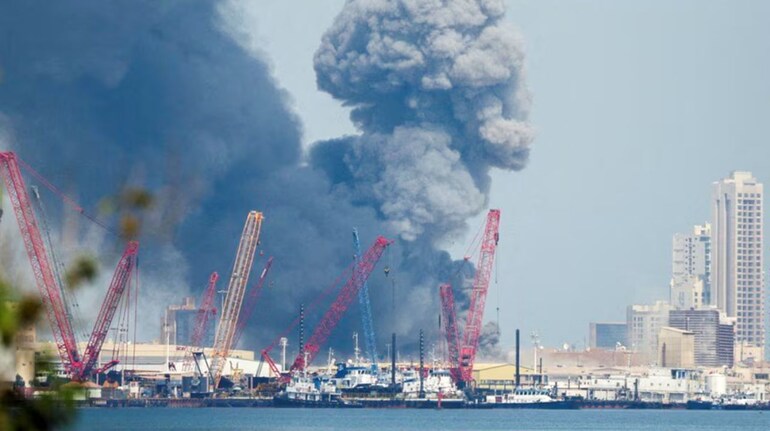

The United States has used one-way attack drones modelled on Iran’s Shahed systems in direct strikes on Iranian targets, marking a significant shift in how Washington approaches aerial warfare in the region.
According to US defence officials and multiple international reports, the drones were deployed during coordinated operations with Israel against Iranian military infrastructure. The platform, known as the Low-cost Unmanned Combat Attack System or LUCAS, is designed as a one-way strike drone. It is meant to loiter, identify a target and then detonate on impact, rather than return to base.
That concept mirrors Iran’s widely used Shahed 136 drones, which have been deployed extensively by Tehran and its allies across West Asia and in other conflicts. The Shahed system became known for its relatively low price, long range and ability to overwhelm air defences through swarm tactics. By fielding a similar low-cost platform, the US appears to be adapting to the same logic that reshaped modern drone warfare over the past few years.
Defence sources indicate that each LUCAS unit costs roughly USD 35,000, making it significantly cheaper than cruise missiles or advanced precision guided munitions. For comparison, a Tomahawk cruise missile can cost well over a million dollars. The economics matter. In prolonged or high intensity exchanges, cost per strike increasingly shapes operational decisions.
The reported strikes also involved Tomahawk missiles launched from naval platforms and sorties by F 18 and F 35 fighter jets. But the introduction of a mass deployable one-way drone suggests a deliberate attempt to diversify the strike package. Instead of relying only on high end platforms, the US is now pairing stealth aircraft and cruise missiles with expendable drones that can saturate defences or hit secondary targets.
Military analysts see this as a practical rather than symbolic move. Iran has spent years refining low-cost drone tactics, forcing adversaries to burn expensive interceptors on relatively cheap incoming systems. By developing its own version, Washington reduces that asymmetry and signals that it is prepared for sustained drone exchanges if tensions escalate further.
The bigger shift is doctrinal. For decades, US air power rested on technological superiority and high precision weapons. The use of lower cost, expendable drones reflects a battlefield reality where volume, persistence and affordability are just as important as sophistication.
As the regional conflict widens, the spread of these systems on both sides suggests that future engagements will rely less on singular headline weapons and more on waves of relatively inexpensive autonomous platforms designed to probe, exhaust and strike.
Discover the latest Business News, Sensex, and Nifty updates. Obtain Personal Finance insights, tax queries, and expert opinions on Moneycontrol or download the Moneycontrol App to stay updated!
Find the best of Al News in one place, specially curated for you every weekend.
Stay on top of the latest tech trends and biggest startup news.





