






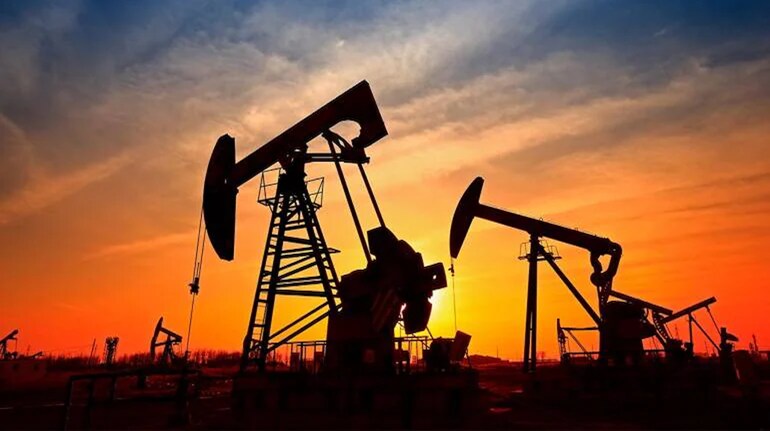
Following a US military operation that captured Nicolás Maduro, President Donald Trump indicated he wants American oil companies to return to Venezuela to tap into the country’s vast crude reserves.
Here are key questions surrounding US interest in Venezuelan oil:
What are Venezuela’s reserves?
Venezuela holds the largest proven oil reserves in the world, with 303.221 billion barrels, according to OPEC, surpassing Saudi Arabia (267.2 billion) and Iran.
Despite its enormous reserves, production remains low. The country currently pumps around 1 million barrels per day (mb/d), compared with approximately 3.5 mb/d when Hugo Chávez assumed power in 1999, said Peter McNally of global research firm Third Bridge.
"Neglect, poor infrastructure, underinvestment, and corruption have diminished the country's productive capacity," McNally noted.
US sanctions imposed in 2019 during Trump’s first term further contributed to production dropping to a historic low of 350,000 b/d the following year.
How does it circumvent sanctions?
Due to the curbs, there are few importers of Venezuelan oil. China buys 80 percent of it, according to estimates, via Malaysia.
Some 5 percent goes to Cuba under agreements between the two countries.
To get around the embargo, Caracas relies on "ghost tankers" that use numerous ploys, like false flags and fake routes.
The M/T Skipper, intercepted by the US Navy as part of an oil blockade on Venezuela announced last month, was one such "ghost" vessel, transporting over a million barrels of Venezuelan oil, reportedly destined for Cuba.
To avoid US sanctions, clients pay in cryptocurrency, including asset-pegged stablecoins, mainly USDT.
What is the American footprint there?
A small portion of Venezuelan oil is produced by US group Chevron.
The company operates under a special license issued by Washington that allows it to maintain its partnership with Venezuela's national oil company and to export part of its production, notably to the American market.
However, it is no longer allowed to transfer money to the state and therefore pays taxes and other dues in crude.
Other US groups present in the early 2000s -- ExxonMobil and ConocoPhillips -- left the country in 2007, refusing Chavez's terms.
They required the state to become the majority shareholder of all companies operating in the country.
Why is Trump interested in Venezuelan oil?
"We have to be surrounded by safe, secure countries, and we also have to have energy, very important," Trump said Saturday.
He added "a lot of money is coming out of the ground", claiming the US would be "repaid for everything" it spent in the country.
The US leader considers that "the oil exported under embargo by Caracas is oil stolen from the international community," John Plassard of Cite Gestion Private Bank told AFP.
In Trump's view, these volumes were extracted thanks to American equipment and investments prior to Chavez's nationalisations, he said.
The US goal is also to push back "Chinese actors from the American continent", including depriving China of influence over the Panama Canal -- through which much of Venezuela's oil transits -- according to Plassard.
Is Trump's plan realistic?
"Any recovery in production would require substantial investment given the crumbling infrastructure resulting from years of mismanagement and underinvestment," Giovanni Staunovo, of UBS, told AFP.
But investing today holds little appeal: oil prices are weighed down by a supply glut and fell in 2025 despite significant growth headwinds like Trump's tariff war and the ongoing conflict in Ukraine.
"The US oil majors main responsibility is towards their shareholders, not the government," Ole Hansen, an analyst at Saxo Bank, told AFP.
"With that in mind I doubt we will see a rush of interest to get back into Venezuela anytime soon."
What will be the impact on oil prices?
In a well-supplied market, analysts say that instability in Venezuela will have a limited effect on the oil price, with only a marginal uptick in prices likely this week.
"Logistics around the ports could be disrupted, flows erratic," Plassard predicted. He believes the market may be more concerned by Trump's threats against Iran, which is responsible for far larger oil production.
If Iran "violently kills peaceful protesters, which is their custom, the United States of America will come to their rescue", Trump posted on his Truth Social platform Friday.
"We are locked and loaded and ready to go," he added, ahead of a weekend that saw deadly clashes between protesters and security forces there.
(With AFP inputs)
Discover the latest Business News, Sensex, and Nifty updates. Obtain Personal Finance insights, tax queries, and expert opinions on Moneycontrol or download the Moneycontrol App to stay updated!
Find the best of Al News in one place, specially curated for you every weekend.
Stay on top of the latest tech trends and biggest startup news.




