






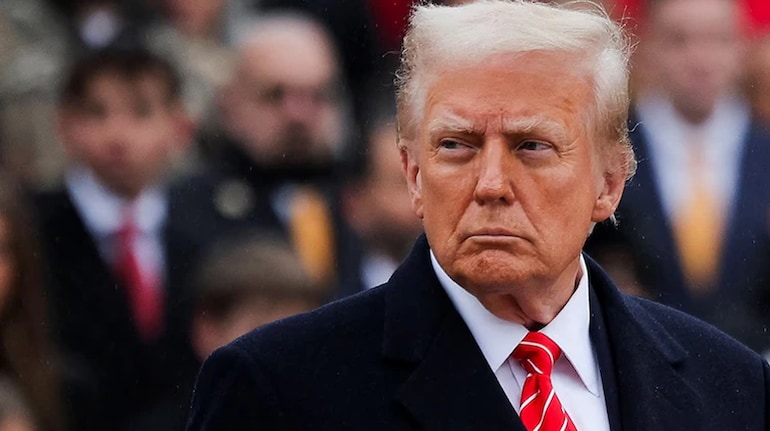

US President Donald Trump on Monday urged Republican lawmakers to “nationalize the voting,” arguing that the federal government should take control of elections in multiple states. The comments revive long running tensions over election authority and come despite the Constitution explicitly giving states the power to manage their own voting processes, the Washington Post reported.
Speaking to conservative podcaster Dan Bongino, Trump repeated his claim that the 2020 election was stolen from him, a claim that has been rejected by courts and election officials across the country. He suggested that Republicans should “take over” elections in at least 15 states, describing some as “crooked” without providing evidence.
What the Constitution says
The US Constitution assigns responsibility for determining the “Times, Places and Manner” of holding elections to individual states. While US Congress has authority to regulate certain aspects of federal elections, the president has no direct constitutional role in overseeing how states conduct voting.
Over time, Congress has passed laws establishing national Election Day and setting standards for voter registration and ballot access. However, the day-to-day administration of elections, including ballot design, polling locations and vote counting procedures, remains largely in state hands.
Republicans have historically defended states’ rights and limited federal authority, making Trump’s call for nationalization notable within his own party.
Georgia search and renewed allegations
Trump’s remarks follow a federal search in Fulton County, Georgia, where agents executed a warrant to seize physical ballots and related materials from the 2020 election. The search comes amid continued right wing scrutiny of Georgia’s vote count, though previous audits and court rulings found no evidence of widespread fraud.
The president again alleged, without evidence, that undocumented immigrants voted illegally and that states misrepresented outcomes he says he won. US national security officials and state election administrators have repeatedly stated that the 2020 election was secure.
Political and legal hurdles
It remains unclear what practical steps could be taken to “take over” elections in the way Trump described. Any significant shift of election authority from states to the federal government would likely require congressional action and face immediate legal challenges.
Legal scholars note that even Congress’s power over election rules has limits under Supreme Court precedent. Direct presidential control over state election machinery would almost certainly be contested.
Trump has previously floated executive action related to voting procedures, arguing that states act as agents of the federal government when counting ballots. That interpretation is not supported by the constitutional text.
For now, the president’s proposal underscores continuing efforts to reshape the debate over election administration ahead of midterm contests, while reopening fundamental questions about federalism and the balance of power between Washington and the states.
Discover the latest Business News, Sensex, and Nifty updates. Obtain Personal Finance insights, tax queries, and expert opinions on Moneycontrol or download the Moneycontrol App to stay updated!
Find the best of Al News in one place, specially curated for you every weekend.
Stay on top of the latest tech trends and biggest startup news.





