






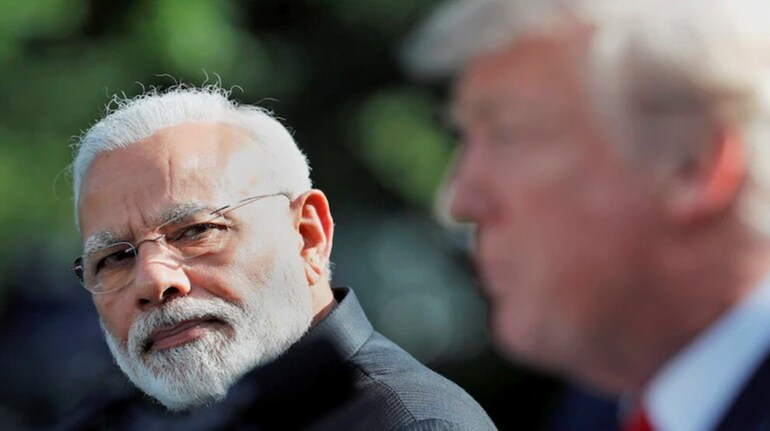
New Delhi’s approach to Donald Trump’s second term was initially reasonable, but the unpredictable nature of his presidency has forced India to recalibrate its foreign policy and rethink long-term strategic priorities. Harsh Vardhan Pant, Vice President of the Observer Research Foundation (ORF), told Moneycontrol, “I don’t think that was a miscalculation but it was just in some ways a misreading of that moment in global politics… eventually like all nations, it got rectified and it was understood that this is a very different presidency.”
Meanwhile, former diplomat Meera Shankar emphasises that Trump’s policies have created a turbulent strategic environment for India. “He has weaponised tariffs and destroyed the MFN principle… With his intervention in Venezuela he has laid claim to Venezuela’s oil and now wants Greenland… He threatens intervention in Iran, Columbia, Cuba and Mexico amongst others. All this has made it hard to navigate the India-US relationship with any degree of predictability… while India has sought to avoid confrontation with the US and remained open to negotiations, we have also sought to safeguard our own interests and our autonomous space for deciding which policies we wish to choose.”
Global anxiety
Pant underscores the global repercussions of Trump 2.0, noting that allies and partners face heightened uncertainty: “This has been a very volatile period in international politics… [his approach] has been very unpredictable and has produced a lot of anxiety around the world… more interestingly for America’s partners and allies.”
Shankar echoes the concern, highlighting how Trump’s domestic and international moves amplify instability. “He has walked out of the Paris Climate Change Agreement and 66 other Agreements related to Climate Change… after walking out of the Human Rights Council, WHO and other UN forums. So, all in all, creating a more uncertain and turbulent world.”
Strategic adjustments
Pant explains that Trump’s second term has shifted the US-India relationship toward a transactional model. “That is the model that Mr Trump favours, so India will also have to play according to the same rule… it also allows a degree of transparency in the relationship – you don’t expect more from the US than you perhaps thought might happen.”
Shankar complements this view, emphasising the limits of trust and the need for strategic autonomy: “An erosion of trust between India and the US could lead to a repositioning in our relationship with the Great Powers… there are still many imponderables depending on the way our bilateral trade discussions with the US progress and the inter se equations between the Great Powers, including the US and China.”
Indo-Pacific partnerships
Pant stresses the importance of regional hedging: “India has to find its own path in the Indo-Pacific in partnership with other like-minded regional powers… India would want stability and does not want a country like China to be the dominant player in the Indo-Pacific.”
Shankar reinforces that unpredictability makes India’s autonomy critical: “While India has sought to avoid confrontation… we have also sought to safeguard our own interests and our autonomous space for deciding which policies we wish to choose.”
The combined insight shows India navigating a careful balance: engaging with the US where beneficial, but building broader partnerships to ensure strategic objectives in the Indo-Pacific are met.
Implications for India
Pant warns that Trump’s personality often overrides structural realities in US-India relations: “Even if a trade deal is signed tomorrow, there is no guarantee that his behaviour or American foreign policy towards India would become more predictable.”
Shankar highlights how domestic US politics could shape these dynamics further: “If the Republican Party fares badly in the midterm elections and Democrats retake the House, it might embolden other institutions in the US and Republicans themselves to question the untrammelled use of authority by Trump, eroding the built-in checks and balances of the US system.”
This unpredictability has prompted India to hedge diplomatically, recalibrating ties with both China and Russia while deepening engagements with other like-minded partners globally.
A transformative moment for global politics
Both commentators agree that India and other US partners are navigating a fundamentally new global order. Pant observes: “We are looking at a moment in global politics where foundations for some long-term changes are being put into place.”
Shankar adds that in this turbulent environment, India must protect its autonomy while remaining engaged with the US: “While India has sought to avoid confrontation with the US and remained open to negotiations, we have also sought to safeguard our own interests and our autonomous space for deciding which policies we wish to choose.”
The message is clear: under Trump 2.0, India can no longer rely on the US to act predictably, and strategic recalibration, combining hedging, partnerships, and autonomous decision-making, has become essential.
Discover the latest Business News, Sensex, and Nifty updates. Obtain Personal Finance insights, tax queries, and expert opinions on Moneycontrol or download the Moneycontrol App to stay updated!
Find the best of Al News in one place, specially curated for you every weekend.
Stay on top of the latest tech trends and biggest startup news.




