






India–US relations under Donald Trump’s second term are increasingly being shaped by volatility, uncertainty and deal-making rather than by the strategic convergence that has defined the partnership in recent decades. According to Harsh V Pant, Vice President of the Observer Research Foundation (ORF), Trump 2.0 represents a qualitatively different phase in American foreign policy, one that is forcing India to recalibrate its engagement with Washington on harder, more transactional terms.
Pant describes the current moment bluntly. “This has been a very volatile period in international politics,” he says, arguing that Trump’s approach to US foreign policy has been “very unpredictable” and has produced “a lot of anxiety around the world”. What is striking, Pant adds, is where this anxiety is concentrated. Trump’s policies, he says, have induced uncertainty “not only for I think America’s adversaries but more interestingly for America’s partners and allies”, placing countries like India in a particularly difficult position.
From assumed continuity to managed expectations
Pant rejects the claim that New Delhi fundamentally misread Trump’s return to power. Like much of the world, India assumed a degree of continuity with Trump’s first term. “I don’t think that there was a miscalculation,” he says. “Much like the rest of the world the assumption was that he may continue with the approach that he had in his first term.” What followed, Pant argues, was not a diplomatic error but “a misreading of that moment in global politics”, which was later corrected as it became clear that “this is a very different presidency”.
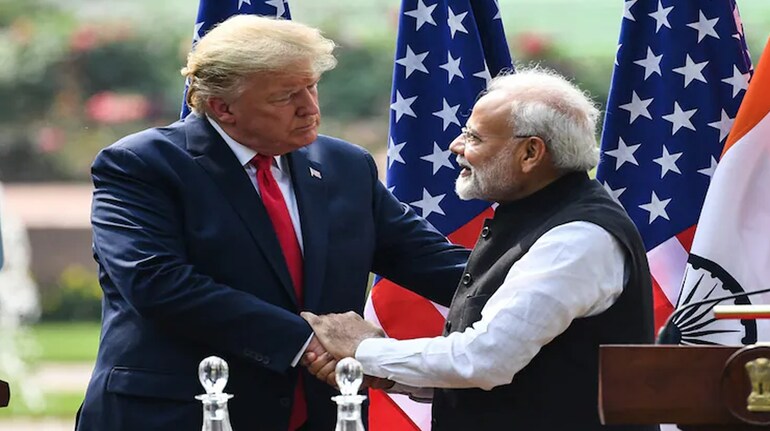
That assumption shaped India’s early outreach. Prime Minister Narendra Modi moved quickly to engage Trump, becoming one of the first global leaders to meet him in February. Pant says the visit and joint statement were part of a conscious attempt to stabilise ties early on. “What India tried to do was to induce a sense of certainty in what early on also it seemed would be a very volatile presidency,” he says. “All that India could do was to work and see how do you reduce that uncertainty and unpredictability, and PM Modi’s visit and the joint statement were an effort in that direction.”
When unpredictability began to dominate
However, Pant argues that subsequent events exposed the limits of reassurance-based diplomacy under Trump 2.0. He points in particular to the unexpected India–Pakistan conflict in 2025. “No one predicted that India and Pakistan would have a conflict in 2025,” he says, adding that “no one also foresaw how Mr Trump would play and what kind of a role he would play in that conflict”. That episode, Pant notes, “also played its role in how certain divergences emerged in a relationship that otherwise was not doing very badly”.
These developments reinforced the sense that Trump’s personal instincts were beginning to override established diplomatic patterns, even with partners that shared long-term strategic interests with the United States.
Trump’s transactional model and India’s adjustment
As Trump’s second term has unfolded, Pant says India has been compelled to adapt to Washington’s preferred framework. “That is the model that Mr Trump favours,” he says, “so India will also have to play according to the same rule.” Under Trump 2.0, Pant argues, the US wants a relationship that is “overtly transactional”, leaving India little choice but to respond in kind.
Pant does not frame this shift as entirely negative. “In a sense that may not be such bad news also,” he says, because transactionalism “allows a degree of transparency in the relationship—you don’t expect more from the US than you know perhaps you thought might happen”. At the same time, he stresses that the deeper structural logic of the relationship has not disappeared. “The structural realities of India–US relationship are such that the two nations have very similar interests in certain areas, particularly in the Indo-Pacific,” he says, where both countries “want stability”, support a “multipolar Indo-Pacific”, and “reject hegemony of China”.
Why transactionalism does not mean predictability
Yet Pant cautions strongly against assuming that deals or agreements can stabilise the relationship under Trump 2.0. “Even if a trade deal is signed tomorrow, there is no guarantee that his behaviour or American foreign policy towards India would become more predictable,” he says, pointing to Trump’s record with other countries where he has “signed trade deals and then gone and threatened them differently”.
The core problem, Pant argues, is that “Mr Trump’s personality seems to be overpowering the structural realities of the relationship”, creating “a lot of turbulence all around”. This, he suggests, is not a temporary phase but a defining feature of Trump’s second term. “That is how he is,” Pant says, warning that this dynamic is likely to continue for as long as Trump remains in office.
A relationship redefined, not abandoned
Pant’s overall assessment is not that India–US ties are weakening, but that they are being fundamentally redefined. Washington, he says, “will play by its own logic”, and India, like many other countries, “will also have to respond to that dynamic in American foreign policy”.
In effect, Trump 2.0 has stripped sentiment and predictability out of the India–US partnership, pushing it towards a harder, interest-based engagement. India may still see the United States as a necessary partner, but under Trump’s second term, that partnership is increasingly governed by transaction rather than trust.
Discover the latest Business News, Sensex, and Nifty updates. Obtain Personal Finance insights, tax queries, and expert opinions on Moneycontrol or download the Moneycontrol App to stay updated!
Find the best of Al News in one place, specially curated for you every weekend.
Stay on top of the latest tech trends and biggest startup news.




