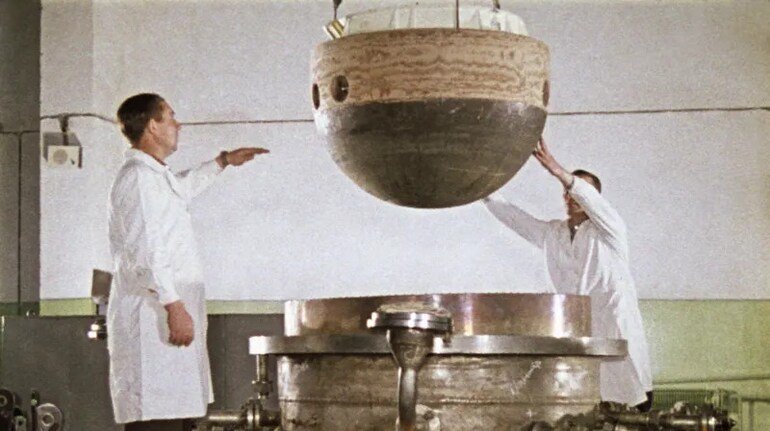
A fragment of a Soviet-era spacecraft that had been stuck in Earth's orbit for more than five decades has likely re-entered the atmosphere, the European Space Agency (ESA) has said, according to a report by BBC.
The object is believed to be a part of Kosmos 482, a Soviet mission launched in 1972 aimed at reaching Venus. The spacecraft never made it beyond Earth's orbit and eventually broke into four pieces, which have been circling the planet ever since.
According to the EU Space Surveillance and Tracking (SST) centre, as quoted by BBC, one of those fragments, believed to be the lander capsule, “most likely” re-entered the atmosphere around 06:16 GMT (11:46 AM IST) on Saturday. However, the exact location of re-entry remains unknown, BBC added.
It is also unclear whether the object burned up completely during re-entry or if any part of it reached the ground. Given that about 70 percent of Earth's surface is covered by water, experts say it is unlikely to have caused any damage.
"It's much more likely that you win the lottery than that you get impacted by this piece of space debris," ESA senior analyst Stijn Lemmens told BBC.
The Kosmos 482 lander was built to endure Venus’s harsh conditions, equipped with a robust heat shield and heavy-duty construction. That durability, ironically, may have allowed it to survive its uncontrolled descent through Earth's atmosphere.
However, the parachute system that was originally designed to soften the lander's arrival on Venus likely deteriorated after decades in space, raising questions about how intact the object was upon re-entry.
Mr Lemmens also noted that such re-entries of human-made objects are quite common, with larger spacecraft typically re-entering on a weekly basis and smaller fragments doing so nearly every day. Most of them burn up before reaching the ground.
Recent examples include China’s Long March 5B booster, which re-entered over the Indian Ocean in 2022, and the Tiangong-1 space station, which largely disintegrated over the Pacific in 2018.
ESA and other international space agencies are now tracking the remnants of Kosmos 482 closely. Mr Lemmens stressed the need for modern spacecraft to be designed for controlled de-orbiting, which would allow for safer, more predictable re-entries.
This, he added, would help mitigate the risks to people and property on Earth, while also addressing the broader environmental impact of space debris.
Discover the latest Business News, Sensex, and Nifty updates. Obtain Personal Finance insights, tax queries, and expert opinions on Moneycontrol or download the Moneycontrol App to stay updated!
Find the best of Al News in one place, specially curated for you every weekend.
Stay on top of the latest tech trends and biggest startup news.