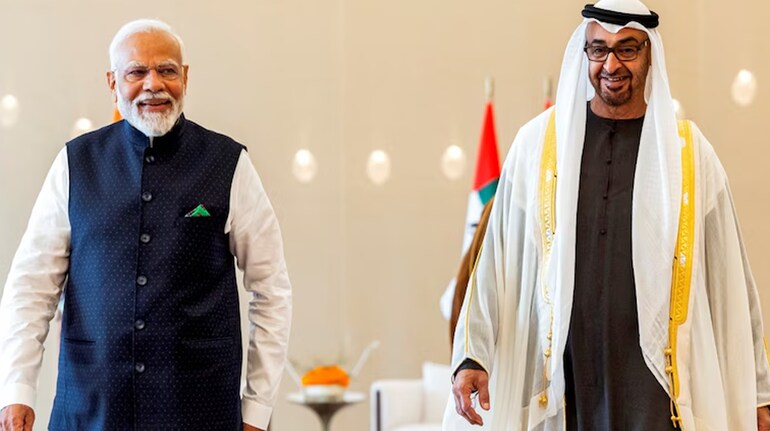
UAE President Sheikh Mohammed bin Zayed Al Nahyan’s surprise three-hour visit to India is now being seen as far more than a routine diplomatic engagement, with its ripple effects reshaping South Asia’s geopolitical equations. Soon after departing India, the UAE leader approved the release of 900 Indian prisoners, a move widely interpreted as a significant gesture of goodwill.
In contrast, Pakistan has suffered a notable setback, with the UAE scrapping its plan to operate Islamabad International Airport. Pakistan’s The Express Tribune confirmed the development, reporting that Abu Dhabi had withdrawn after losing interest in the project. The decision has reportedly caused unease within Pakistan’s leadership, including Prime Minister Shehbaz Sharif and Army Chief Asim Munir.
The airport deal was initially finalised in August 2025, when the UAE agreed to take over operations at Islamabad Airport as Pakistan grappled with a deepening economic crisis. The arrangement has now been abandoned, with no alternative partner announced. Officially, the withdrawal has been attributed to a “loss of interest”.
While the report does not explicitly cite political motivations, the timing has drawn attention, coming amid emerging strains between the UAE and Saudi Arabia that are increasingly spilling into South Asian geopolitics.
Pakistan’s growing defence alignment with Saudi Arabia is widely seen as a complicating factor. Islamabad has entered into a defence pact with Riyadh and is seeking to bring Turkey into what some describe as an “Islamic NATO”. This evolving bloc is understood to have unsettled the UAE, with the airport deal’s collapse coinciding with these regional realignments.
The decision also comes as ties between India and the UAE deepen rapidly. Sheikh Mohammed bin Zayed’s unannounced visit to New Delhi on January 19, though brief, is being viewed as strategically significant. While Pakistan has historically maintained economic links with Gulf states, it has increasingly tilted towards Saudi Arabia. In September 2025, Islamabad and Riyadh formalised a mutual defence agreement, with discussions under way to expand the framework.
Relations between Pakistan and the UAE were once particularly close, especially in aviation. During the 1980s, Pakistan played a crucial role in the establishment of Emirates Airlines, providing technical expertise and personnel, with the carrier’s first commercial flight operating between Dubai and Karachi. Over the years, however, Pakistan’s aviation sector has struggled, plagued by safety concerns, licensing controversies and ageing infrastructure.
Despite the UAE’s experience managing airports in challenging environments, including Afghanistan, its decision to walk away from Islamabad Airport underscores a clear erosion of confidence. The pullback signals that the trust that once defined Pakistan-UAE ties, particularly in aviation and infrastructure, is no longer intact.
Discover the latest Business News, Sensex, and Nifty updates. Obtain Personal Finance insights, tax queries, and expert opinions on Moneycontrol or download the Moneycontrol App to stay updated!
Find the best of Al News in one place, specially curated for you every weekend.
Stay on top of the latest tech trends and biggest startup news.