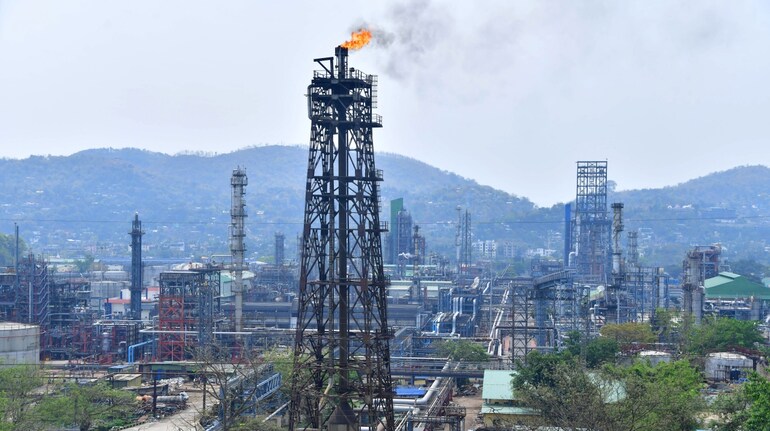

As India and the United States struggle to break the deadlock in trade negotiations, Washington has once again turned its focus to New Delhi’s energy ties with Moscow. US Treasury Secretary Scott Bessent has claimed that India has scaled back its purchases of Russian crude oil after President Donald Trump imposed steep tariffs on Indian goods and penalties linked to Russian oil imports.
The assertion, however, has raised eyebrows among analysts and energy trackers. While India’s Russian oil imports have dipped in recent weeks, the broader data suggests a complex market-driven adjustment rather than a policy shift driven by US pressure. For New Delhi, energy security remains a national priority, shaped by price, availability and long-term demand, not political signalling from Washington.
What Scott Bessent claimed
Bessent made his remarks during an interview with Fox News, linking India’s oil decisions directly to Trump’s tariff action.
“India started buying Russian oil after the conflict began,” Bessent said. “But President Trump put a 25 per cent tariff on them, and India has geared down and has stopped buying Russian oil.”
He was responding to a proposal by Lindsey Graham, whose bill seeks to impose a 500 per cent tariff on countries purchasing Russian crude. On this, Bessent added, “On the 500 per cent tariff on the buyers of Russian oil, that is a proposal that Senator Graham has in front of the Senate.”
Bessent also took aim at Europe, saying, “We have Europe buying Russian oil still, four years later. They are financing the war against themselves.”
Trump himself echoed uncertainty about India’s position. “I understand that India is no longer going to be buying oil from Russia. That’s what I heard, I don’t know if that’s right or not. That is a good step. We will see what happens,” he said.
India’s oil reality cannot be reduced to politics
India’s crude import strategy is rooted in hard economics. The country imports close to 90 per cent of its oil needs and consumes roughly five million barrels per day. Energy security for a population of 1.4 billion cannot hinge on diplomatic pressure alone.
Before the Ukraine war, Russia supplied barely two per cent of India’s crude. That changed sharply in 2022 as Western sanctions pushed Russian oil into global markets at heavy discounts. By 2023, India was importing around 1.66 million barrels per day from Russia. By mid-2025, volumes had climbed further to nearly two million barrels per day, making Russia India’s single largest supplier.
According to data from the Centre for Research on Energy and Clean Air, India has imported nearly $144 billion worth of Russian crude since 2022, becoming Moscow’s second-largest buyer after China.
Why Russian oil still makes economic sense
Even today, Russian crude trades about $10 to $15 per barrel below Brent. With Brent hovering near $63 per barrel, Russian oil typically lands in India at $50 to $54 per barrel, even after shipping costs. For Indian refiners, especially state-run ones, that price advantage remains difficult to ignore.
Major suppliers such as Iraq, Saudi Arabia, the UAE and the United States continue to play important roles, but Russia now accounts for roughly 35 per cent of India’s crude basket.
A dip does not mean a policy shift
There has been a recent decline, but it is far from the collapse implied by Washington. In November 2025, India imported 7.7 million tonnes of Russian crude, the highest level since May. In December, imports fell sharply.
According to tanker tracking firm Kpler, “India’s imports of Russian crude fell by 595,000 barrels per day month-on-month in December, dropping to 1.24 million barrels per day.”
However, analysts say this reflects market adjustments rather than a political decision.
“Despite declining aggregate imports, PSU refinery intake of Russian crude has remained resilient, highlighting a redistribution rather than a collapse in demand,” said Pankaj Srivastava of Rystad Energy.
Similarly, Muyu Xu told CNBC that state-owned firms “have continued to buy Russian crude for future delivery, through non-sanctioned suppliers.”
India’s position remains consistent
New Delhi has never framed its oil imports as a geopolitical statement. Instead, it has repeatedly stressed national interest.
“We take decisions based on the price at which oil is available in the international market and depending on the global situation at that time,” said Randhir Jaiswal.
Finance Minister Nirmala Sitharaman was even more direct. “India will continue to buy Russian oil. It is our decision to buy what suits our needs.”
A claim ahead of the facts
Bessent’s assertion that India has “stopped” buying Russian oil does not stand up to scrutiny. At most, the data shows short-term fluctuations driven by shipping, pricing and refinery schedules.
For India, energy policy remains grounded in affordability and supply stability. For Washington, portraying these shifts as a tariff victory may serve domestic messaging, but it risks oversimplifying a far more complex reality.
Discover the latest Business News, Sensex, and Nifty updates. Obtain Personal Finance insights, tax queries, and expert opinions on Moneycontrol or download the Moneycontrol App to stay updated!
Find the best of Al News in one place, specially curated for you every weekend.
Stay on top of the latest tech trends and biggest startup news.