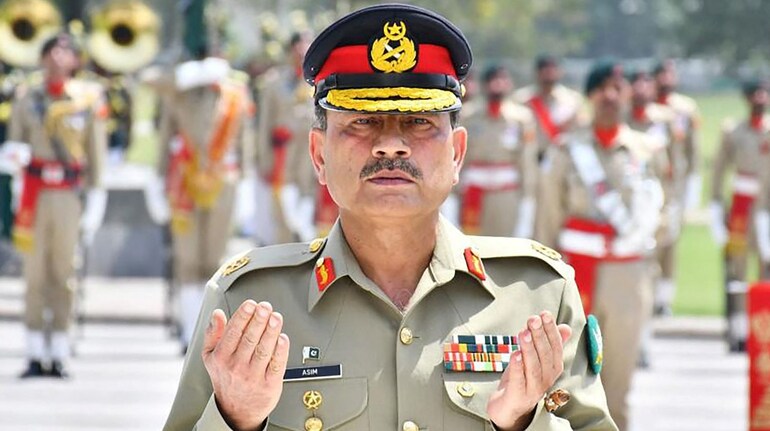
Pakistan may not have witnessed tanks rolling into Islamabad this year, but make no mistake: a coup is already underway, one executed in silence and secrecy by the man in uniform who calls the shots. Field Marshal Asim Munir, once hailed as a stabilising figure, has now transformed into the ultimate puppeteer of Pakistan’s state machinery. Having crushed his only real political threat, Imran Khan, Munir has installed loyalists across the government, the military, and even foreign service ranks. What Pakistan is witnessing today is not the restoration of democracy, but the quiet consolidation of a personal dictatorship, wrapped neatly in the facade of civilian rule.
In July, whispers spread across Islamabad’s corridors of power that Munir was preparing to overthrow the government. But he didn’t have to. He realised that coups today invite international isolation, not control. So instead, Munir chose a more strategic path: take over the state from within.
After ensuring Imran Khan’s political destruction and imprisonment, Munir installed Asif Ali Zardari as President and Shehbaz Sharif as Prime Minister, both now reduced to ceremonial puppets. His grip tightened when he appointed his trusted aide, General Asim Malik, as ISI chief, also handing him the additional charge of National Security Advisor -- a move that gave Munir total command over Pakistan’s intelligence apparatus.
Now, in an unprecedented move, Munir has begun transferring his own relatives and army officers into the civil administration. His nephew, Captain Syed Abu Rehman Bin Qasim, has been moved from the army to the Prime Minister’s Office, along with nine other military men. This creeping militarisation of Pakistan’s bureaucracy exposes Munir’s blueprint for absolute control. The Prime Minister’s Office, once symbolic of civilian authority, is now effectively an extension of GHQ Rawalpindi.
Officials within Islamabad’s establishment admit that this restructuring gives Munir near-total dominance over every lever of power: the military, intelligence, and now the civilian state. His plan reportedly extends to installing loyalists in key ministries, embassies, and high commissions, ensuring that even Pakistan’s foreign policy remains an extension of his personal command.
Intelligence Bureau sources suggest that Munir’s nephew could soon head a mission abroad, perhaps in Washington or New Delhi, further tightening the family’s grip on sensitive diplomatic and intelligence networks. But Munir’s insecurity runs deeper than ambition. Having been elevated to the rank of Field Marshal by a pliant government, despite multiple military embarrassments, including India’s Operation Sindoor, Munir remains haunted by dissent within his own ranks.
The army’s discontent is growing. In regions like Khyber Pakhtunkhwa, soldiers have reportedly refused to fight against the Tehreek-e-Taliban Pakistan (TTP). The same frustration simmers among officers sidelined by Munir’s manipulation of corps commander appointments. His bid to extend his tenure until 2030 has only deepened this anger, alienating those next in line for promotion.
For a country already fractured by economic collapse, terror attacks, and internal unrest, Munir’s silent coup could be the final blow. What Pakistan calls a democracy today is merely a uniform in disguise -- a state hijacked by one man’s paranoia and hunger for power.
Discover the latest Business News, Sensex, and Nifty updates. Obtain Personal Finance insights, tax queries, and expert opinions on Moneycontrol or download the Moneycontrol App to stay updated!
Find the best of Al News in one place, specially curated for you every weekend.
Stay on top of the latest tech trends and biggest startup news.