







Pakistan said on Thursday it was reviewing the implications of the newly signed free trade agreement between India and the European Union, as exporters and analysts warned the deal could weaken Pakistan’s competitive position in its second-largest export market.
The agreement grants Indian exporters sweeping tariff-free access to the EU, a move that Pakistani industry groups say could neutralise Islamabad’s long-standing advantage under the EU’s Generalized Scheme of Preferences Plus (GSP+).
At a weekly press briefing, Foreign Office spokesman Tahir Andrabi said Islamabad was aware of the agreement and remained committed to its trade relationship with the EU, according to PTI.
“Pakistan maintains long-standing, friendly, and mutually beneficial relations with the EU. The GSP Plus scheme for Pakistan has proven to be a win-win template for bilateral cooperation,” Andrabi said, as cited by PTI.
He said trade volumes between Pakistan and the EU stood at over €12 billion, adding that EU imports of Pakistani textiles and apparel had risen sharply under the scheme.
“We remain committed to further strengthening relations with the EU in all areas of mutual interest, including trade,” he said.
Why exporters are worried
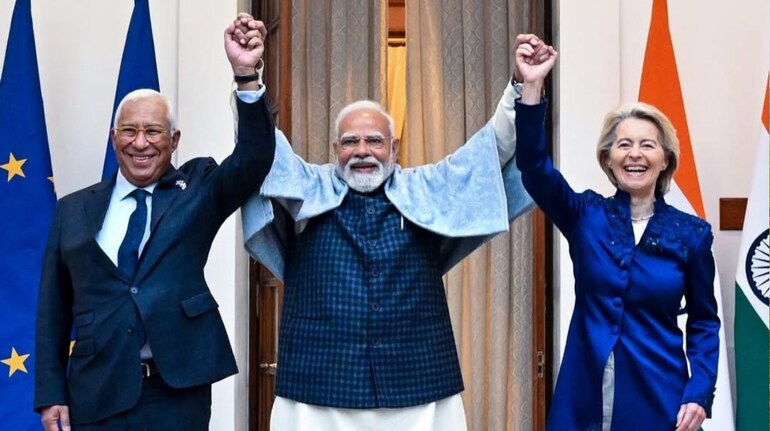
The EU–India agreement is described by Prime Minister Narendra Modi as the 'mother of all trade deals,' while European Commission President Ursula von der Leyen said it created a free trade zone of two billion people.
For Pakistan, the concern is that India’s immediate duty-free access could erase the tariff gap that had favoured Pakistani exports under GSP+, particularly in textiles and apparel.
Kamran Arshad, chairman of the All Pakistan Textile Mills Association (APTMA), told Pakistani daily Dawn that the EU’s 27 member states buy about $8.8 billion, or 27.2 percent, of Pakistan’s total exports, and nearly $7 billion, or 39 percent, of its textile shipments each year.
“India has now secured duty-free access on 100 percent of its textile and apparel tariff lines,” Arshad said. “This fundamentally changes the competitive dynamic.”
Under GSP+, Pakistan enjoys duty-free access on around 66 percent of EU tariff lines, while Indian textile exports previously faced duties of up to 12 percent.
“With the FTA now in effect, Pakistan risks losing an already narrow comparative advantage,” said Shankar Talreja, head of research at Topline Securities, adding that higher domestic costs were compounding the problem.
Muhammad Waqas Ghani of JS Global Capital said India’s higher value addition and stronger vertical integration would further enhance its competitiveness in the EU.
Industry executives echoed those concerns. Musadaq Zulqarnain, chairman of Interloop Holdings, said high energy costs remained the sector’s biggest handicap.
“The real problem is the cost of production,” Zulqarnain told Arab News. “Electricity tariffs here are 25–30 percent higher than regional competitors.”
The shift comes at a fragile moment for Pakistan’s exports. After rising 5 percent to $32.1 billion last fiscal year, exports fell 9 percent to $15.2 billion in the first half of the current year through December, according to official data.
Former commerce minister Gohar Ejaz warned that preferential access alone could no longer sustain exports.
“$9 billion in exports to the EU and 10 million jobs are at risk,” Ejaz said in a post on X.
Calls for urgent action
Traders and analysts told Dawn that the EU–India deal could pose serious challenges unless Pakistan moves quickly to cut costs and restore competitiveness.
Saquib Fayyaz Magoon, vice president of the Federation of Pakistan Chambers of Commerce and Industry, warned that Pakistan could lose its foothold in Europe if urgent corrective measures were not taken.
“Once India secures zero-rated access, Pakistan’s advantage will vanish,” he said, as cited by Dawn, calling for lower power tariffs, tax simplification, and exporter incentives.
The government, meanwhile, said it was reviewing issues affecting the cost of doing business for export-oriented industries, even as concerns mount that India’s new access to the EU could reshape regional trade dynamics.
Discover the latest Business News, Sensex, and Nifty updates. Obtain Personal Finance insights, tax queries, and expert opinions on Moneycontrol or download the Moneycontrol App to stay updated!
Find the best of Al News in one place, specially curated for you every weekend.
Stay on top of the latest tech trends and biggest startup news.





