






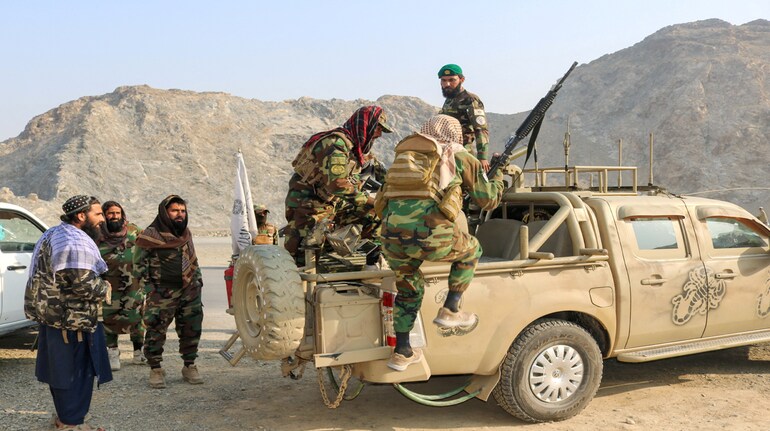
As military clashes intensify along the Durand Line, three regional powers — Russia, China and Iran — are moving in parallel to prevent the confrontation between Pakistan and Afghanistan from spiralling further. Their calls for restraint and offers of mediation reflect not only concern over rising casualties but also deeper strategic anxieties about instability on a volatile frontier.
Pakistan launched what it described as a retaliatory operation, “Ghazab lil Haq”, claiming 133 Taliban fighters were killed. Afghanistan’s Ministry of National Defence, however, said 55 Pakistani soldiers died in counter-operations and accused Islamabad of violating Afghan territory. With both sides trading heavy fire and accusations, diplomatic pressure has mounted.
Russia: Urging a return to the negotiating table
Moscow has responded with an explicit appeal for de-escalation. The Russian Foreign Ministry expressed concern over the “sharp escalation” of armed clashes “involving regular army units, air force, and heavy weapons”.
“There are casualties on both sides, including civilians. We call on our friendly countries, Afghanistan and Pakistan, to abandon this dangerous confrontation and return to the negotiating table to resolve all differences through political and diplomatic means,” foreign ministry spokesperson Maria Zakharova said in a statement.
Zamir Kabulov, the Kremlin’s Special Envoy for Afghanistan, reinforced the message. “We are in favour of a swift end to mutual attacks and a diplomatic resolution of differences,” he was quoted as saying by state-run news agency RIA Novosti.
Russia’s approach is direct: halt hostilities first, then push structured diplomatic engagement.
China: Calling for ceasefire and quiet mediation
Beijing has framed its intervention around restraint and dialogue. “Pakistan and Afghanistan are close neighbours, and both are neighbouring countries of China. As a neighbour and friend, China is deeply concerned about the escalation of the conflict and deeply saddened by the casualties caused by the conflict,” Foreign Ministry spokesperson Mao Ning said at a briefing.
She urged both sides to “exercise calm and restraint, properly resolve their differences and disputes through dialogue and consultation, and realise a ceasefire as soon as possible to avoid more suffering”.
Significantly, Mao added that China has already been mediating “through its own channels” and “stands ready to continue to play a constructive role in de escalating the situation and improving relations between the two countries”.
China’s strategy combines public messaging with behind-the-scenes engagement.
Iran: Framing dialogue through good neighbourliness
Tehran has tied its appeal to the spirit of Ramadan while offering practical mediation. “It is fitting, on the occasion of the blessed month of Ramadan… that Afghanistan and Pakistan resolve their differences through good neighborliness and dialogue,” Foreign Minister Seyed Abbas Araghchi said.
“The Islamic Republic of Iran is prepared to provide every possible assistance to facilitate dialogue and promote mutual cooperation,” he added.
By invoking religious unity and regional cooperation, Iran is positioning itself as both a moral and diplomatic intermediary.
Together, the three powers are pressing for one outcome: an immediate halt to fighting followed by negotiations. Whether their coordinated diplomatic push succeeds will depend on whether Islamabad and Kabul see advantage in talks over continued confrontation.
(With inputs from agenacies)
Discover the latest Business News, Sensex, and Nifty updates. Obtain Personal Finance insights, tax queries, and expert opinions on Moneycontrol or download the Moneycontrol App to stay updated!
Find the best of Al News in one place, specially curated for you every weekend.
Stay on top of the latest tech trends and biggest startup news.




