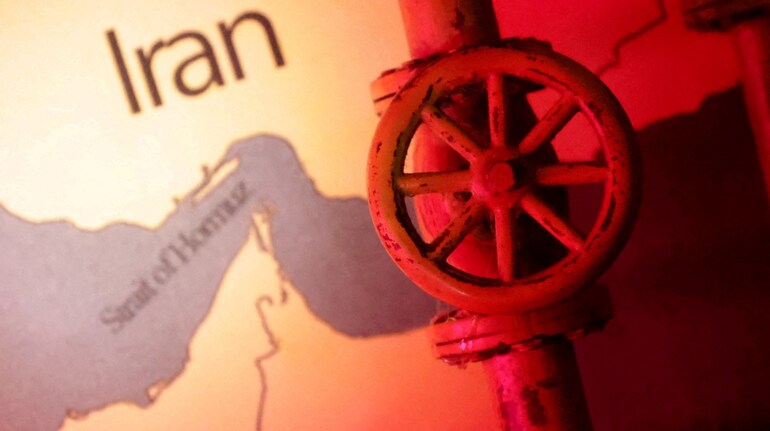

As tensions intensify in the Strait of Hormuz during the ongoing conflict involving Iran, the United States and Israel, a little-known maritime network has quietly become central to Tehran’s economic survival. Even as the Iranian Revolutionary Guard Corps has declared the strategic waterway effectively shut for most commercial traffic, Iranian oil exports have not completely stopped.
According to a report by CNN-News18, the reason lies in a covert shipping system widely referred to as Iran’s “shadow fleet”. This network of tankers continues to move large quantities of sanctioned Iranian crude across global waters, ensuring a steady revenue stream for Tehran despite international sanctions.
What is the shadow fleet
The shadow fleet is a collection of oil tankers used by Iran to bypass global sanctions and continue exporting crude oil. Intelligence assessments indicate that roughly 400 to 430 vessels are believed to be involved in this network.
The fleet is reportedly overseen by Iran’s Islamic Revolutionary Guard Corps (IRGC), which plays a key role in managing the logistics and security of the shipments.
According to the CNN-News18 report, the shadow fleet generates an estimated $25 billion to $30 billion annually for Iran. These revenues are believed to support Iran’s military activities and regional proxy groups.
China has emerged as the dominant buyer of this oil. Much of the crude transported by the shadow fleet eventually reaches China’s independent refineries, often referred to as “teapot refineries”.
How Iran hides the ships
Iran uses a complex system of deception to keep its shadow fleet operating outside international oversight.
According to CNN-News18, vessels involved in the network are often registered through shell companies located in jurisdictions that have weaker regulatory oversight. These include places such as Hong Kong, the United Arab Emirates, Panama and the Marshall Islands.
Ships frequently change their country of registration or “flag” in order to conceal their real ownership. Investigations suggest that around 62 percent of the identified vessels in the shadow fleet are falsely flagged.
Another common tactic involves disabling or manipulating tracking systems. Tankers routinely turn off their Automatic Identification System (AIS) transponders or use spoofing techniques to broadcast false location data, allowing them to disappear from standard global shipping tracking systems.
Ship-to-ship transfers and relabelling
Iran’s shadow fleet relies heavily on ship to ship transfers to disguise the origin of its oil.
In this process, crude oil loaded from Iranian terminals such as Kharg Island is transferred from one tanker to another in international waters. These transfers often occur in remote maritime zones near Malaysia, Oman or the Gulf of Oman.
After the transfer, the cargo is frequently relabelled as oil from another country before entering global markets.
Another technique involves blending Iranian crude with oil from other sources. The mixture is then shipped using documentation that falsely lists the origin of the cargo.
The ships themselves often undergo constant identity changes. Many vessels repeatedly change their names, ownership records and flags of registration, often appearing under flags from jurisdictions such as Comoros or Panama.
Oil flows continue despite sanctions
Despite international sanctions, the shadow fleet continues to move large volumes of crude oil.
According to CNN-News18, the network transports approximately 1.3 to 1.6 million barrels of Iranian crude oil per day. Most of these shipments are sold at heavily discounted prices to Chinese buyers.
The system has also expanded to include cooperation with other sanctioned oil producers. Some of the same tankers have reportedly been used to transport both Iranian and Venezuelan crude oil interchangeably.
Hormuz control strengthens Iran’s network
Recent developments in the Strait of Hormuz have further strengthened Iran’s control over its shadow fleet operations.
The IRGC has claimed that it now exercises full control over the strategic waterway, treating it as a wartime shipping route.
According to the CNN-News18 report, international commercial traffic through the strait has fallen by more than 90 percent since the conflict escalated.
However, Iranian shipments continue to move through the passage. Tehran has reportedly allowed only its shadow fleet vessels and certain China linked ships to navigate the route.
Iranian forces have also targeted tankers that ignored warnings not to enter the area. Reports suggest that more than ten vessels have been struck during the crisis.
By intimidating rival shipping and restricting access to the strait, Iran has effectively secured the passage for its own sanctioned oil trade.
The result is a paradox in global energy markets. Even as international shipping through the Strait of Hormuz has collapsed, Iranian crude continues to reach buyers through a hidden maritime network that has become one of the most sophisticated sanctions evasion systems in the world.
Discover the latest Business News, Sensex, and Nifty updates. Obtain Personal Finance insights, tax queries, and expert opinions on Moneycontrol or download the Moneycontrol App to stay updated!
Find the best of Al News in one place, specially curated for you every weekend.
Stay on top of the latest tech trends and biggest startup news.