






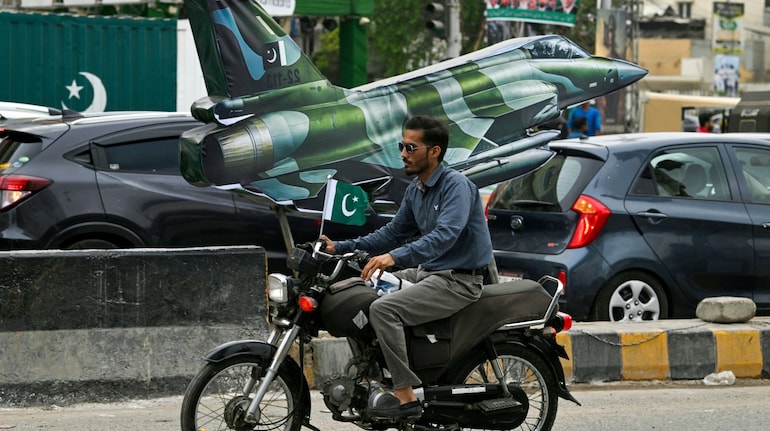

Pakistan’s military establishment is loudly pitching its fighter jets as “combat tested” and in global demand. The reality, however, is far less impressive. Despite months of claims about rising international interest, Pakistan has not secured a single confirmed export order for its flagship JF-17 fighter jets. Even Islamabad’s own defence production minister has now acknowledged that the much-touted talks may collapse under geopolitical pressure.
Behind the bravado lies a deeper problem. Pakistan’s defence sales drive appears less about commercial success and more about desperation. With a broken economy, mounting foreign debt and shrinking diplomatic leverage, Islamabad is increasingly offering fighter jets, drones and weapons as bargaining chips instead of cash. Analysts warn that Pakistan’s sales pitch is heavy on hype, light on credibility, and increasingly exposed as a stopgap attempt to paper over structural economic failure.
Talks without take-offs
According to a Reuters report, Pakistan has held discussions with 13 countries over the sale of JF-17 jets, drones and training aircraft. However, none of these talks have translated into signed contracts. Even Islamabad admits the negotiations remain uncertain.
“These talks are taking place but they can fall through due to international pressures,” Pakistan’s Defence Production Minister Raza Hayat Harraj told Reuters, calling the negotiations “guarded secrets.”
“There are a lot of queries but we are negotiating,” Harraj added, stressing that interest does not equal commitment.
Pakistan’s military and defence ministry have also declined to provide details of any confirmed sales, reinforcing the reality that there are no firm orders.
The JF-17 hype versus reality
Islamabad has aggressively marketed the JF-17 as a cheaper alternative to Western fighter jets, priced between $30 million and $40 million. Officials have highlighted its use alongside Chinese-made J-10 aircraft during last year’s air conflict with India to claim a “combat tested” edge.
But analysts remain sceptical. As reported by Moneycontrol, Pakistan’s fighter jet narrative is “big on hype, short on reality”. The JF-17 lacks the technological sophistication, weapons integration and long-term support packages that most serious buyers demand. For many air forces, cost alone is not enough to offset concerns about performance, logistics and sanctions risk.
Zero orders despite loud claims
Pakistan Prime Minister Shehbaz Sharif has publicly claimed that “several countries” are actively engaged in talks to acquire Pakistani fighter jets. Yet months after those statements, there are still no signed export deals.
Countries named in discussions include Sudan, Nigeria, Morocco, Indonesia, Saudi Arabia, Bangladesh and Libya’s eastern administration. Several of these destinations are either politically unstable, under arms embargo scrutiny, or unlikely to close high-value defence deals without Chinese approval.
Siemon Wezeman of the Stockholm International Peace Research Institute told Reuters that sales to places like Sudan and Libya would be “really problematic” due to United Nations arms restrictions.
Jets instead of debt repayment
More revealing is how Pakistan is using the JF-17 as a financial tool rather than a commercial product. According to Moneycontrol, Islamabad has floated proposals offering fighter jets in place of cash repayments to creditors and allies.
In talks with Saudi Arabia, Pakistan reportedly pitched JF-17 jets as part of loan-to-arms swap arrangements. Similar ideas have surfaced in discussions with other partners as Pakistan struggles to meet repayment obligations.
This approach reflects a deeper crisis. Pakistan’s economy remains heavily dependent on bailouts, rollovers and emergency funding. Instead of fixing structural problems, the military establishment is pushing arms exports as a shortcut to economic relief.
Minister admits risk of failure
Even Pakistan’s own defence leadership is now tempering expectations. Harraj’s admission that negotiations could collapse highlights how fragile Islamabad’s sales push really is.
Analysts say international pressure, China’s veto power over exports, regional rivalries and Pakistan’s limited production capacity all threaten the viability of these deals.
“Pakistan is becoming more relevant as a flexible, mid-tier provider,” said Andreas Krieg of King’s College London. But relevance does not automatically mean reliability or success.
A sales pitch masking deeper trouble
Ultimately, Pakistan’s fighter jet campaign appears aimed as much at domestic optics as foreign buyers. By projecting military strength and export potential, the establishment seeks to distract from economic distress and diplomatic isolation.
So far, the results are clear. Despite the noise, Pakistan has zero confirmed fighter jet orders, mounting scepticism from analysts, and a defence minister openly conceding that the talks may fail.
For all the talk of “combat tested” jets, Pakistan’s biggest battle remains economic credibility, and that is one war its fighter jets cannot win.
Discover the latest Business News, Sensex, and Nifty updates. Obtain Personal Finance insights, tax queries, and expert opinions on Moneycontrol or download the Moneycontrol App to stay updated!
Find the best of Al News in one place, specially curated for you every weekend.
Stay on top of the latest tech trends and biggest startup news.





