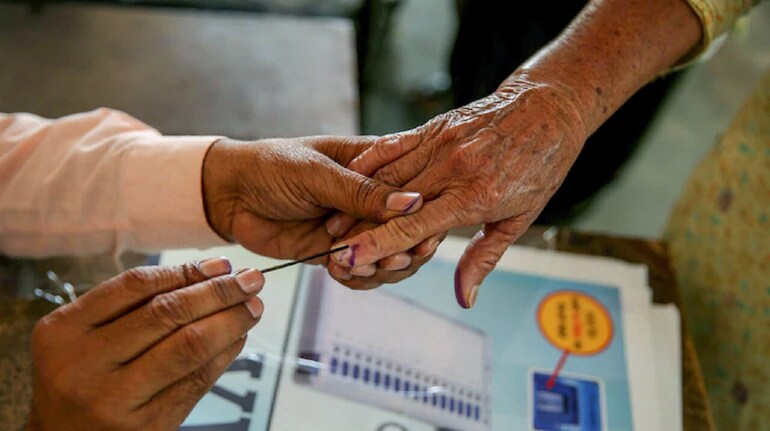
Political parties in Nepal on Monday formally launched campaigning for the March 5 parliamentary elections, the first national polls since deadly anti-corruption Gen Z protests toppled the government led by KP Sharma Oli in 2025.
Campaigning began soon after restrictions imposed by the Election Commission (EC) were lifted late Sunday. Candidates moved quickly into door-to-door outreach, public meetings and rallies across the country. The EC said formal campaign activities—including rallies, processions, corner meetings and the use of loudspeakers—will continue from February 16 to March 2, followed by a mandatory 48-hour silence period beginning at midnight on March 2.
The election comes amid heightened political attention following last year’s upheaval, which exposed widespread public anger over corruption, governance failures and unemployment.
Nepal prepares for the vote
According to official data, Nepal has 18,903,689 eligible voters, including at least 915,119 newly registered voters since the last parliamentary election in 2022. The 275-member lower house will be elected through a mixed system, with 165 lawmakers chosen via the first-past-the-post method and 110 through proportional representation.
More than 6,600 candidates are contesting the election—around 3,400 under the direct voting system and about 3,200 under proportional representation. Voting will take place across roughly 10,500 polling stations and 23,112 polling booths nationwide.
The Election Commission said more than 213,000 personnel and over 330,000 security staff will be deployed to ensure a smooth process, with election security coordinated by the Nepal Army to guarantee a free and fearless vote.
Why India is watching Nepal’s elections closely
Given the open border, recent security concerns and wider regional stakes, India is watching the March 5 elections in Nepal closely.
New Delhi has historically supported a democratic and stable Nepal, a position it reaffirmed after the Gen Z protests by swiftly recognising the interim government and engaging with it diplomatically. Indian officials view the elections as a potential stabilising force in Nepal’s fractured political landscape, particularly to prevent renewed unrest that could have cross-border implications.
Election periods in Nepal have at times been accompanied by nationalist and populist rhetoric that can strain bilateral ties, but Indian policymakers say their focus remains on the posture and priorities of the post-election government rather than campaign messaging. India’s ambassador to Nepal, Naveen Srivastava, has said New Delhi has always stood with Nepal in its democratic progress and that post-election constitutional and political stability will be critical.
The developments are also being closely tracked by regional stakeholders, including China, given their strategic interests in the Himalayan region. During last year’s unrest, India tightened border vigilance and urged restraint and dialogue while praising the role of Nepali youth in restoring order.
Despite concerns over a potential constitutional breakdown following the collapse of the Oli government, New Delhi congratulated the interim administration led by Sushila Karki. Prime Minister Narendra Modi later conveyed India’s readiness to work closely with her government and reiterated support for the electoral process, including logistical assistance.
Indian officials say they are cautiously optimistic that a credible and peaceful vote will usher in a more predictable and constructive phase in India–Nepal relations, while remaining alert to the risk of renewed uncertainty if the polls fail to produce effective and accountable governance.
(With agency inputs)
Discover the latest Business News, Sensex, and Nifty updates. Obtain Personal Finance insights, tax queries, and expert opinions on Moneycontrol or download the Moneycontrol App to stay updated!
Find the best of Al News in one place, specially curated for you every weekend.
Stay on top of the latest tech trends and biggest startup news.