






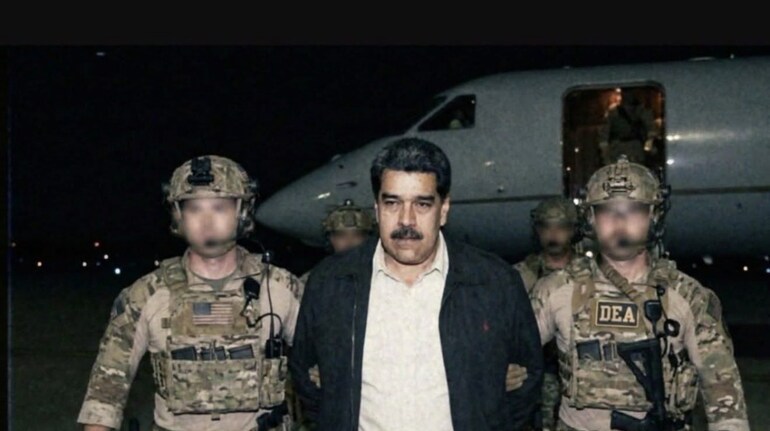

More than 30 years ago, the United States did something rare and explosive: it seized the leader of a foreign country in his own backyard.
That leader was Manuel Noriega, Panama’s strongman. This month, as Venezuela’s Nicolás Maduro faces prosecution in the United States after being captured in a military operation, Noriega’s case is suddenly back in the legal spotlight, not as history trivia, but as a potential blueprint for what comes next. CNN frames Noriega as the closest modern parallel for prosecutors, defense lawyers, and judges now grappling with Maduro’s prosecution.
The shared DNA: drugs, a raid, and a courtroom in the US
According to CNN, Noriega and Maduro share a striking set of factual overlaps that matter legally:
Maduro, CNN reports, is accused by prosecutors of running “state sponsored gangs” and facilitating drug trafficking — allegations that set the stage for a defense strategy built around constitutional and international law objections.
The first defense move: “You can’t do this”
Noriega’s lawyers went straight at the foundation of the case. CNN notes they argued the US violated international law and due process by invading Panama and arresting him abroad. They also claimed Noriega had immunity as a foreign head of state.
Those are the same pressure points Maduro is expected to hit.
Steve Vladeck, a CNN legal analyst and Georgetown law professor, wrote in his One First newsletter that Maduro will “likely raise a series of significant objections to the prosecution,” similar to Noriega’s. Vladeck predicts the Maduro case could involve “novel constitutional and international law arguments,” a view echoed by CNN senior legal analyst Elie Honig, who said Saturday: “We’ve really seen very little like this.”
What the Noriega case tells prosecutors: courts may not care how he got here
Noriega ultimately lost. CNN notes he was tried, convicted in 1991, and sentenced to 40 years in prison. A key reason: US courts largely refused to examine the legality of the invasion itself.
Clark Neily of the Cato Institute argued in an article cited by CNN that federal courts have repeatedly held that the way a defendant is brought before a US court, even by force from foreign soil, does not defeat criminal jurisdiction.
In plain English: even if Maduro argues he was illegally brought to the United States, that argument alone may not get the case thrown out. There is longstanding case law explaining why prosecution can still proceed even after an unlawful seizure.
The government’s fallback: a controversial memo and “inherent authority”
If forced to justify the capture, prosecutors could reach for a piece of legal scaffolding that remains contested.
CNN reports that a 1989 memo by William Barr, then at the Justice Department’s Office of Legal Counsel, argued that a president had “inherent constitutional authority” to order the FBI to take people into custody abroad, even if doing so violated international law. Barr later became attorney general under President George H.W. Bush and again during Trump’s first administration. CNN notes the memo remains controversial among legal scholars.
The harder problem: immunity, not geography
Vladeck’s view, as cited by CNN, is that the toughest battlefield may not be jurisdiction, it may be immunity.
Maduro can argue he is entitled to protections either because he was Venezuela’s head of state, or because the alleged crimes stem from “official acts” carried out with governmental authority. In Noriega’s case, courts deferred to the executive branch’s view that Noriega wasn’t entitled to immunity and emphasized the allegedly illegal nature of the acts.
But CNN points out a major difference: the US State Department did not recognize Noriega as Panama’s legitimate head of state.
With Maduro, the line blurs. The Justice Department described him in the indictment unsealed Saturday as the “de facto but illegitimate ruler” of Venezuela, per CNN, language that signals how the US wants courts to see his status, without conceding legitimacy.
Discover the latest Business News, Sensex, and Nifty updates. Obtain Personal Finance insights, tax queries, and expert opinions on Moneycontrol or download the Moneycontrol App to stay updated!
Find the best of Al News in one place, specially curated for you every weekend.
Stay on top of the latest tech trends and biggest startup news.





