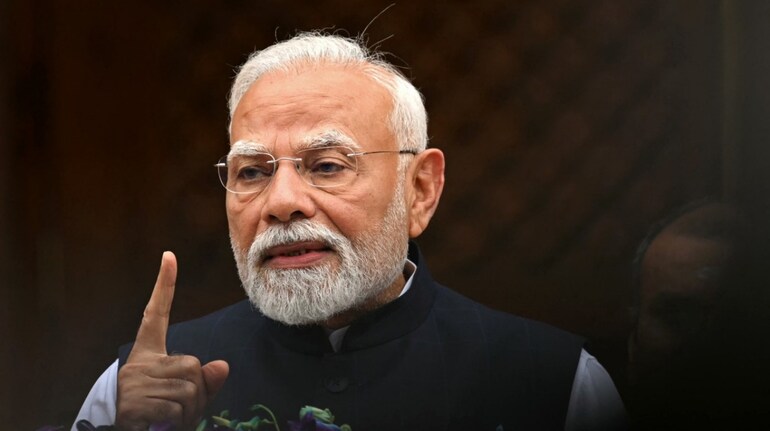
Prime Minister Narendra Modi will begin a crucial official visit to the United Kingdom on July 23, where he is expected to raise strong concerns about the rising threat of Khalistani extremism in Britain — an issue that has been a longstanding irritant in India-UK relations. The talks with newly-elected UK Prime Minister Keir Starmer are likely to focus not just on trade and strategic ties but also on what New Delhi views as London’s inaction against separatist elements operating with impunity on British soil.
Addressing a special press conference on Tuesday, Foreign Secretary of India Vikram Misri said, “The issue of the presence of Khalistani extremists, bodies close to these people, is something that we have brought to the attention of our partners in the UK. We will continue to do so. This is a matter of concern not only to us but should be a matter of concern to our partners as well because this impacts social cohesion and social order in these other countries as well.”
PM Modi had flagged the issue prominently during the G7 Summit in Italy in June 2025, where he met Starmer on the sidelines. The prime minister is understood to have expressed India’s deep frustration with the UK’s continued tolerance of Khalistani propaganda and activities, including attacks on Indian diplomatic missions and the open glorification of terrorism.
Rising threat of Khalistani extremismIndia has repeatedly raised alarms over the resurgence of Khalistani extremism in the UK, where fringe groups have been operating under the guise of advocacy and free speech. In recent years, the Indian High Commission in London has faced multiple security threats, most notably in March 2023, when a group of Khalistani sympathisers vandalised the Indian mission, pulled down the national flag, and clashed with police, while UK authorities failed to respond with the urgency New Delhi expected.
These groups have also taken to social media platforms to spread disinformation, incite violence, and radicalise youth in both India and the Indian diaspora. Intelligence reports from Indian agencies suggest that several individuals with known links to banned organizations like Sikhs for Justice (SFJ) continue to organise rallies and fundraising events in British cities with little to no pushback from local law enforcement.
India’s growing frustrationDespite repeated diplomatic protests and the sharing of detailed dossiers, India believes the UK has not taken concrete steps to crack down on extremist financing, anti-India propaganda, or the misuse of British freedoms by Khalistani operatives. New Delhi has expressed particular concern over the UK's failure to prosecute individuals involved in direct threats to Indian sovereignty, and sees this as a gap in counterterrorism cooperation between the two nations.
At a time when India is seeking deeper cooperation with the UK, including on trade, defence, and technology -- the lack of movement on this sensitive issue has become a stumbling block. Indian officials have emphasized that the safety of Indian diplomatic personnel and the sovereignty of the Indian state are non-negotiable, and that repeated incidents of vandalism and threats must be met with strong legal action.
What to expect from the talksDuring the bilateral meeting, PM Modi is expected to reiterate India’s demand for a zero-tolerance approach toward extremist groups. New Delhi will likely press for greater intelligence sharing, monitoring of overseas funding to Khalistani outfits, and the extradition of wanted individuals sheltered in the UK. There may also be calls for stricter oversight of events and rallies that promote secessionism or glorify terrorist acts.
For Prime Minister Starmer, the talks present an early test of his government’s foreign policy approach to India -- a key partner in the Indo-Pacific and a top priority in the UK's post-Brexit global outreach. While his administration has pledged to reset relations with key global partners, how it handles the Khalistan issue will be closely watched in both London and New Delhi.
If Britain hopes to finalise a long-pending Free Trade Agreement (FTA) with India, it will have to demonstrate sincerity on India’s core security concerns. Failure to act meaningfully on Khalistani extremism risks not only damaging diplomatic goodwill but also jeopardizing broader economic and strategic cooperation.
As the two prime ministers meet, the world will be watching to see if the UK takes its first real steps toward dismantling Khalistani networks within its borders — or if India’s warnings continue to fall on deaf ears.
Discover the latest Business News, Sensex, and Nifty updates. Obtain Personal Finance insights, tax queries, and expert opinions on Moneycontrol or download the Moneycontrol App to stay updated!
Find the best of Al News in one place, specially curated for you every weekend.
Stay on top of the latest tech trends and biggest startup news.