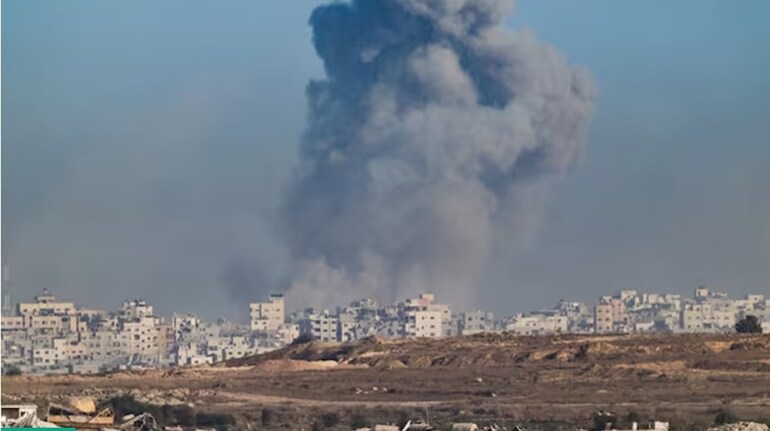
The latest round of strikes between Israel and Iran has escalated into an open aerial confrontation. Coordinated attacks by Israeli and American forces penetrated deep into Iranian airspace, targeting military infrastructure across multiple provinces.
Satellite imagery and field reports suggest that several radar installations and missile batteries were neutralised during the operation, highlighting vulnerabilities in what had been perceived as a robust, multi-layered air defence network.
What is HQ-9B-backed infrastructure?
The term “HQ-9B-backed infrastructure” refers to the entire network surrounding China’s HQ-9B long-range surface-to-air missile system. It includes missile launchers, phased-array radar systems, command centres, communication links, and mobile transporter-erector vehicles designed to operate in a coordinated fashion.
The HQ-9B is capable of countering fighter jets, cruise missiles, and high-altitude threats over considerable distances, but its effectiveness depends heavily on real-time sensor data and command coordination.
Iran’s layered air defence design
Iran’s air defence combines Russian, Chinese, and indigenous systems arranged in concentric defensive rings. Long-range systems such as S-300PMU-2 batteries and HQ-9B missiles form the outer layer, aimed at intercepting high-altitude threats before they reach critical infrastructure.
Indigenous platforms like Bavar-373 provide overlapping coverage. Closer to key areas, mobile medium-range batteries, including Khordad-15 and Raad units, and point-defence systems handle intruders that penetrate the outer layers.
Limits exposed by recent strikes
Reports indicate that the recent attacks targeted radar installations and command nodes, disrupting the “nervous system” of Iran’s air defence. Analysts suggest that stand-off weapons, electronic warfare, and drone swarms were combined to test Iran’s defensive seams. Without fully integrated sensor networks and real-time data sharing, even advanced missile systems like the HQ-9B struggle to respond effectively.
Integration challenges in Iran’s Air defence
Unlike Western systems, Iran’s air defence network is a mix of technology from multiple sources. “True multi-sensor integration, where radars, command posts, and launchers operate seamlessly, remains a work in progress,” analysts note. Recent strikes likely exploited these gaps by first neutralising sensors and command infrastructure, leaving missile batteries less effective.
HQ-9B performance under scrutiny
The HQ-9B, developed by China Aerospace Science and Industry Corporation, has been deployed by Iran to bolster its long-range defence. Senior Iranian lawmaker Abolfazl Zohrevand stated that China’s systems would close “critical operational gaps" against high-altitude threats. However, China has publicly denied delivering HQ-9Bs to Iran.
Recent US-Israel strikes have raised questions about the system’s effectiveness, mirroring concerns from Pakistan’s experience during India’s Operation Sindoor in May 2025. There, HQ-9 systems supplied to Pakistan failed to adequately defend against stealth and precision attacks, allowing Indian forces to strike several key military targets.
Lessons for modern air defence
The strikes demonstrate that advanced missile systems alone are insufficient. The ability to integrate sensors, share data, and maintain resilience under electronic attack is critical. Iran’s mixed results emphasize that air defence requires not only capable missiles but a coherent, networked command and sensor structure to respond effectively to sophisticated, coordinated strikes.
Discover the latest Business News, Sensex, and Nifty updates. Obtain Personal Finance insights, tax queries, and expert opinions on Moneycontrol or download the Moneycontrol App to stay updated!
Find the best of Al News in one place, specially curated for you every weekend.
Stay on top of the latest tech trends and biggest startup news.