






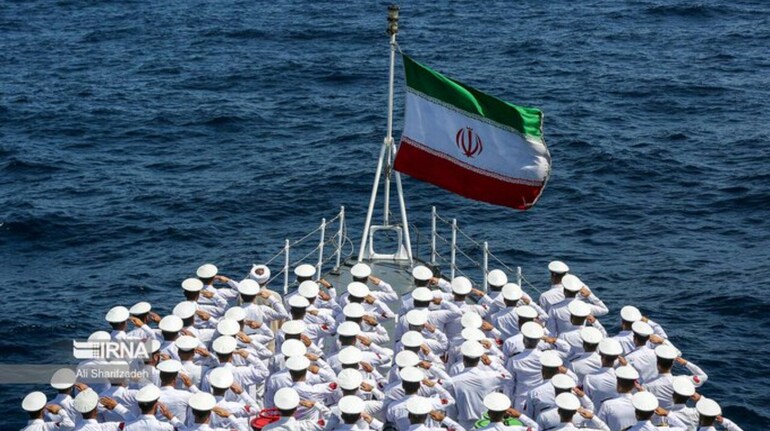

Iranian Foreign Minister Seyed Abbas Araghchi has sharply criticised the United States following the sinking of the Iranian frigate Dena, calling the incident an "atrocity at sea."
In a post on X, Araghchi said the warship - which he described as a "guest of India's Navy" carrying nearly 130 sailors - was struck without warning in international waters about 2,000 miles from Iran's shores.
"The US has perpetrated an atrocity at sea," he wrote, warning that Washington would "come to bitterly regret the precedent it has set."
The U.S. has perpetrated an atrocity at sea, 2,000 miles away from Iran's shores. Frigate Dena, a guest of India's Navy carrying almost 130 sailors, was struck in international waters without warning. Mark my words: The U.S. will come to bitterly regret precedent it has set. pic.twitter.com/cxYiI9BLUk— Seyed Abbas Araghchi (@araghchi) March 5, 2026
The frigate IRIS Dena was reportedly returning home after participating in MILAN 2026, a multinational naval exercise hosted by India, along with the International Fleet Review in Visakhapatnam, only weeks earlier.
Sri Lankan Navy and Defence Ministry sources described the sinking as resembling a submarine torpedo strike. Distress calls were reportedly intercepted between 5:08 am and 5:30 am local time, indicating a massive underwater explosion. The blast is believed to have caused a catastrophic breach in the hull, leading to rapid flooding before the vessel disappeared from radar and sank within minutes.
Analysts say the silent nature of the strike and absence of any surface radar signature point to a possible attack by a nuclear-powered attack submarine (SSN) operating in deep waters. While no country has officially claimed responsibility, experts believe the operation bears the hallmarks of a covert high-seas strike designed to avoid direct escalation through air or surface warfare.
According to an Indian defence assessment, the timing of the incident is notable. It comes shortly after Iran claimed it had hit a US Navy destroyer with a missile in the Indian Ocean, suggesting the sinking could be interpreted as a strategic signal to Tehran that its naval vessels are vulnerable even far from the Persian Gulf.
For Washington, such an operation would represent a "high-seas neutralisation" approach, targeting Iranian naval assets in deep international waters rather than conducting strikes in more sensitive areas such as the Arabian Sea or the Persian Gulf, where the risk of broader confrontation is higher.
Indian maritime and intelligence experts have also raised concerns about the implications for India's economic and energy security. Although the incident occurred outside Indian waters, the presence of an active conflict zone south of Sri Lanka suggests that the West Asia conflict is beginning to spill into the wider Indian Ocean region.
India remains highly dependent on imported energy, with roughly 85-88 percent of its crude oil sourced from abroad. Nearly 40 percent of these supplies transit through the Strait of Hormuz, a critical chokepoint that Iran has threatened to close amid rising tensions.
The Indian Ocean carries an estimated 30-40 percent of global maritime trade, including vital shipping routes linking Asia with Europe and the Middle East.
Discover the latest Business News, Sensex, and Nifty updates. Obtain Personal Finance insights, tax queries, and expert opinions on Moneycontrol or download the Moneycontrol App to stay updated!
Find the best of Al News in one place, specially curated for you every weekend.
Stay on top of the latest tech trends and biggest startup news.





