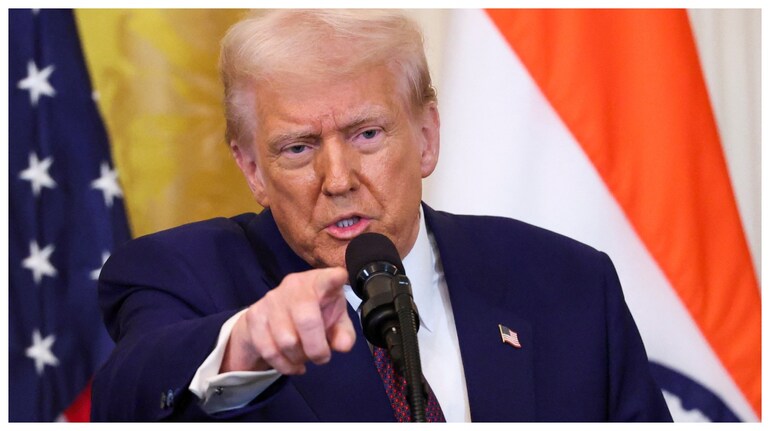
Investors are betting against the US dollar as Donald Trump's tariff threats and economic uncertainty raise concerns about the currency's long-term stability.
Increasing numbers of investors are betting against the US dollar as there are indications that the American economy is slowing down and concerns that deepening trade wars will further reduce the value of the currency, a Bloomberg report says
A change in sentiment in the markets
Though Trump's tariff threats temporarily lifted the dollar last week, asset managers like Invesco and Columbia Threadneedle, as well as hedge fund Mount Lucas Management, are changing their positions. Large financial institutions like Morgan Stanley and Societe Generale caution that long-dollar positions are crowded and might not stand the test of economic uncertainty.
Rather than reinforcing the dollar from inflationary sources, tariffs now present themselves as a threat to economic stability. Trump's cutbacks, global policy moves, and the consequence of his flop at brokering peace in Russia and Ukraine are all pushing the scepticism that surrounds the resilience of the greenback.
Risks of shorting the dollar
Although most investors are repositioning, the dollar's volatility is still high. It spiked last week after Trump declared 25% tariffs on Mexico and Canada and an extra 10% tax on Chinese imports. The currency also rose after a fiery Oval Office standoff between Trump and Ukrainian President Volodymyr Zelenskyy resulted in the collapse of a mineral wealth deal with Russia.
Yet European currencies rose as talk of defence budgets and the security of Ukraine boosted investor optimism. The euro was higher, while regional currencies like the Polish zloty and Romanian leu rose as expectations of increased European expenditure grew.
Economic data and market response
Subsequent US economic reports have given further cause for alarm. Home sales that are pending have plummeted to historical lows, while unemployment claims have increased as a result of federal workforce reductions. These indicators of economic vulnerability are building on bearish sentiment for the dollar.
For a while, the market only priced the good side of the administration's policies," said David Aspell, co-chief investment officer at Mount Lucas. "You also need to price through the full things that are going to be growth-negative.
Mount Lucas has gone short, betting against the dollar versus the British pound and Mexican peso. Invesco has gone underweight on the dollar, and Columbia Threadneedle's Ed Al-Hussainy has been shorting the dollar versus emerging-market currencies since December.
The Fed's role in dollar fluctuations
The bond market is also showing the shifting mood. Two-year Treasury yields have been pushed to their lowest levels since October by traders, who are expecting more Federal Reserve rate cuts. Market participants now anticipate almost 0.70 percentage points of Fed rate cuts by the end of the year, versus 0.85 percentage points for the European Central Bank.
"A drop lower in yields on further indications of economic frailty is the dollar bear thesis," said George Catrambone, DWS Americas head of fixed income. "To have a significant move lower in the dollar, you have to see the market price in further cuts, but it will also really depend on what other central banks are doing."
The effects of tariffs on the path of the dollar
Goldman Sachs strategists predict that the dollar could gain if Trump's sweeping tariffs go into effect, while Morgan Stanley argues that the dollar's major peers have become less responsive to trade war rhetoric. As a result, the dollar's trajectory remains uncertain.
As investors balance the economic risks, the dollar is still in a vulnerable spot. While short-term profits are achievable, longer-term headwinds could continue to chip away at confidence in the dollar's dominance.
Discover the latest Business News, Sensex, and Nifty updates. Obtain Personal Finance insights, tax queries, and expert opinions on Moneycontrol or download the Moneycontrol App to stay updated!
Find the best of Al News in one place, specially curated for you every weekend.
Stay on top of the latest tech trends and biggest startup news.