







While US President Donald Trump and his aides have projected the India-US trade agreement as a major win for Washington, a Bloomberg report suggests New Delhi had taken a far more resolute stance behind closed doors.
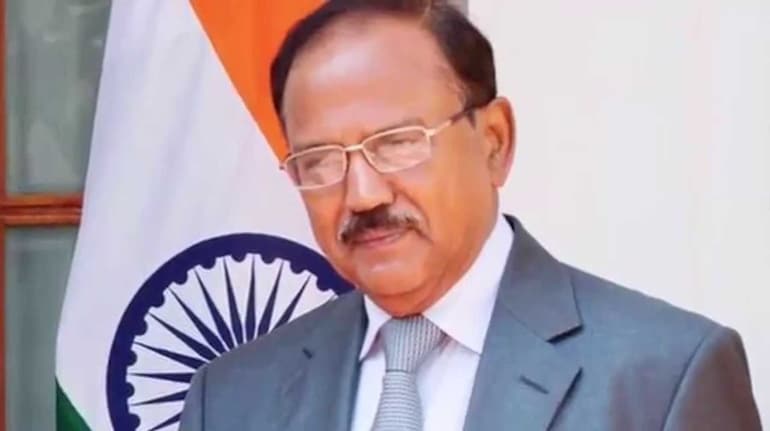
According to Bloomberg, the Narendra Modi government informed the Trump administration that India was prepared to wait out Trump’s presidential term rather than accept unfavourable trade terms. The position was conveyed during a private meeting between India’s National Security Adviser Ajit Doval and US Secretary of State Marco Rubio in early September 2025.
The meeting took place amid escalating tensions between the two countries, following sharp public criticism of India by senior Trump administration officials and the imposition of 50% tariffs on Indian exports, among the highest levied by the US globally.
Doval’s message to Washington
Bloomberg quoted Doval as telling Rubio that “India wouldn't be bullied by US President Donald Trump and his top aides, and would be willing to wait out his term, having faced other hostile US administrations in the past.”
Officials familiar with the meeting told Bloomberg that New Delhi also urged Washington to tone down its public rhetoric if it wanted bilateral ties to return to normal. Both India’s Ministry of External Affairs and the US State Department declined to comment, with sources saying the discussion was private.
Following the meeting, Trump’s public tone appeared to soften. Later that month, the US President called Prime Minister Narendra Modi to wish him on his birthday.
Escalating rhetoric and tariffs
Before the diplomatic outreach, India-US ties had sharply deteriorated. Trump and senior aides, including White House trade adviser Peter Navarro, repeatedly attacked New Delhi over its purchase of Russian crude and its refusal to open sensitive sectors such as agriculture and dairy to US companies.
Navarro went so far as to accuse India of aligning with “authoritarians” and framed the Russia-Ukraine conflict as “Modi’s war.” The rhetoric intensified after India rejected Trump’s claim that he had brokered a ceasefire between India and Pakistan during their four-day conflict in May 2025.
Tariffs were raised soon after, pushing bilateral relations to one of their lowest points in two decades.
Trade deal announcement sparks controversy
Despite the fraught backdrop, Trump announced the finalisation of the India–US trade deal on his Truth Social platform, bypassing diplomatic protocol. He said he had spoken with Modi, describing him as a close friend.
“It was an Honor to speak with Prime Minister Modi, of India, this morning. He is one of my greatest friends and, a Powerful and Respected Leader of his Country… We spoke about many things, including Trade,” Trump wrote.
While Modi acknowledged the conversation, he made no reference to the trade deal in his public statement.
Commerce and Industry Minister Piyush Goyal later confirmed that negotiations, which began in February 2025, had reached a “final form,” though detailed terms have not yet been released.
Opposition pressure and unanswered questions
Trump’s unilateral announcement placed the Modi government under domestic scrutiny. The absence of deal details has fuelled opposition claims that India may have conceded ground on oil imports or agricultural access, allegations the government has neither confirmed nor denied.
The Bloomberg report has since strengthened the government’s argument that India did not succumb to pressure. It suggests that New Delhi’s willingness to wait until Trump’s term ends in 2029 gave it leverage during negotiations.
Goyal defends agreement
Goyal said the deal safeguards national interests, particularly in agriculture and dairy.
“The much-awaited trade deal with the United States of America has been successfully concluded,” he said, adding that sensitive sectors had been protected and that a joint statement with full details would be issued soon.
Strategic patience
The report sheds light on what officials describe as “Doval diplomacy,” a backchannel effort to de-escalate tensions while keeping negotiations alive. It also underscores India’s broader strategy of strategic patience, signalling that New Delhi was willing to endure short-term friction rather than accept coercive terms.
As India and the US prepare to finalise technical details of the agreement, the Bloomberg disclosure highlights how the deal was shaped as much by quiet diplomacy as by public posturing.
Discover the latest Business News, Sensex, and Nifty updates. Obtain Personal Finance insights, tax queries, and expert opinions on Moneycontrol or download the Moneycontrol App to stay updated!
Find the best of Al News in one place, specially curated for you every weekend.
Stay on top of the latest tech trends and biggest startup news.





