






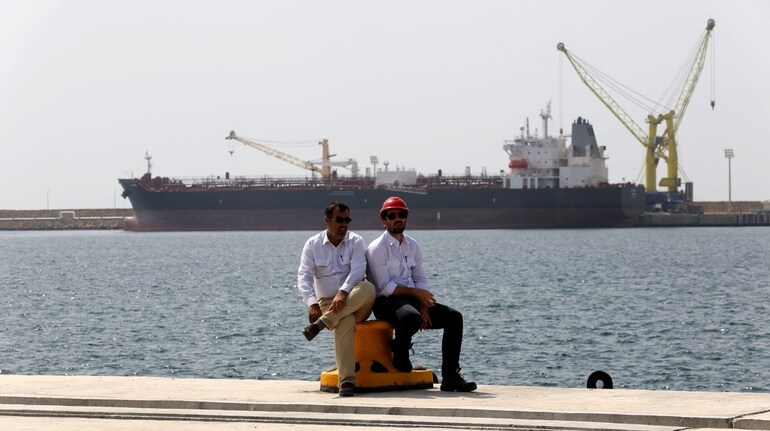

Unrest in Iran has once again pushed India’s most carefully crafted regional connectivity project into uncertain territory. As protests shake Tehran and questions grow over the durability of Iran’s political system, New Delhi is quietly reassessing the future of its nearly $500 million investment in the Chabahar Port.
For India, this is not just about turmoil inside Iran. It is about losing its only reliable land bridge to Afghanistan and Central Asia, at a time when Pakistan blocks overland access and China is rapidly expanding its footprint across West Asia.
The anxiety has been compounded by a fresh geopolitical shock. US President Donald Trump has announced a 25 percent tariff on countries doing business with Iran, a move that has revived fears of secondary sanctions and left Indian policymakers weighing economic risks against long-term strategic losses.
Why Chabahar matters so much to India
The Chabahar Port is the cornerstone of India’s westward connectivity strategy. Located on Iran’s southeastern coast, the port allows Indian goods to reach Afghanistan and Central Asia without passing through Pakistan. Over the years, New Delhi has committed close to $500 million through port operations, infrastructure development and credit lines linked to road and rail connectivity from Chabahar to Afghanistan.
The logic was simple. Geography had boxed India in, and Chabahar offered a rare escape. It was never just a commercial port but a strategic instrument that gave India access, influence and leverage in a difficult neighbourhood.
However, as multiple reports note, that logic depends entirely on stability in Iran and political space for India to operate.
How unrest in Iran threatens the project
Prolonged protests or a messy power transition in Tehran raise immediate red flags for long-gestation infrastructure projects. Port operations, security guarantees, customs regimes and transit agreements all rely on a functioning and predictable state.
Former Indian diplomat Anil Trigunayat, in conversation with Moneycontrol, has warned that instability in Iran could seriously disrupt India’s plans. As he told Moneycontrol, uncertainty in Tehran increases the risk that “projects like Chabahar could slow down further or be overtaken by other external players who have deeper pockets and fewer constraints”.
Indian officials are particularly concerned that in a crisis scenario, Tehran may prioritise partners who can offer quick financial relief and political backing.
Trump’s tariff threat adds pressure
India’s worries have sharpened after Trump’s announcement of a 25 percent tariff on countries trading with Iran. While Chabahar has previously enjoyed limited sanctions waivers due to its role in Afghanistan’s development, New Delhi knows such exemptions are political, not permanent.
Any escalation in US pressure would make it harder for Indian companies, banks and insurers to stay involved. The risk is not only higher costs but exposure to punitive trade measures at a time when India is already managing complex trade negotiations with Washington.
As one Moneycontrol report points out, this puts India in a bind. Walking away from Chabahar would be a strategic retreat. Staying the course could invite economic penalties.
China waiting in the wings
The biggest long-term risk for India is not just instability but who fills the vacuum if India hesitates. China is already Iran’s largest trading partner and its main buyer of sanctioned oil. The 25-year China-Iran strategic cooperation agreement signed in 2021 has laid the groundwork for deeper Chinese involvement in ports, energy and infrastructure.
If Iran’s economy weakens further, Beijing is well placed to step in with capital, technology and political cover. In such a scenario, India’s presence at Chabahar could be marginalised or crowded out entirely.
Trigunayat has cautioned that China’s ability to operate with fewer political constraints gives it an edge in unstable environments, something India cannot easily match.
Why India prefers stability over change
There is a common assumption that regime change in Iran would automatically benefit external partners. Indian strategists do not share that optimism. New Delhi has learned how to work with Iran’s current power structure, however restrictive it may be. What worries India is unpredictability, not ideological discomfort.
A fragmented or externally dependent Iran would narrow India’s options, weaken its regional balancing strategy and potentially hand China a decisive advantage. In that sense, even an uneasy stability in Tehran serves India better than prolonged chaos.
For now, New Delhi appears to be in wait-and-watch mode. But with unrest inside Iran and renewed US pressure from Washington, India’s $500 million Chabahar bet is facing its most serious test yet.
Discover the latest Business News, Sensex, and Nifty updates. Obtain Personal Finance insights, tax queries, and expert opinions on Moneycontrol or download the Moneycontrol App to stay updated!
Find the best of Al News in one place, specially curated for you every weekend.
Stay on top of the latest tech trends and biggest startup news.





