






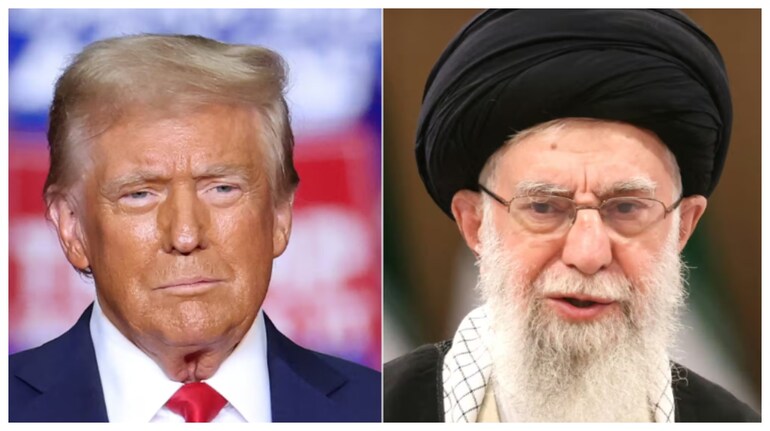
For decades, Iran has planned for a conflict it knew it could never win outright. Against the overwhelming military superiority of the United States, Tehran built a different playbook. Rather than seeking battlefield dominance, it focused on deterrence through cost. Even after Israeli and American strikes last year damaged parts of its military infrastructure and amid growing domestic unrest, Iran retains the ability to retaliate in ways that would be painful, unpredictable and difficult to contain.
As US forces surge into the region and Donald Trump warns of possible action, the central question is not whether Iran can defeat the United States. It is how much damage it can still inflict if it believes the regime itself is at risk, CNN reported.
Missiles and drones remain Iran’s frontline threat
Iran’s most immediate option lies in its missile and drone arsenal. Over years of sanctions and isolation, Tehran invested heavily in systems designed to offset its lack of modern aircraft and naval power. The result is a vast stockpile of ballistic missiles and one-way attack drones capable of striking US bases across the Middle East, as well as targets inside Israel.
These weapons are not theoretical. Iran demonstrated their effectiveness in recent confrontations, when waves of missiles and drones managed to breach sophisticated air defence systems. While many were intercepted, enough got through to cause real damage and signal that Iran’s deterrent still works.
US officials acknowledge that tens of thousands of American troops stationed across the region remain within range. Even limited, calibrated strikes could force Washington into a broader conflict it may be trying to avoid.
Proxy forces, weakened but still dangerous
Iran’s regional network of armed allies has been battered over the past two years. Israeli operations have degraded Hezbollah’s capabilities in Lebanon, while US pressure has constrained Iranian-backed militias in Iraq. Yet these groups have not disappeared.
Militias such as Kataeb Hezbollah in Iraq and the Houthis in Yemen have openly declared their willingness to act if Iran is attacked. Even in a weakened state, these groups retain the ability to target US personnel, allies and shipping routes, often in ways that provide Tehran with plausible deniability.
The Houthis, in particular, have shown how a relatively unsophisticated force can disrupt global trade. Their earlier attacks on shipping in the Red Sea forced rerouting of vessels and drove up insurance and freight costs. A renewed campaign, coordinated with Iran, could again strain global supply chains.
The Strait of Hormuz and the global economy
Perhaps Iran’s most powerful leverage point is economic rather than military. Sitting astride the Strait of Hormuz, Iran has the capacity to disrupt one of the world’s most critical energy chokepoints. More than a fifth of global oil flows through the narrow channel, along with large volumes of liquefied natural gas.
Iran has repeatedly threatened to close or disrupt the strait in the event of war. Even partial interference, through naval mines, fast-attack boats or drone strikes, could send oil prices sharply higher and fuel inflation worldwide. For energy-importing economies already grappling with fragile growth, the consequences would be immediate.
Such a move would also hurt Iran and its neighbours, making it a last-resort option. But experts warn that if Tehran views US action as existential, economic self-harm may not be a deterrent.
Asymmetric warfare as a long game
Iran’s strategy has always relied on asymmetry. Rather than seeking a decisive confrontation, it aims to stretch conflicts over time, raise costs and exploit political divisions among its adversaries. Mines in shipping lanes, cyber operations, drone harassment and indirect attacks by proxies all fit this model.
History offers warnings. During the late stages of the Iran-Iraq war in the 1980s, Iranian mining operations nearly sank US naval vessels and forced Washington into a risky escalation. Similar tactics today, combined with more advanced drones and missiles, could prove even more disruptive.
Why escalation risks spiralling fast
For Washington, the challenge is that none of these Iranian responses would look like a conventional declaration of war. Instead, they would unfold across multiple fronts, often just below the threshold that triggers all-out retaliation. That ambiguity is precisely what gives Iran leverage.
A single US strike might be intended as a warning. Tehran’s response, however, could unfold over weeks or months, targeting troops, allies and markets in ways that gradually pull the region into a wider crisis.
A conflict with global consequences
Iran’s power today is not what it was a decade ago. Its economy is strained, its proxies weakened and its population restless. Yet it remains capable of shaping events far beyond its borders. Any US decision to strike would have to account not just for immediate military objectives, but for the cascading effects that could follow.
The real danger is not a sudden, decisive war. It is a drawn-out confrontation in which Iran, wounded but still dangerous, uses every tool it has to make escalation costly for everyone else.
Discover the latest Business News, Sensex, and Nifty updates. Obtain Personal Finance insights, tax queries, and expert opinions on Moneycontrol or download the Moneycontrol App to stay updated!
Find the best of Al News in one place, specially curated for you every weekend.
Stay on top of the latest tech trends and biggest startup news.




