






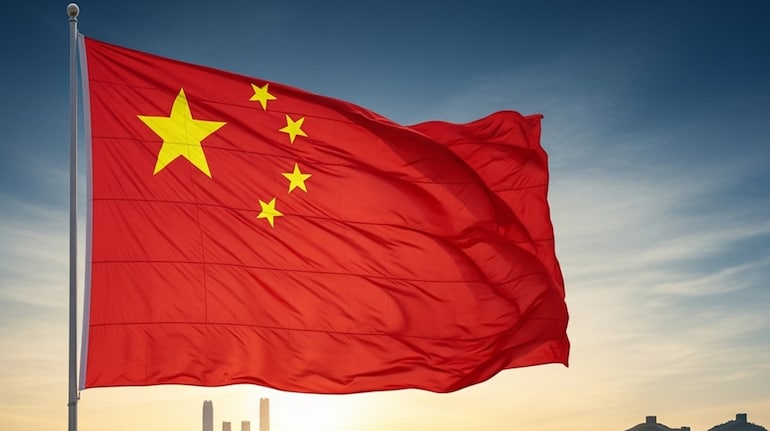
For decades, China’s rapid economic rise masked a critical weakness. It could not fully equip its own armed forces without foreign help. That gap is now narrowing fast. New jet engines powering China’s latest stealth fighters have become a visible symbol of a broader transformation in the country’s arms industry, one aimed at reducing dependence on overseas suppliers and positioning China as a peer competitor to the United States and its allies, the Wall Street Journal reported.
AECC and the engine problem China could not crack
The turning point came in 2016, when Beijing created Aero Engine Corp. of China, or AECC, a state-backed aerospace conglomerate tasked with mastering one of the most complex areas of modern military technology: high-performance aircraft engines. Jet engines had long been a bottleneck for China, forcing it to rely on Russian designs for frontline fighters and transport aircraft.
Less than a decade later, Chinese officials now say their newest stealth jets are flying with “Chinese hearts,” shorthand for indigenously developed engines. The change reflects a wider success. According to data from the Stockholm International Peace Research Institute, China’s share of global arms imports has fallen sharply, pushing it out of the world’s top 10 weapons buyers. Two decades ago, it was the single largest importer.
Why self-sufficiency is now a strategic doctrine
China once depended heavily on Russia and European suppliers for warplanes, air defence systems and engines, and even bought US military technology in the 1980s. Today, analysts say Beijing can manufacture most of the systems it needs, even if it still uses some foreign components for reasons of cost or performance.
That shift has strategic consequences. A more self-sufficient arms industry strengthens China’s ability to sustain military operations during a major conflict and reduces the leverage of Western export controls. It fits squarely within President Xi Jinping’s broader push to make China less vulnerable to what he has described as external “strangleholds,” from semiconductors to energy.
Reverse-engineering, espionage, and technology catch-up
The path has not been clean. Western officials and analysts say China has closed some technology gaps through espionage and illegal reverse-engineering. US authorities have disclosed cyber operations aimed at stealing aerospace and maritime technologies, and a Chinese aviation executive pleaded guilty in the US in 2016 to hacking American defence contractors. Russia has also accused China of copying aircraft designs it once sold to Beijing.
State restructuring and the “national champions” model
At the same time, China undertook major structural reforms. Its defence industry, long dominated by inefficient state giants, was reorganised to pool talent and capital. AECC combined engineers and researchers from dozens of institutes and was showered with billions of dollars in state funding to compete with Western engine makers. Shipbuilding firms were merged to create the world’s largest shipbuilder.
What has changed in the air
These moves are yielding tangible results. Newer versions of fighters such as the J-10 and J-11, once powered by Russian engines, are now flying with Chinese-made alternatives. China’s first stealth fighter, the J-20, was publicly shown with a domestic engine in 2021. Its second stealth design, the J-35, unveiled more recently, is also believed to rely on indigenous propulsion, making China the only country besides the US to operate more than one stealth fighter model.
Exports, hypersonics, and the widening portfolio
China’s progress extends beyond aviation. The country is now the world’s fourth-largest arms exporter, behind the US, France and Russia. It has showcased hypersonic missiles that Western analysts say challenge or exceed existing US capabilities.
The shipbuilding surge and the Fujian milestone
At sea, China has surged ahead in shipbuilding volume. Between 2015 and 2024, its navy launched more than twice as many vessels as the US, giving it the world’s largest fleet by hull count.
The commissioning of the Fujian, China’s first fully domestically designed aircraft carrier with electromagnetic catapults, marked another milestone. Earlier carriers were based on refurbished or derivative designs. The Fujian narrows a key technological gap with US supercarriers, even if operational experience still lags.
Where China still lags
Limits remain. US jet engines are widely regarded as more reliable, with longer operating lives between overhauls. Soviet- and Russian-designed aircraft still make up a significant share of China’s inventory, and foreign engines continue to power some helicopters and bombers.
The direction of travel is clear
Even so, the trajectory is unmistakable. China has moved from being one of the world’s most import-dependent militaries to one that increasingly designs, builds and exports its own weapons. The implication for rivals is simple: Chinese military systems are no longer experimental curiosities. They are maturing quickly, and their strategic impact will only grow.
Discover the latest Business News, Sensex, and Nifty updates. Obtain Personal Finance insights, tax queries, and expert opinions on Moneycontrol or download the Moneycontrol App to stay updated!
Find the best of Al News in one place, specially curated for you every weekend.
Stay on top of the latest tech trends and biggest startup news.




