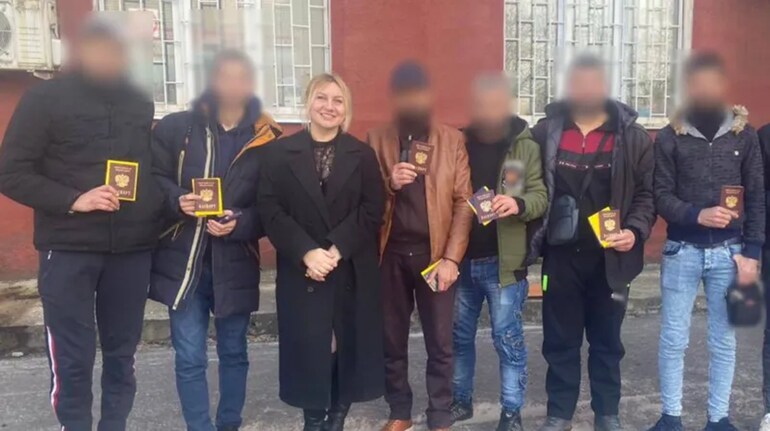
A Russian woman has been using social media to recruit hundreds of foreign men into Russia’s military, allegedly misleading them about the nature of their service and forcing them into frontline combat in Ukraine, an investigation has found.
The investigation focuses on Polina Alexandrovna Azarnykh, a 40-year-old former teacher from Russia’s Voronezh region, who runs a large Telegram channel promoting one-year military contracts, high salaries, and the prospect of Russian citizenship to men from economically vulnerable countries.
According to the BBC, Azarnykh issued nearly 500 official “invitation” documents over the past year, allowing foreign nationals to enter Russia and enlist in the armed forces. Most recruits come from Syria, Egypt, Yemen, Morocco, Nigeria, and other countries in the Middle East and Africa.
Recruitment process
The BBC discovered that Azarnykh’s Telegram channel instructs prospective recruits to send scans of their passports. She then provides the necessary invitation documents for entry into Russia, and recruits are met on arrival and taken to military recruitment centres.
Several men told the BBC they were promised non-combat roles, such as guarding facilities or working at checkpoints, with monthly salaries of up to $2,500 and sign-up bonuses worth several thousand dollars. Some were also told they would be eligible for Russian citizenship after completing a one-year contract.
However, multiple recruits said the contracts were written only in Russian, which they did not understand, and that they were sent to the front line after minimal training. Under a 2022 Russian decree, military contracts can be automatically extended until the end of the war, preventing soldiers from leaving after one year.
One Syrian recruit told the BBC he was deployed to the front line with just 10 days of training after refusing to pay Azarnykh an alleged $3,000 fee, which he says she demanded to keep him out of combat.
Other recruits and their families told the BBC that Azarnykh threatened those who complained, including relatives who spoke out publicly.
Moscow relies on non-traditional recruitment
Kateryna Stepanenko, a research fellow at the Institute for the Study of War, said some regional authorities in Russia offer cash incentives of up to $4,000 to individuals who recruit soldiers, indicating that Moscow is increasingly relying on non-traditional channels to maintain troop numbers.
Discover the latest Business News, Sensex, and Nifty updates. Obtain Personal Finance insights, tax queries, and expert opinions on Moneycontrol or download the Moneycontrol App to stay updated!
Find the best of Al News in one place, specially curated for you every weekend.
Stay on top of the latest tech trends and biggest startup news.