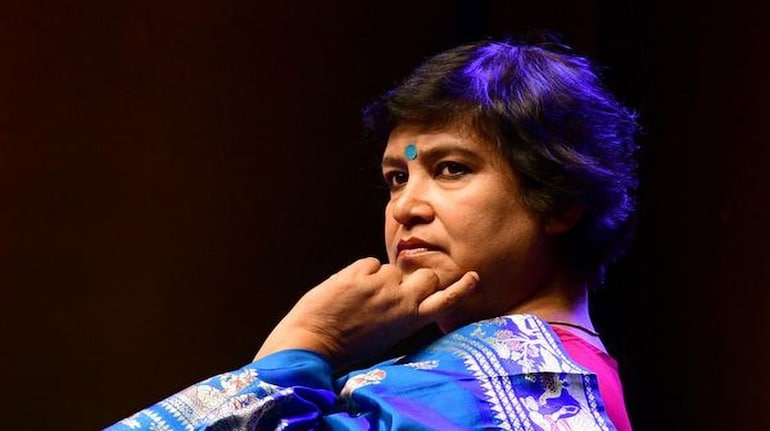

Exiled Bangladeshi writer Taslima Nasreen reacted sharply on Tuesday to the death of former prime minister Khaleda Zia, accusing the late leader of institutionalising censorship, aligning with religious extremists and ensuring that she remained barred from returning to her homeland.
In a post on X, Nasreen said Zia never allowed her to return to Bangladesh during her years in power and held her directly responsible for banning several of her books. Nasreen has lived in exile for decades after facing sustained threats from Islamist groups and pressure that the Bangladeshi state failed to counter.
Nasreen, who has been living in India for years, said Zia’s government actively sided with fundamentalist forces instead of defending free expression. She recalled that legal action was initiated against her for challenging religious orthodoxy, turning the state into an enforcer of ideological conformity.
“In 1994, she sided with jihadists by filing a case for ‘hurting religious sentiments’ against a secular, humanist, feminist, free-thinking writer," Nasreen wrote.
Khaleda Zia has passed away. She was 80 years old. From a housewife she became a party chief, and served as the country’s prime minister for ten years. She lived a successful life—a long life. Sheikh Hasina kept her in jail for two years; apart from that period, I don’t think she…— taslima nasreen (@taslimanasreen) December 30, 2025
“She issued an arrest warrant against the writer. And then she unjustly expelled that writer, me, from my own country. During her rule, she did not allow me to return home," she added.
Questioning whether Zia’s death could now undo years of official censorship, Nasreen asked if the bans imposed during her tenure would finally be reversed.
“…with her death, will the bans on the books she had banned not be lifted? They should be lifted," she wrote.
Nasreen listed several works that were prohibited under Zia’s rule, including Lajja (1993), Utal Hawa (2002), Ka (2003) and Those Dark Days (2004). She argued that even after stepping away from active politics, Zia never attempted to restore artistic freedom or roll back the prohibitions.
“While she was alive, she did not stand up for freedom of expression by lifting the bans on those books. If her death now ends up protecting freedom of expression, so be it," Nasreen said.
Lajja, which translates to shame, documented violence against Hindus following the Babri Masjid demolition in 1992. Though the ban imposed in 1993 was briefly lifted, it was reinstated after protests by religious groups. In 1994, additional titles such as Fera (Divorce), Phera (Return) and Nirbasan (Exile) were also banned, with the state citing threats to public order and religious sentiment.
As mobs attacked her and death threats intensified from extremist groups aligned with Zia’s Bangladesh Nationalist Party, Nasreen fled Bangladesh in 1994. She first took refuge in Sweden before relocating to India years later, becoming one of the most prominent symbols of Bangladesh’s shrinking space for dissent.
Khaleda Zia, 80, died early Tuesday after a prolonged illness. She was being treated for heart and lung infections and pneumonia, according to national media. Although she had been out of power since 2006 and spent years either in jail or under house arrest, Zia continued to command loyalty within the BNP.
The party is widely seen as the frontrunner in parliamentary elections due in February next year. Zia’s son and acting BNP chief Tarique Rahman returned to Bangladesh last week after nearly 17 years in self-exile and is being positioned as a leading contender for the prime minister’s post, even as critics warn that the country’s past record on intolerance and repression remains unresolved.
Discover the latest Business News, Sensex, and Nifty updates. Obtain Personal Finance insights, tax queries, and expert opinions on Moneycontrol or download the Moneycontrol App to stay updated!
Find the best of Al News in one place, specially curated for you every weekend.
Stay on top of the latest tech trends and biggest startup news.