







Balochistan, Pakistan’s largest province by landmass, has witnessed one of its most audacious insurgent offensives in years, exposing Islamabad’s weakening grip over the region. For over 40 hours, separatist fighters carried out coordinated attacks across multiple districts, directly challenging the Pakistan Army, police, and intelligence agencies.
The violence marks a sharp escalation in the decades-old Baloch insurgency, rooted in long-standing grievances over political marginalisation, economic neglect, and alleged repression by the Pakistani state.
The attacks were carried out under what the group calls its ongoing offensive, Operation Herof Phase II.
About Operation Hereof Phase II
The banned Balochistan Liberation Army (BLA) claimed responsibility for the coordinated attacks, saying its ongoing offensive, Operation Herof Phase II, has spread across large parts of the province.
Nearly 50 people were killed, including at least 17 security personnel, according to official figures. In response, Pakistan launched a prolonged counter-operation, with Balochistan Chief Minister Sarfraz Bugti stating that more than 140 militants were killed during the 40-hour battle.
The scale and coordination of the attacks have raised questions about Pakistan’s internal security capabilities.
As part of Operation Herof-II, BLA fighters struck at least 12 cities. In statements issued by spokesperson Jeeyand Baloch, the group said operations were completed in Kharan, Mastung, Tump, and Pasni, while clashes continued elsewhere. The BLA also claimed it pushed back Pakistani forces in parts of Quetta and Noshki, calling the offensive a challenge to Pakistan’s control over Balochistan.
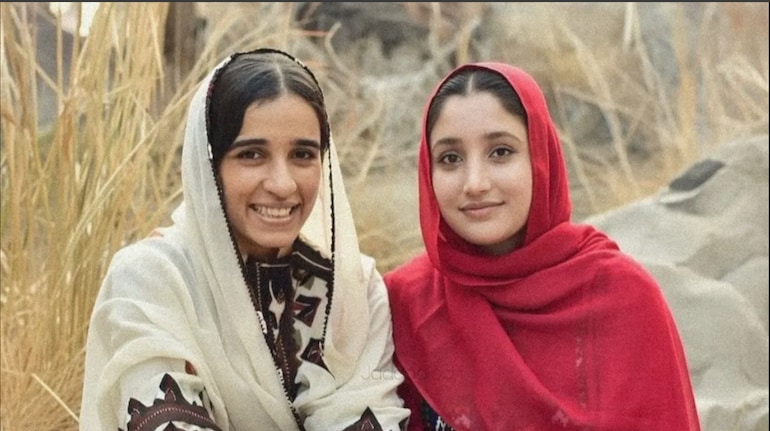
In the deadly attack, the banned BLA used women ‘fidayeen’ attackers, releasing images of two of them as a video of one assault went viral on social media.
Hawa Baloch
Alongside Asifa Mengal, another woman identified as Hawa Baloch, alias Droshum, has emerged prominently in BLA messaging. The group claims she was a member of its elite Majeed Brigade and fought on the Gwadar front during Operation Herof Phase II.
The BLA has portrayed her as both a combatant and an ideological figure, comparing her symbolic role to Mahsa Amini in Iran. Reports circulated by the group claim she was a writer before joining the armed movement and that her father, also involved in the Baloch struggle, was killed in combat years ago.
Her participation near Gwadar, a key node of the China-Pakistan Economic Corridor (CPEC), has been highlighted as strategically significant. The group described her death as “martyrdom”.
Asifa Mengal
Asifa Mengal, 24, has been identified by the BLA as one of the female attackers involved in the latest wave of violence. The group claims she hailed from Nushki district and was the daughter of Mohammad Ismail.
Born in October 2002, she reportedly joined the BLA’s Majeed Brigade after turning 21. According to the group, she volunteered last year to become a “fidayee”, committing herself to a suicide mission.
The BLA claims Asifa played a key role in an attack on an Inter-Services Intelligence (ISI) facility in Nushki. Images released by the group show her in militant attire, widely seen as an attempt to elevate her into a symbol of resistance.
Why is BLA pushing women fighters to the forefront?
Analysts say the deployment of women fighters marks a strategic shift aimed at increasing psychological pressure on the state and attracting international attention.
In videos released by the group, one of the women accuses Pakistan of targeting Baloch families, framing the violence as retaliation rather than aggression, an attempt to recast the insurgency as a broader ideological struggle.
Conflicting casualty claims
According to the BLA, more than 200 personnel from the Pakistan Army, police, and Frontier Corps were killed, with at least 17 captured. The group described these as “preliminary and cautious estimates”.
While these figures remain unverified, Chief Minister Sarfraz Bugti acknowledged that 17 law enforcement personnel and 31 civilians were killed, contradicting attempts to downplay the scale of the violence.
Pakistan’s military claimed it killed 92 militants on Saturday and 41 on Friday, though skepticism persists due to the lack of a detailed operational briefing.
Release of officials exposes Islamabad’s weakness
In a move that further embarrassed authorities, the BLA said it detained and later released Noshki Deputy Commissioner Muhammad Hussain Hazara and Assistant Commissioner Maria Shamoo, describing the act as a “humanitarian gesture”.
The group warned that officials assisting what it termed the “occupying army” would be treated as hostile targets, highlighting gaps in Pakistan’s ability to secure even senior civil administrators.
History of Balochistan
As British rule neared its end in 1947, the princely state of Kalat sought independence under its ruler, Mir Ahmed Khan. On August 12, 1947, the Khan declared Balochistan independent after signing an agreement with the Muslim League that entrusted security to Pakistan.
However, Britain later ruled that Balochistan was incapable of functioning as an independent state. Pakistan subsequently pressured Kalat to merge, a move opposed by the Baloch assembly.
On March 18, 1948, Pakistan announced the separation of key Baloch regions, isolating Kalat. With no external support forthcoming, the Pakistani army entered Balochistan on March 26, 1948, forcing the Khan to accept accession.
Balochistan’s brief independence lasted 227 days, sowing deep resentment. The first rebellion, led by Prince Karim Khan in 1948, was crushed, setting the stage for decades of insurgency that continue to this day.
Discover the latest Business News, Sensex, and Nifty updates. Obtain Personal Finance insights, tax queries, and expert opinions on Moneycontrol or download the Moneycontrol App to stay updated!
Find the best of Al News in one place, specially curated for you every weekend.
Stay on top of the latest tech trends and biggest startup news.





