






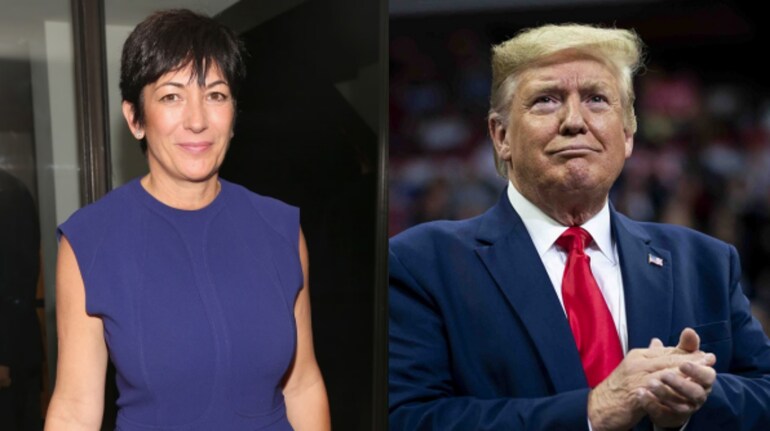

Ghislaine Maxwell’s offer to testify in exchange for clemency has once again pushed Donald Trump’s record on presidential pardons into the spotlight, reviving questions about how he has used executive power in moments of political pressure, personal proximity and controversy.
Maxwell, the former girlfriend and associate of Jeffrey Epstein, has signalled through her legal team that she is willing to cooperate if President Trump intervenes to end her prison sentence. The proposal immediately drew attention not only because of Epstein’s global notoriety, but also because it follows a pattern in which Trump’s clemency decisions have often intersected with loyalty, politics and public narratives of victimhood.
What Maxwell is offering
During a closed-door deposition, Maxwell’s lawyer David Oscar Markus told lawmakers that his client was prepared to testify if granted clemency.
“Maxwell is prepared to speak fully and honestly if granted clemency by President Trump,” Markus said in a statement to the committee.
He further claimed that both Trump and former President Bill Clinton were not implicated in wrongdoing connected to Epstein. Markus said Trump and Clinton “are innocent of any wrongdoing,” adding that “Ms. Maxwell alone can explain why, and the public is entitled to that explanation.”
The statement effectively frames clemency not as mercy, but as a transaction tied to testimony that could shape public understanding of one of the most explosive scandals involving elite power networks.
Why this is not an isolated moment
Maxwell’s appeal lands in familiar territory for Trump. Throughout his political career, Trump has viewed clemency not just as a corrective tool, but as a means of countering what he describes as politicised prosecutions.
In both his first term and his current presidency, Trump has repeatedly argued that the justice system has been weaponised against allies, supporters or ideological fellow travellers. That worldview has shaped several of his most controversial clemency decisions.
January 6 convicts and the politics of pardons
During his current presidency, Trump has openly considered clemency for individuals convicted over the January 6, 2021 Capitol attack.
He has portrayed many of those prosecuted as victims of political targeting rather than perpetrators of violence. Supporters see this as consistency with his anti-establishment stance, while critics argue that pardons would erode accountability for an attack on democratic institutions.
The issue remains one of the most polarising tests of how Trump exercises presidential power and how far he is willing to stretch the meaning of clemency.
Loyalty and the Russia probe: Roger Stone
One of the most scrutinised clemency decisions of Trump’s first term involved Roger Stone, a longtime associate and political confidant.
Stone had been convicted of lying to Congress, obstructing an investigation and witness tampering during the Russia probe. Trump commuted Stone’s sentence and later issued a full pardon, arguing that Stone was the victim of political persecution.
Critics countered that the move rewarded loyalty and sent a signal that close allies could escape the consequences of obstructing investigations connected to the president himself.
Ideology and culture wars: Dinesh D’Souza
In 2018, Trump granted a full pardon to conservative commentator Dinesh D’Souza, who had pleaded guilty to campaign finance violations.
Trump said D’Souza had been treated unfairly by prosecutors, but the case followed standard legal procedures. The pardon reignited criticism that Trump was using clemency to advance ideological narratives and culture war grievances rather than address clear miscarriages of justice.
Defying courts: Joe Arpaio
Trump’s 2017 pardon of former Arizona sheriff Joe Arpaio marked an early signal of how he viewed executive clemency.
Arpaio had been convicted of criminal contempt for defying a federal court order that prohibited racial profiling during immigration enforcement. Trump justified the pardon by praising Arpaio’s tough stance on border security.
Civil rights groups and legal experts warned that the decision sent a dangerous message that law enforcement officials could ignore court orders if their politics aligned with the White House.
Family ties: Charles Kushner
In one of the most controversial decisions of his first term, Trump pardoned Charles Kushner, the father of his son-in-law Jared Kushner.
Charles Kushner had served time for tax evasion, illegal campaign donations and witness retaliation. The pardon reignited debate over ethical boundaries, with critics calling it an example of personal and familial favouritism.
Why the Maxwell case is different
What sets Maxwell’s appeal apart is the explicit linkage between clemency and testimony.
Unlike previous cases framed as correcting injustice or rewarding loyalty, Maxwell’s offer presents clemency as leverage in exchange for narrative control over a scandal that continues to implicate powerful figures across politics, business and royalty.
With Epstein-related documents continuing to surface and public scrutiny intensifying, any decision by Trump would carry enormous political and moral consequences.
What comes next
For now, Trump has not indicated whether he will act on Maxwell’s request. But the episode has already reignited debate over how clemency is used and whether it serves justice or political strategy.
As Maxwell’s statements reopen questions about elite accountability, Trump’s past record ensures that any move he makes will be viewed not in isolation, but as part of a long and controversial pattern.
All eyes are now on whether Trump will extend mercy to Maxwell, and what that would say about power, accountability and the limits of presidential authority in one of the most sensitive scandals of the modern era.
Discover the latest Business News, Sensex, and Nifty updates. Obtain Personal Finance insights, tax queries, and expert opinions on Moneycontrol or download the Moneycontrol App to stay updated!
Find the best of Al News in one place, specially curated for you every weekend.
Stay on top of the latest tech trends and biggest startup news.





