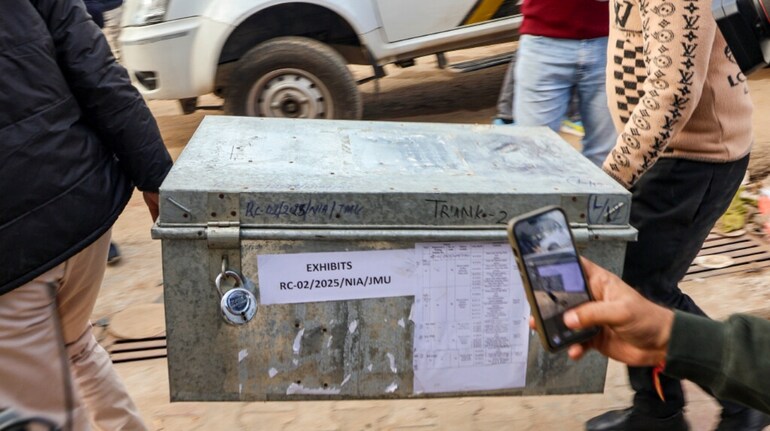
The Pahalgam terror attack on April 22, 2025 was one of the most brazen assaults on Indian soil in decades, killing 26 innocent tourists. But beyond the horror of that massacre lies a damning revelation of the depth of Pakistan’s strategic sponsorship of terrorism against India. The National Investigation Agency’s 1,600-page chargesheet filed in a special court in Jammu makes clear that this was not a spontaneous local outrage. It was planned, orchestrated and facilitated by Pakistan-based terror groups with deep ties to Pakistan’s military and intelligence apparatus.
In a decisive development for India’s counter-terror campaign, the NIA has formally charged Lashkar-e-Taiba (LeT) and its proxy The Resistance Front (TRF) along with seven individuals for their roles in the Pahalgam attack. What makes this chargesheet particularly significant is that the LeT has been charged as a legal entity for the first time, and the origin of terror communications was traced back to Pakistan. Investigators determined that digital messages issued by TRF were actually generated from within Pakistan’s territory, exposing not just individual involvement but institutional direction and support across the border.
LeT and TRF are not ad hoc extremist cells. They are long-standing instruments of state-sponsored terrorism. Indian agencies have repeatedly highlighted how militant groups like LeT have been nurtured, funded, and supported for decades by Pakistan’s security establishment to wage asymmetric warfare against India. The NIA’s chargesheet now legally affirms what India has consistently asserted on the world stage: that Pakistan remains complicit in sponsoring terror attacks aimed at destabilising India and disrupting its social harmony.
The charge of “waging war against India” laid against the accused is appropriate given both the scale and the objective of the attack. TRF, widely recognised as a front for LeT, initially claimed responsibility for the assault, underscoring Pakistan’s attempt to mask its involvement through proxy entities even as it denies direct accountability.
It is impossible to separate this denouement from Pakistan’s broader pattern of behaviour. Islamabad has a track record of using militant groups as strategic assets. Lashkar-e-Taiba was behind the 2008 Mumbai attacks, planned and directed from inside Pakistan with links to that country’s intelligence agency. The Pahalgam chargesheet now adds further legal legitimacy to New Delhi’s accusations that Pakistan’s territory and organisational networks were key enablers of this atrocity.
At the same time, developments in Pakistan’s military hierarchy raise troubling questions about future trajectories. The elevation of General Asim Munir to the newly created post of Chief of Defence Forces (broadening his authority over all branches of the armed forces) is widely seen not as a move toward moderation but one that could embolden the very forces that India and the world seek to counter. Recently, senior Lashkar-e-Taiba leaders publicly endorsed Munir’s elevation and aligned themselves with Pakistan’s military leadership, a stark indicator of unholy alignment between a proscribed terror group and Pakistan’s official power structure.
This endorsement is not merely symbolic. It reflects a potentially deeper institutional tolerance for extremism, with terror groups seeing the elevation of Pakistan’s top defence official as validation of their cause. In a region already rife with terrorist proxies and strategic competition, the optics of such alignment send a chilling message that Islamabad’s policy calculus toward jihadist entities may remain unchanged.
India’s chargesheet therefore does more than outline criminal liability. It shines a spotlight on the continuing danger posed by Pakistan’s support networks, even as Islamabad publicly denies involvement. For New Delhi, the legal affirmation that LeT and its offshoot were central to the Pahalgam carnage is a vindication of its long-held position on cross-border terror. For the international community, it should serve as a stark reminder that counter-terrorism in South Asia requires accountability and pressure on states that harbour networks inimical to peace and security.
Pakistan’s refusal to confront or dismantle these networks, and the elevation of leaders like Munir who are welcomed by such groups, actively undermines global counter-terror efforts. Without a break from this entrenched policy of backing extremist proxies, Pakistan will continue to be a breeding ground for violence that threatens not just India but regional stability at large.
Discover the latest Business News, Sensex, and Nifty updates. Obtain Personal Finance insights, tax queries, and expert opinions on Moneycontrol or download the Moneycontrol App to stay updated!
Find the best of Al News in one place, specially curated for you every weekend.
Stay on top of the latest tech trends and biggest startup news.