






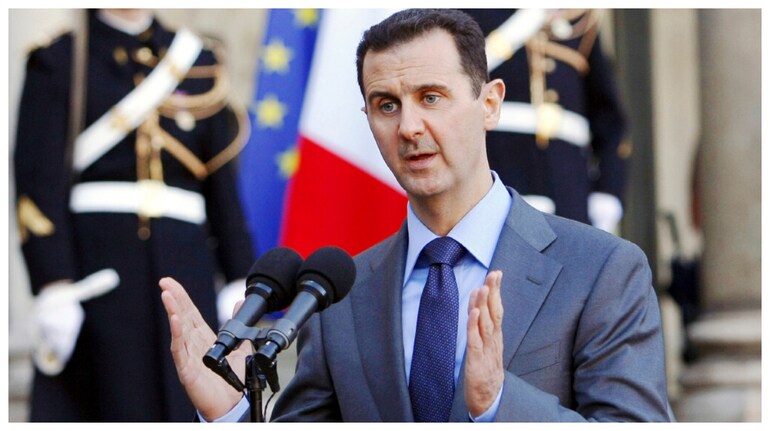
They were once among Bashar al-Assad’s most powerful generals and intelligence chiefs, central to the violent suppression of Syria’s uprising. Now, about a year after fleeing as the regime collapsed, several of those figures are plotting to undermine the new authorities who replaced them and, if possible, reclaim influence inside the country. Interviews and intercepted communications reviewed by The New York Times show determination among the exiled officials, even as they remain divided and at odds with one another.
Building an insurgency from exile
Some former regime leaders are attempting to organise an armed insurgency from abroad. One has backed a group behind a million-dollar lobbying effort in Washington. Several are focused on Syria’s Mediterranean coast, home to the Alawite minority from which Assad and many senior commanders came. In an intercepted phone call from Lebanon in April, Ghiath Dalla, a former commander in Syria’s Fourth Division, told a subordinate that operations would not begin until the group was fully armed.
How the communications were obtained
Dozens of phone calls, text messages and group chats were shared with The Times by Syrian activists who say they hacked the phones of senior Assad commanders before the regime’s collapse and have monitored them since. The Times reviewed the material and cross-checked it with Syrian officials and people in contact with those whose phones were compromised. The activists shared only a sample of their material and spoke anonymously to preserve their ability to continue surveillance.
The generals at the centre
Two central figures are Suhail Hassan, Assad’s former special forces commander, and Kamal Hassan, the regime’s former military intelligence chief. Both are under international sanctions over accusations of war crimes. The material reviewed by The Times shows networks linked to them distributing funds, recruiting fighters and, in Suhail Hassan’s case, procuring weapons. Both men went into exile in Moscow with Assad in December 2024 but appear to have travelled since.
Suhail Hassan’s coastal plans
Text exchanges indicate Suhail Hassan met collaborators in Lebanon, Iraq and even Syria. Messages include handwritten charts listing fighters and weapons across coastal villages, claiming more than 168,000 verified fighters with access to machine guns, antiaircraft guns, anti-tank weapons and sniper rifles. Each message ended with the sign-off: “Your servant, with the rank of holy warrior.” People involved in the plans said he worked with Rami Makhlouf, Assad’s estranged cousin, who they say helped fund the effort and sent money to impoverished Alawite families.
Money, recruits and aborted plots
By spring, the communications show Hassan recruiting Ghiath Dalla into the network. Dalla wrote that he had distributed about $300,000 a month to potential fighters and commanders and sought approval to buy satellite communications equipment. Other messages describe meetings with Iraqi militia leaders aligned with Iran, aborted assassination plots, and attempts to acquire drones and anti-tank missiles, including weapons said to be hidden inside Syria.
The role of sectarian violence
The intercepted communications begin in April 2025, shortly after a burst of sectarian violence on Syria’s coast in which more than 1,600 people, mostly Alawites, were killed. Former Assad officials sought to use the massacre as a rallying cry to recruit fighters from an Alawite community that is fearful, heavily armed and filled with former soldiers, though resentment toward the old regime remains widespread.
A different path to influence
Kamal Hassan, the former intelligence chief, is described by collaborators as focusing less on insurgency and more on building political influence. People working with him say he is behind a Beirut-based group that presents itself as aiding Syrian minorities and housing Alawite refugees but is also used to lobby Washington for international protection of the Alawite region.
Lobbying Washington
According to US disclosure filings, the group hired an American lobbying firm and a former Trump adviser on a $1 million contract. The organisation has publicised meetings with staff from several US lawmakers’ offices. Aides confirmed the meetings but described them as routine. Several diplomats said they were more troubled by the lobbying than by insurgency plans, warning such efforts could gradually build support for a semi-autonomous region.
Uncertain threat, fragile state
Syrian officials monitoring the former regime figures played down the immediate threat of an insurgency, while acknowledging the country remains deeply divided after a civil war that killed more than 600,000 people. Large areas are still only loosely controlled by the new government, and unease persists over the extremist past of Syria’s new leader. Whether the exiled generals can translate ambition into action remains unclear, but the communications show that, from exile, they are still trying.
Discover the latest Business News, Sensex, and Nifty updates. Obtain Personal Finance insights, tax queries, and expert opinions on Moneycontrol or download the Moneycontrol App to stay updated!
Find the best of Al News in one place, specially curated for you every weekend.
Stay on top of the latest tech trends and biggest startup news.




