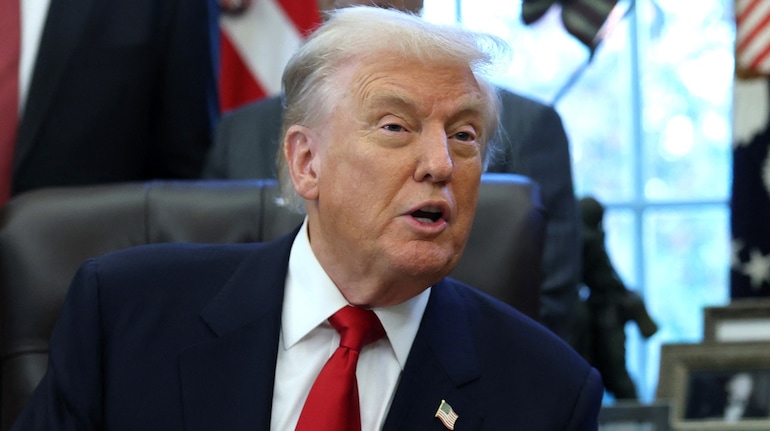
After the US Supreme Court on Friday struck down the global tariffs imposed by Donald Trump, the US President said that he has a "backup plan" for the punitive duties. He termed the verdict “a disgrace” during a White House breakfast with US governors this morning.
According to two people familiar with his remarks, as quoted by CNN, Trump told those present that he already had a backup plan in mind following the court’s decision. Administration officials had earlier prepared the president for the possibility of an adverse ruling, assuring him that alternative ways existed to pursue his trade agenda even if the tariffs were invalidated.
Behind the scenes, Trump has expressed growing frustration with the Supreme Court in recent weeks. Several people familiar with the matter said he had privately complained that the court was taking too long to deliver its verdict.
He also repeatedly speculated about how the justices would rule. A source familiar with the discussions told CNN that Trump at one point said he did not expect the Supreme Court to strike down the tariffs, citing the high stakes involved. Another source said he referred to the billions of dollars already collected under the tariff regime while making that assessment.
Officials inside the administration had been quietly bracing for a loss, however, and had told Trump that even if the court ruled against him, there were other legal paths available to impose trade measures.
The Supreme Court ruling marks a significant setback for Trump’s trade strategy, but his comments suggest the administration intends to move quickly to explore alternative options to keep its economic agenda on track.
Addressing concerns last year, US Secretary of the Treasury Scott Bessent had said the administration was confident it could respond if the courts ruled against the use of emergency powers. “We have other tools available,” he said, insisting that the US would not be left without options to defend its trade interests.
Sharp court split points towards alternatives
While the Supreme Court ruled against Trump, the decision exposed deep divisions within the court and underscored that the White House still has alternative legal tools available.
In a dissenting opinion joined by Justices Clarence Thomas and Samuel Alito, Justice Brett Kavanaugh took a broad view of the emergency powers at the centre of the case. He argued that the law Trump relied on “allows the president to impose tariffs somewhat more efficiently to deal with foreign threats during national emergencies.”
“The tariffs at issue here may or may not be wise policy. But as a matter of text, history, and precedent, they are clearly lawful,” Kavanaugh wrote. He added that the court’s majority was effectively faulting Trump for choosing the wrong statute.
“In essence, the court today concludes that the president checked the wrong statutory box by relying on IEEPA rather than another statute to impose these tariffs,” he said.
Kavanaugh also noted that Trump retains other options to impose similar duties, though these routes involve limits on timing and scope and often require formal investigations.
What fallback options does the White House have
Despite the Supreme Court striking down the tariffs imposed under emergency economic powers, the Trump administration retains several alternative legal routes to pursue its trade agenda.
Officials have indicated that the president could turn to existing trade laws that allow tariffs after formal investigations. These include Section 301 of the Trade Act of 1974, which permits duties in response to unfair trade practices, and Section 232 of the Trade Expansion Act of 1962, which allows tariffs on national security grounds. Both provisions have been used by Trump in the past and remain unaffected by the court’s ruling.
Sector-specific tariffs are also still in force. Duties on steel, aluminium and certain other goods imposed under separate authorities continue to apply, and additional investigations are underway that could lead to more such measures.
Another option is to redesign trade actions through narrower, country-specific or product-specific measures that are tied to clear legal justifications rather than broad, across-the-board levies.
Discover the latest Business News, Sensex, and Nifty updates. Obtain Personal Finance insights, tax queries, and expert opinions on Moneycontrol or download the Moneycontrol App to stay updated!
Find the best of Al News in one place, specially curated for you every weekend.
Stay on top of the latest tech trends and biggest startup news.