






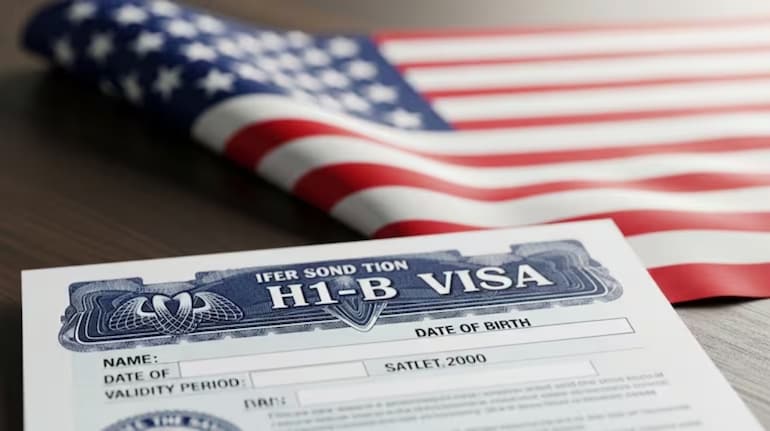

A new immigration proposal introduced in the United States House of Representatives aims to roll back several restrictions imposed on the H-1B visa programme during President Donald Trump’s second term. The legislation comes at a time when Washington continues to debate how to regulate high-skilled immigration, particularly from countries such as India that account for a large share of H-1B applicants.
The bill, titled the Welcoming International Success Act (WISA), was introduced by Democratic Representative Bonnie Watson Coleman. If enacted, it would effectively cancel a September 2025 presidential proclamation issued by Trump that introduced stricter financial and wage requirements for companies sponsoring foreign workers under the H-1B programme.
What the WISA Act proposes
The Welcoming International Success Act seeks to reverse several controversial provisions introduced under the 2025 presidential proclamation.
One of the most significant measures in the proclamation was a $100,000 sponsorship fee for new H-1B applicants. The rule also imposed strict wage requirements that significantly increased the cost of hiring foreign workers.
Supporters of the WISA Act argue that these policies created major barriers for American institutions that rely on skilled international professionals.
In a press release issued by her office, Watson Coleman said the restrictions were harming sectors that depend heavily on specialised talent.
“Trump's short-sighted proclamation has created significant barriers for U.S. employers, universities, hospitals, and research institutions that rely on highly skilled professionals,” Coleman said.
She also defended the broader purpose of the visa programme, arguing that it complements rather than replaces American workers.
“The H-1B program does not replace the domestic workforce; it serves as a bridge between U.S. talent and global talent that fuels U.S. economic growth,” she said.
Concerns about labour shortages
Supporters of the legislation say the restrictions could worsen labour shortages in critical sectors, particularly healthcare.
According to Coleman, the United States could face a growing shortage of qualified nurses in the coming years because of several overlapping factors.
“A combination of an ageing workforce, Covid-related burnout, restrictions on H-1B visas, and the Trump Administration's recent limitations placed on federal student loans for nursing degrees has created a perfect storm for a nursing shortage in the coming years,” she said.
Coleman added that the WISA Act would help address this challenge.
“The Welcoming International Success Act (WISA) would ease this burden as demand for qualified healthcare professionals increases.”
Several Democratic lawmakers have joined as co-sponsors of the proposal. These include Representatives Yvette Clarke, Lois Frankel, Seth Moulton and Hank Johnson.
Legal challenges to Trump’s visa restrictions
The presidential proclamation that triggered the controversy is already facing legal challenges in US courts.
The US Chamber of Commerce and a group of Democratic-led states headed by California have filed lawsuits arguing that the restrictions are unconstitutional and could harm public services.
The lawsuits claim that sectors such as healthcare and education rely heavily on skilled foreign workers and that the policy could weaken those systems.
Why the H-1B programme is under pressure
The debate around the WISA Act comes as the H-1B visa programme faces increasing political pressure in Washington.
The programme has long been used by US companies to recruit highly skilled professionals from abroad, particularly in technology, engineering and healthcare fields.
Indian professionals form the largest group of H-1B beneficiaries.
Research by the Pew Research Center found that Indians accounted for nearly three quarters of the approximately 400,000 H-1B approvals in 2023, with many working in science, technology, engineering and mathematics fields.
However, several policy changes introduced during Trump’s second term have made the programme significantly more restrictive.
These include replacing the traditional lottery-based selection system with a weighted model that prioritises higher-paid applicants, effectively pricing out many candidates.
Additional measures such as stricter visa processing rules outside the United States and expanded social media screening requirements have also created complications for applicants.
In some cases, these rules reportedly left H-1B workers stranded outside the United States after travelling abroad, preventing them from returning to their jobs and families.
Growing push to limit or end the programme
The WISA Act is emerging amid broader efforts by some lawmakers to curb or eliminate the H-1B programme altogether.
Earlier this year, Republican Representative Marjorie Taylor Greene introduced the End H-1B Now Act, which seeks to terminate the visa programme. The proposal allows a temporary ten-year extension only for medical professionals.
Another bill introduced by Representative Greg Steube, known as the EXILE Act, would phase out the programme entirely by 2027 by reducing the annual visa allocation to zero.
These competing proposals reflect the increasingly polarised debate over immigration policy in the United States.
While some lawmakers argue that the programme is essential for maintaining America’s technological and economic competitiveness, others believe it undermines job opportunities for domestic workers.
As the WISA Act moves through Congress, the future of the H-1B visa programme could become a central issue in the broader national debate over immigration and labour policy.
Discover the latest Business News, Sensex, and Nifty updates. Obtain Personal Finance insights, tax queries, and expert opinions on Moneycontrol or download the Moneycontrol App to stay updated!
Find the best of Al News in one place, specially curated for you every weekend.
Stay on top of the latest tech trends and biggest startup news.





