
India and the United States once again find themselves navigating a familiar fault line in trade negotiations, this time over something deeply political on both sides of the aisle: pulses.
Two senior Republican lawmakers have urged US President Donald Trump to press India into scrapping a 30 per cent import tariff on American yellow peas, warning that US farmers are being unfairly disadvantaged. While the move has reignited debate in Washington, New Delhi’s position reflects long-standing domestic realities that successive Indian governments have been unwilling to compromise on.
What triggered the latest push
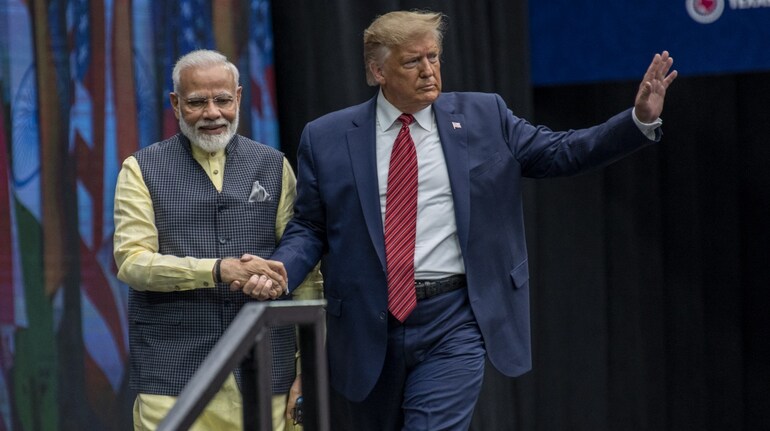
Republican Senators Steve Daines and Kevin Cramer wrote to Trump asking him to raise the issue with Prime Minister Narendra Modi as India and the US attempt to revive talks on a bilateral trade agreement.
India imposed a 30 per cent duty on yellow pea imports from the US in October, which came into effect on November 1, 2025. The senators described the move as unfair and said it hurts American producers.
“As a result of the unfair Indian tariffs, US pulse crop producers face a significant competitive disadvantage when exporting their high-quality product to India,” the lawmakers wrote.
“As the United States looks to rebalance trade disparities, American farmers are ready to help fill the gap. They have tremendous capacity to feed and fuel the world if trade opportunities are unleashed,” they added.
The senators also thanked Trump for backing farmers in Montana and North Dakota and urged him to ensure favourable provisions for US pulse producers in any deal with India. They recalled that during Trump’s first term, the President had “hand-delivered” a similar letter to Modi during the 2020 negotiations.
Why pulses are politically sensitive for India
For India, pulses are not just another tradable commodity. They are a dietary staple consumed daily by hundreds of millions of people and a livelihood issue for small and marginal farmers.
India accounts for roughly 27 per cent of global pulse consumption and is also one of the world’s largest importers. In FY 2023–24, India imported about 4.65 million tonnes of pulses worth nearly $3.75 billion. Imports climbed further to a record 6.5 million tonnes in 2024–25.
Despite this dependence, New Delhi has consistently calibrated imports to protect domestic producers. According to reports, India had allowed duty-free imports of yellow peas until March 31, 2026. The decision to impose tariffs was driven largely by domestic pressures after farmers complained of falling prices.
As Bloomberg reported earlier, India had waived import duties on certain pulse varieties ahead of the 2024 Lok Sabha elections to keep food inflation in check, highlighting how closely agricultural policy is tied to domestic stability.
The US push and India’s red lines
The tariff dispute comes against the backdrop of a broader trade imbalance that Trump has frequently criticised. In 2024, US exports to India stood at $41.5 billion, while imports from India were about $87.3 billion, leaving Washington with a trade deficit of roughly $45 billion.
The US Trade Representative has argued that India’s average applied tariff on agricultural products is about 39 per cent, compared to around 5 per cent in the US. Washington has repeatedly pushed India to open up its agriculture and dairy sectors, citing regulatory barriers and market access restrictions.
New Delhi, however, has been unequivocal.
Modi has publicly vowed that India would “protect its farmers at any cost”. External Affairs Minister S Jaishankar has described agriculture and dairy as non-negotiable.
“Our bottom lines, our red lines have to be respected,” Jaishankar said earlier.
A person familiar with the negotiations told Hindustan Times: “The US side’s focus continues to be on the opening up of India’s agriculture and dairy sectors, and the government has already made its red lines very clear.”
Could pulses derail the deal?
Some trade experts believe agriculture could once again stall progress.
“Indian farmers are a red line. If a trade deal demands opening India’s pulse market at the cost of domestic producers, there will be no trade deal,” an expert told India Today.
From India’s perspective, the US demand appears selective. While Washington wants access to India’s politically sensitive farm sector, it has imposed steep tariffs on Indian goods, including the 50 per cent levy that prompted New Delhi’s latest response.
That asymmetry has not gone unnoticed in New Delhi, where policymakers argue that trade liberalisation cannot be one-sided.
What happens next
Diplomats on both sides suggest the issue may still be resolved through negotiation rather than confrontation. India could offer limited relief on specific pulse imports if the US eases tariffs on Indian exports.
External Affairs Ministry spokesperson Randhir Jaiswal has previously said the two sides “have been close to a deal” on several occasions.
For now, pulses have become the latest reminder that India-US trade talks are shaped as much by domestic politics as by economic logic. Whether Washington adjusts its expectations or New Delhi holds firm will determine whether dal becomes a stumbling block or just another bargaining chip in a long and complicated negotiation.
Discover the latest Business News, Sensex, and Nifty updates. Obtain Personal Finance insights, tax queries, and expert opinions on Moneycontrol or download the Moneycontrol App to stay updated!
Find the best of Al News in one place, specially curated for you every weekend.
Stay on top of the latest tech trends and biggest startup news.