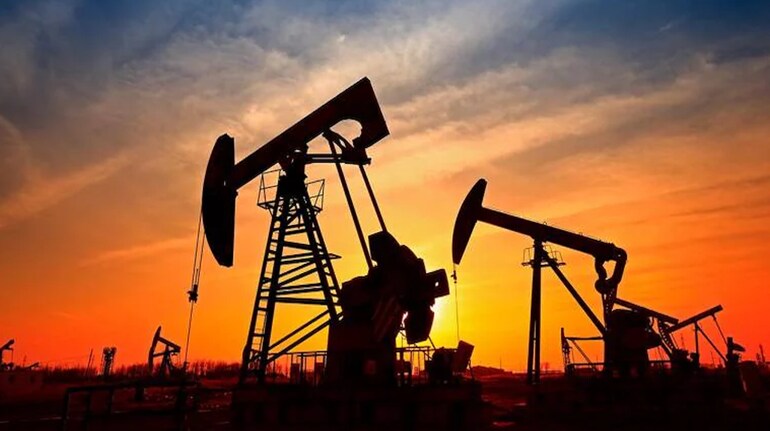
Brent crude surged 10% to around $80 a barrel on Sunday, following US and Israeli strikes on Iran that have intensified tensions in the Middle East. Analysts predict prices could climb to $100 if the crisis escalates further, according to a Reuters report.
Barclays analysts said, “Oil markets might have to face their worst fears on Monday. As things stand right now, we think Brent could hit $100 (per barrel), as the market grapples with the threat of a potential supply disruption amid a spiralling security situation in the Middle East.”
"While the military attacks are themselves supportive for oil prices, the key factor here is the closing of the Strait of Hormuz," said Ajay Parmar to Reuters, director of energy and refining at ICIS. The strait, which handles more than 20% of global oil trade, has seen most tanker operators, oil majors, and trading houses suspend shipments after Tehran warned against navigation.
Experts warn that even partial disruption could trigger a significant spike in energy costs. "Even limited disruption could spike energy prices, fuel inflation, and rattle global markets," said Ali Vaez, head of the Iran Project at the International Crisis Group. Barclays analysts also forecast Brent could reach $100 per barrel amid ongoing hostilities.
OPEC+ agreed on a modest output increase of 206,000 barrels per day from April, representing less than 0.2% of global demand. Rystad Energy economist Jorge Leon noted that alternative pipelines could only offset a fraction of lost supply, leaving a potential deficit of 8–10 million barrels per day.
US WTI rose 3.19% to $67.29 per barrel, while Brent reached $72.87 on Friday. Equirus Securities highlighted historical trends, saying: "Oil overreacts first, embeds a geopolitical risk premium, and then gradually adjusts as trade flows reroute & fundamentals reassert themselves." Even a partial disruption in the Strait could embed a $20–$40 per barrel premium, potentially pushing prices to $95–$110 or higher.
For India, rising crude prices have added inflationary pressures. “Elevated import costs are likely to widen the current account deficit and further strain the fiscal deficit through increased subsidy obligations,” said Manoranjan Sharma, Chief Economist at Infomerics Ratings. Madhavi Arora, Chief Economist at Emkay Global Institutional Equities, added that India’s diversified imports and strategic reserves help absorb short-term shocks.
On the stock market, oil marketing company (OMC) shares, refineries, and sectors dependent on petroleum derivatives, such as tyres and paints, are expected to see upward momentum as crude prices rise.
Vijay Bhambwani, Founder-Promoter of Bhambwani Securities, noted: “OPEC has spare capacity that will be stepped up to calm nerves in the international oil markets… Guyana has cranked up output to 9,00,000 bpd which is 50% higher than 3 quarters ago.”
Global markets remain jittery as the conflict escalates across West Asia, with fresh explosions reported in Dubai, Doha, and Bahrain. Iran has warned of “harsh, successive” retaliatory steps following the strikes that killed Supreme Leader Ayatollah Ali Khamenei.
OPEC+ oil producers are scheduled to meet on Sunday, Reuters reported, with discussions likely to focus on boosting output amid the ongoing crisis. Meanwhile, many tanker operators, oil companies, and trading firms have halted shipments through the Strait of Hormuz.
Discover the latest Business News, Sensex, and Nifty updates. Obtain Personal Finance insights, tax queries, and expert opinions on Moneycontrol or download the Moneycontrol App to stay updated!
Find the best of Al News in one place, specially curated for you every weekend.
Stay on top of the latest tech trends and biggest startup news.