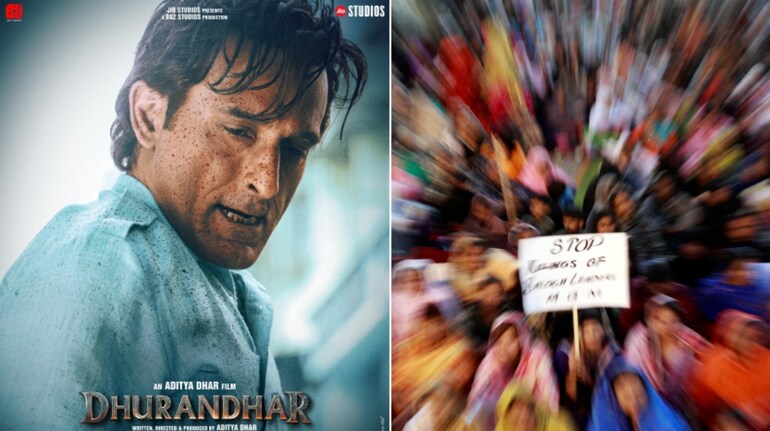
Akshaye Khanna’s intense performance as a Balochi gangster in "Dhurandhar" and the various scenes depicting the community's struggle in Pakistan has ignited conversation far beyond cinema halls.
Several sequences in the movie are loosely based on one of South Asia’s most contested political movements: the struggle for Balochistan. Suddenly, an issue long confined to human-rights reports and diplomatic murmurs is being examined through a mainstream film. Viewers are curious. Baloch activists are alert. And Pakistan is uneasy.
The real conflict behind the reel resistance
Balochistan is a land abundant in natural wealth, yet poverty grips its towns and villages. Rich gas fields and minerals fuel Pakistan’s industry and budget, but rarely enrich the people who live where these resources are buried. This contradiction fuels the Baloch demand for autonomy and, for some, complete independence.
Then there are the disappearances. Families have waited for years for sons, daughters and fathers who vanished without paperwork, trial or explanation. Human rights groups continue to record stories of young activists whisked away by security agencies, never to return. Protest tents line public squares. Mothers make lists of the missing. Students march with photographs instead of placards.
The anger is not sudden. It has accumulated for decades. When activist Mir Yar Baloch declared in May 2025 that “Balochistan is not Pakistan,” it was not a call for chaos, but a demand for acknowledgement. His appeal to the international community asked for recognition of a political identity that does not want to disappear like its people.
The mass grave scene and a haunting parallel
In Dhurandhar, one scene particularly unsettled audiences. Workers are seen digging a mass grave of children when Ranveer Singh's character visits the region. He is told that the Pakistani ISI mixed poison in the water supply of the local school. The scene, though fictionalised, borrows from real accounts of Baloch activists accusing the Pakistani forces of mixing chemicals in their water lines.
In fact, over the years, reports have surfaced of unidentified corpses discovered in desolate stretches of Balochistan. Many activists believe these bodies belong to those who vanished without trace. Whether or not the film intended a direct reference, the resemblance is hard to ignore.
Pakistan’s shadow in the story
The dispute over Balochistan cannot be separated from the power of the Pakistani military state. It is an open secret that Pakistan's deep state complex actually rules the country, with the army chief serving as the de facto head.
The Balochistan province remains heavily militarised and its political leaders often speak from the margins rather than Parliament.
Pakistan insists its actions are necessary for national security. Yet the lack of dialogue, the underdevelopment in a resource-rich province and the unaddressed disappearances continue to deepen distrust. Instead of discussion, force becomes the language of governance. And in that silence, resentments grow louder.
Why Dhurandhar also faces backlash
While many viewers admire Khanna’s performance, Baloch activists argue that the movie stops short of fully acknowledging their political goals. One criticism is especially sharp: the claim that the film links Baloch rebels to global terrorism. Activist Mir Yar Baloch rejected this portrayal, saying that “Baloch people, who are fighting for freedom, never celebrated the 26/11 attacks, since they too are victims of Pakistan-sponsored terrorism.”
He added that “Baloch are not religiously motivated, and they never chant Islamic slogans … and never ever collaborated with ISI to harm Indian interests.”
Discover the latest Business News, Sensex, and Nifty updates. Obtain Personal Finance insights, tax queries, and expert opinions on Moneycontrol or download the Moneycontrol App to stay updated!
Find the best of Al News in one place, specially curated for you every weekend.
Stay on top of the latest tech trends and biggest startup news.