






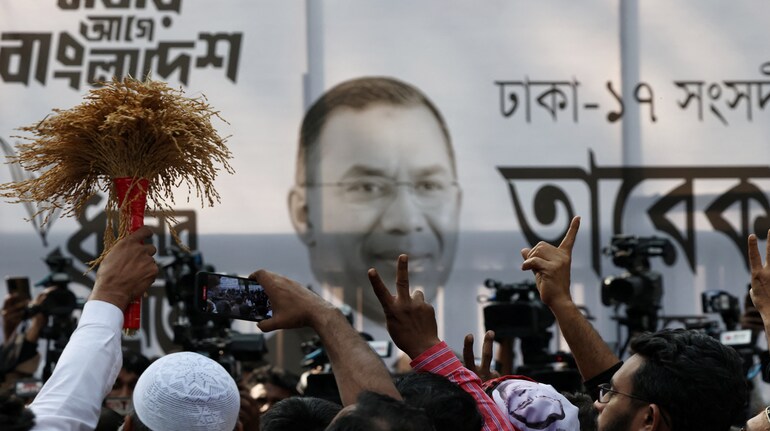
Despite the Bangladesh Nationalist Party’s long and often strained history with India, its sweeping return to power in Bangladesh is being viewed in New Delhi as the least risky outcome amid post-uprising uncertainty, according to former Indian foreign secretary Kanwal Sibal.
In an interview with Moneycontrol, Sibal said the BNP’s decisive mandate offers India a more manageable political partner than a Jamaat-influenced or student-led coalition that many in New Delhi had feared could emerge after the fall of Sheikh Hasina.
“Yes, but I think given the circumstances, this is the best option for us, or the best outcome for us,” Sibal said, reflecting on the election results. He noted that, prior to the vote, there was “a real concern” that Jamaat-e-Islami might come to power by aligning with the newly formed National Citizen Party and leaders of the student movement that spearheaded the 2024 uprising.
“That uncertainty about how well they perform” has now eased, Sibal argued, because the BNP has secured a two-thirds majority, while Jamaat and its allies have been limited to around 70 seats. “Which means that it will not be a coalition government,” he said, underlining a point of particular importance for India.
Former diplomat said that India’s concerns stem less from the BNP itself and more from Jamaat’s past ability to shape policy from within coalition governments. “In the past, BNP has had coalition governments with Jamaat. And the Jamaat therefore was able to exercise very negative influence within that coalition against Indian interests,” he said. “And I was privy to that myself, when I was foreign secretary and the BNP was in power.”
From New Delhi’s perspective, the absence of Jamaat from the centre of power significantly lowers the strategic risk. While acknowledging that the BNP has “a history of being difficult with India”, Sibal stressed that the party is fundamentally business-oriented and less ideological than Islamist or student-led groups.
“Now that they are in power, they, I think, will reverse some of the trends that we have seen,” he said, pointing in particular to what he described as a growing “bonhomie with Pakistan” encouraged by figures in the post-Hasina interim phase. According to Sibal, a BNP government is likely to be more sensitive to the economic and geopolitical costs of a breakdown in ties with India.
At the same time, Sibal was candid about the shortcomings of the election process, noting that the Awami League was barred from participating despite commanding significant popular support. “After all, they have 30% of the vote, and they were not allowed to participate,” he said. “So, to that extent, it is not a fair and inclusive election.”
However, he dismissed suggestions that these concerns should translate into Indian hesitation in engaging the new government. “That would hardly be any reason for us to say that we don’t recognise the results of the election or be lukewarm about it,” Sibal said. “Now, we have to deal with the BNP.”
In his assessment, India’s approach should be guided by realism rather than expectations of warmth or ideological alignment. “BNP will not embrace us. But we don’t need to embrace them,” he said. “We need to have normal state-to-state ties, which may lack warmth, but which pragmatically accept that our interests are mutual and they should be protected.”
Sibal also downplayed the likelihood that contentious issues — particularly demands surrounding Sheikh Hasina’s extradition — would fundamentally disrupt bilateral relations. While acknowledging that the issue could generate political “noise”, he suggested it was unlikely to become a deal-breaker if handled pragmatically by the BNP leadership.
“My own feeling is that we will go ahead and see where we can have positive interaction and remove some of the wrinkles and misunderstandings that have occurred,” he said, adding that India would continue discussions on sensitive issues while moving forward on areas of mutual interest.
Ultimately, Sibal framed the BNP’s return not as a positive endorsement of the party’s past record, but as a strategic relief in a volatile regional moment. “Therefore, I think, on the whole, we should be satisfied with what has happened,” he said — signalling that, for India, the 2026 Bangladesh election represents a case of damage limitation rather than diplomatic triumph.
Discover the latest Business News, Sensex, and Nifty updates. Obtain Personal Finance insights, tax queries, and expert opinions on Moneycontrol or download the Moneycontrol App to stay updated!
Find the best of Al News in one place, specially curated for you every weekend.
Stay on top of the latest tech trends and biggest startup news.




