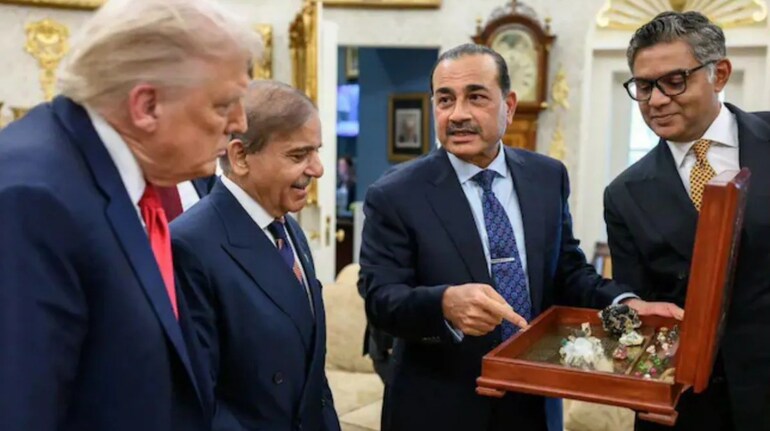

As Islamabad intensifies its outreach to Donald Trump, a familiar question is resurfacing in Washington policy circles. Is Pakistan trying to reposition itself strategically or simply playing to Trump’s personal instincts? In an interview with India Today, global affairs commentator Fareed Zakaria suggested the answer is far less sophisticated than Islamabad would like to project.
According to Zakaria, Pakistan’s current charm offensive is not rooted in long-term policy alignment or regional stability but in reading Trump’s personality and feeding his preferences. At the centre of this effort, Zakaria argued, is Pakistan’s military leadership, particularly Army chief Asim Munir, who has framed himself as a strongman willing to deliver on Trump’s terms.
Playing to Trump’s instincts
Zakaria was blunt in his assessment of why Pakistan appears to enjoy warmer signals from Trump than India does. “Trump loves autocrats,” he said, explaining that Trump instinctively trusts leaders who project unchecked authority rather than democratic complexity.
According to Zakaria, Munir has understood this well. “Munir presented himself in exactly the terms that Trump likes. ‘I’m the guy who runs Pakistan. We will do anything you want,’” he said, describing a pitch built around raw power rather than institutions or accountability.
Zakaria added that Pakistan’s overtures went beyond diplomacy, pointing to extravagant promises and symbolic gestures. These included talk of Nobel Prize nominations and business-friendly signals linked to Trump’s family interests, tactics that appeal more to Trump’s ego than to US strategic interests.
Why India will not play the same game
Zakaria contrasted Pakistan’s approach sharply with India’s. “India doesn’t do that. It’s a serious democracy,” he said. While this may look like a disadvantage in Trump’s highly transactional worldview, Zakaria stressed that it is a long-term strength. “In the long run, it’s a huge advantage that India has.”
Unlike Pakistan’s military-led system, India cannot be reduced to a single power broker making sweeping promises. That institutional depth, Zakaria argued, ultimately gives India greater credibility, even if it limits short-term theatrics with leaders like Trump.
Managing Trump’s claims on India-Pakistan
On Trump’s repeated assertions that he helped calm tensions between India and Pakistan after Operation Sindoor, Zakaria urged New Delhi not to overreact. “There’s no reason to get your back up so much that you absolutely refuse to acknowledge any involvement by the US,” he said, pointing out that earlier Indian leaders handled similar claims without turning them into diplomatic crises.
Zakaria acknowledged that Trump’s public courtship of Pakistan is unsettling but warned against panic. “Yes, it’s a worry,” he said, “but don’t panic. Have patience.”
A caution against bluffing
Zakaria also dismissed suggestions that India should mimic China’s confrontational posture with Trump. Beijing, he said, can afford that stance because it has leverage. India, at least for now, does not. “Don’t bluff when you don’t have the cards,” he cautioned, arguing that Trump is highly attuned to power imbalances.
The takeaway from Zakaria’s remarks is stark. Pakistan’s renewed relevance in Trump’s rhetoric is less about strategic value and more about performance. By selling itself through a strongman narrative, Islamabad may gain short-term attention. But as Zakaria implied, that attention is fragile, personality-driven and unlikely to translate into durable strategic gains.
Discover the latest Business News, Sensex, and Nifty updates. Obtain Personal Finance insights, tax queries, and expert opinions on Moneycontrol or download the Moneycontrol App to stay updated!
Find the best of Al News in one place, specially curated for you every weekend.
Stay on top of the latest tech trends and biggest startup news.