Across much of Asia, the war in the Middle East is starting to show up in a very practical way: fuel.
As oil prices surged above USD100 a barrel earlier this week, governments across the region began scrambling to prevent the shock from spreading through their economies. Many Asian countries rely heavily on oil and gas imported from the Middle East, so any disruption in the region hits them quickly, the New York Times reported.
A key worry is the Strait of Hormuz, the narrow shipping route between Iran and Oman. Around 20 million barrels of oil pass through it every day, most of it heading to Asian markets. With the conflict disrupting tanker movement through the Gulf, governments are preparing for supply problems and higher prices.
Different countries are responding in different ways.
In South Korea, the government announced it would cap gasoline and diesel prices at the pump, the first such move in nearly 30 years. Officials have also warned companies against hoarding or manipulating prices as crude oil costs rise.
But price caps come with their own problems. If global oil prices keep rising, refiners and fuel suppliers may end up absorbing the losses unless the government steps in with subsidies.
Some governments are looking at their emergency stockpiles. Japan has asked oil storage facilities to prepare in case the country needs to release crude from its strategic reserves. China has also said it will do whatever is necessary to protect its energy security, including possibly tapping its reserves.
Still, analysts say releasing oil from storage is not always quick or easy. It takes time to move the oil to refineries and get it into the market.
The disruption is already affecting industry. In Japan, Mitsubishi Chemical has cut production at a plant north of Tokyo after facing difficulties obtaining naphtha, a fuel-derived chemical used to make plastics.
Other governments are trying to reduce energy use instead.
In the Philippines, several local governments have shifted to a four-day work week in order to cut fuel consumption and electricity demand. Bangladesh has introduced fuel rationing and even closed universities to reduce power use and transport demand.
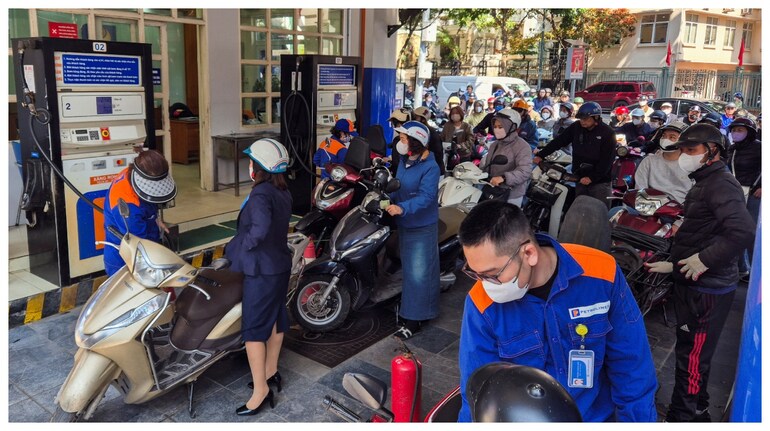
In some places the strain is already visible in daily life. In Hanoi, several petrol stations have run out of fuel in recent days, forcing drivers to wait in long lines to fill their tanks.
Authorities have tried to reassure residents that the country still has roughly a month of oil reserves and urged people not to panic-buy fuel.
For workers who rely on fuel to earn a living, however, the pressure is immediate. Motorbike taxi drivers in Vietnam say rising petrol costs are already eating into their daily income.
Even if the conflict eases soon, officials say the disruption could linger for weeks. Oil shipments, refinery supply chains and shipping insurance all take time to stabilise after a shock.
For many Asian governments, the problem now is not just the war itself. It is how to keep fuel flowing and prevent the energy shock from spilling into the wider economy.
Discover the latest Business News, Sensex, and Nifty updates. Obtain Personal Finance insights, tax queries, and expert opinions on Moneycontrol or download the Moneycontrol App to stay updated!
Find the best of Al News in one place, specially curated for you every weekend.
Stay on top of the latest tech trends and biggest startup news.