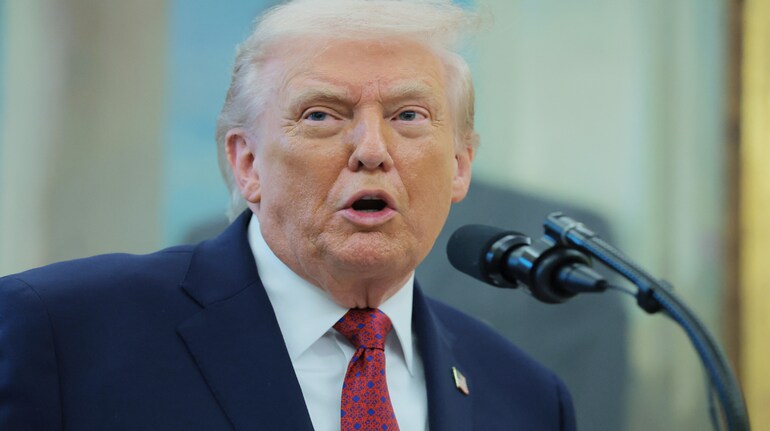
In January 2025, as President Donald Trump began his second term, federal workers across the United States watched executive orders roll out in real time and realised their jobs, and in some cases entire agencies, were at risk. Within months, the 2.4 million-strong federal workforce would undergo one of the most sweeping overhauls in modern American history, the Washington Post reported.
Ending remote work and forcing relocationsThe first directive ordered an end to remote work, requiring federal employees to return to offices full time. Workers were given days or weeks to relocate, sometimes across state lines. Some faced daily commutes of several hours, while others quit rather than leave sick spouses or children. Offices became overcrowded and improvised, with sensitive calls taken amid noise and staff working from closets to find privacy.
The rapid dismantling of DEI and civil rights officesAlongside the return-to-office mandate came an order to eliminate diversity, equity, inclusion and accessibility programs. Murals were painted over, websites scrubbed of DEI references and civil rights offices shut down. At the Social Security Administration, a 150-person civil rights and disability accommodations office was closed. At NASA, emails to equal employment contacts bounced back because the offices no longer existed.
‘Fork in the Road’ and the wave of resignationsSoon after, federal workers received an email titled “Fork in the Road,” offering a deferred resignation. Some hesitated, others accepted immediately. Across Washington, Colorado and Minnesota, employees weighed loyalty against a growing belief that they would eventually be forced out. Even some Trump voters viewed the move as the president fulfilling his promise to shrink government.
DOGE and the acceleration of job cutsCuts intensified with the creation of the US DOGE Service, a cost-cutting initiative led by Elon Musk. Thousands of probationary workers were fired, some notified through prerecorded videos and told to leave within minutes. Agencies later scrambled to reverse mistakes, rehiring nuclear weapons engineers, Veterans Crisis Line staff and food safety specialists who had been let go.
Weekly reporting, frozen spending and daily disruptionDOGE-driven controls reshaped daily work. Employees were ordered to list weekly accomplishments or face resignation. Federal credit cards were deactivated, halting routine purchases. Scientists ran out of lab supplies, firefighters delayed buying fuel, and Social Security offices lacked basic materials even as call volumes surged. FEMA staff were pulled from core roles to answer phones during disasters.
Self-censorship and the erosion of scientific workAcross agencies, staff began censoring their own language to protect programs. Words such as “carbon,” “sustainability,” “race” and “gender” were stripped from documents. At the National Institutes of Health, grants were reviewed for prohibited terminology rather than scientific merit, leaving many researchers questioning the purpose of their work.
Health agencies hit and personal costs mountBy spring, large-scale firings swept through health agencies. Ten thousand employees at the Department of Health and Human Services lost their jobs, while senior leaders were reassigned to remote postings. Some workers discovered they had been fired when their security badges failed. For many, the fallout was immediate: lost retirement income, rising debt and reliance on food banks.
As summer progressed, approval bottlenecks paralysed spending. Forest Service offices delayed fire-prevention work, while FEMA dissenters were placed on leave. Resignations mounted across the NIH, FAA and IRS, stripping agencies of institutional knowledge built over decades.
Shutdowns, furloughs and a battered workforceIn the fall, a government shutdown sent more than 750,000 workers home without pay. Parks closed, flights were disrupted and taxpayer services stalled. When the government reopened, employees returned to warnings of deeper cuts ahead and downgraded performance ratings that threatened future pay and promotions.
A federal workforce permanently alteredBy year’s end, many who remained described exhaustion and moral injury. Workers cleaned bathrooms, led tours or abandoned specialised research. Others prayed quietly at work, unsure whether to stay or leave. In less than a year, the Trump administration had transformed the federal government in ways few had imagined, leaving lasting scars on the institutions meant to serve the public.
Discover the latest Business News, Sensex, and Nifty updates. Obtain Personal Finance insights, tax queries, and expert opinions on Moneycontrol or download the Moneycontrol App to stay updated!
Find the best of Al News in one place, specially curated for you every weekend.
Stay on top of the latest tech trends and biggest startup news.