






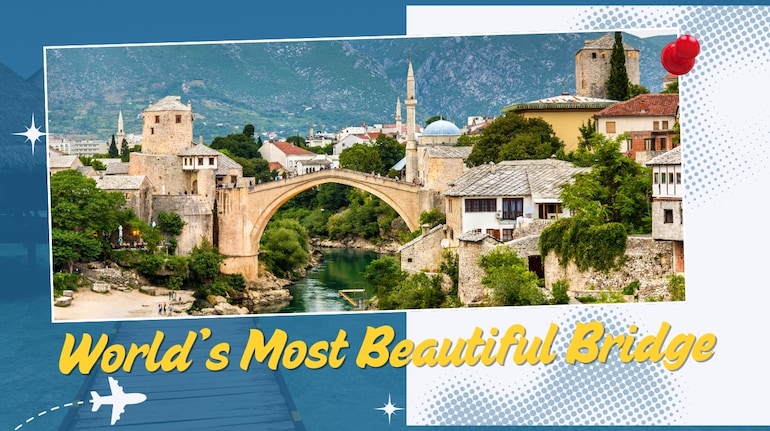

In a global list celebrating architectural brilliance and cultural icons, Stari Most in Bosnia and Herzegovina has secured the top spot as the world’s most beautiful bridge, according to Time Out. But beyond the visual appeal of its sweeping stone arch lies a deeper story — one of engineering innovation, wartime destruction, international cooperation, and reconciliation.
Located in the historic city of Mostar, the 16th-century Ottoman bridge is more than a tourist attraction. It is a national symbol and a UNESCO World Heritage Site that reflects centuries of Balkan history.
A 16th-Century Engineering Feat
Stari Most, which translates to “Old Bridge”, was constructed between 1557 and 1566 during the rule of Ottoman Sultan Suleiman the Magnificent. The bridge was designed by Ottoman architect Mimar Hayruddin and built to replace a precarious wooden crossing that once connected the two sides of Mostar.
Spanning the emerald-green Neretva River, the bridge’s single limestone arch stretches nearly 29 metres in length and rises approximately 24–25 metres above the water. At the time of its construction, it was considered an engineering marvel due to its bold, single-span design and structural precision.
Historical accounts suggest that the bridge was constructed using traditional Ottoman techniques. Local folklore claims the mortar mixture included egg whites for added binding strength, though documented evidence confirms it was built using limestone blocks and advanced masonry methods of the era.
The structure stood for 427 years, becoming the defining landmark of Mostar — a city whose name itself derives from “mostari”, meaning “bridge keepers”.
Destruction During the Bosnian War
On November 9, 1993, during the Croat–Bosniak conflict of the Bosnian War, Stari Most was deliberately targeted and destroyed by artillery fire. Images of the bridge collapsing into the Neretva River were broadcast globally and came to symbolise the devastation of the war.
Its destruction was not only the loss of a historic monument but also a blow to the city’s cultural identity.
Reconstruction as a Symbol of Peace
Following the end of the war, a major international reconstruction effort was launched. With support from multiple countries and global institutions, including UNESCO and the World Bank, the bridge was rebuilt between 2001 and 2004.
The reconstruction followed original 16th-century building techniques. Stone was sourced from the same local quarry used during the Ottoman period, and some original blocks recovered from the riverbed were reintegrated into the structure.
The rebuilt bridge officially reopened on July 23, 2004. In 2005, the Old Bridge Area of Mostar was designated a UNESCO World Heritage Site by UNESCO, which described it as a symbol of reconciliation, international cooperation, and coexistence among diverse cultural, ethnic, and religious communities.
Architectural Significance
Stari Most is considered one of the finest surviving examples of Ottoman-era architecture in the Balkans. Its defining feature is the elegant, single-span arch that appears almost weightless against the backdrop of stone towers and cobbled streets.
Key architectural highlights include:
At sunset, the pale stone reflects golden hues, while evening illumination enhances its visual impact, making it one of Europe’s most photographed landmarks.
Cliff Diving Tradition and Global Recognition
Beyond its architectural importance, Stari Most is globally known for its centuries-old cliff-diving tradition. Local men have historically dived from the bridge into the cold Neretva River as a rite of passage. The drop measures around 24 metres and requires rigorous training due to the river’s strong currents and low temperature.
The annual diving competition in Mostar is considered one of the oldest organised extreme sports events in Europe. Since 2015, the location has also featured as a stop in the Red Bull Cliff Diving World Series, bringing international attention to the city.
Local diving clubs now train participants, and the event draws thousands of spectators every summer.
A Major Tourist Attraction in Bosnia and Herzegovina
Today, Stari Most is the most iconic tourist attraction in Bosnia and Herzegovina. It sits at the heart of Mostar’s old town, surrounded by the historic Kujundžiluk bazaar, cafes, and traditional restaurants.
Visitors often combine a walk across the bridge with:
The bridge’s reflection in the Neretva River remains one of the country’s most recognisable postcard images.
Best Time to Visit
The ideal months to visit Mostar are May to June and September to October, when temperatures are moderate and tourist crowds are manageable. Summer offers the opportunity to witness the cliff-diving competition, though it is also peak travel season.
Early mornings and late evenings provide the best lighting conditions for photography and a quieter walking experience across the bridge.
Why Stari Most Continues to Captivate
What distinguishes Stari Most from other architectural landmarks is not only its visual elegance but its layered history. It represents:
In ranking it as the world’s most beautiful bridge, Time Out has highlighted more than aesthetic appeal — it has recognised a structure that tells a powerful story of destruction and renewal.
For travellers seeking destinations that combine history, architecture, and cultural significance, Stari Most remains an essential stop in southeastern Europe.

Discover the latest Business News, Sensex, and Nifty updates. Obtain Personal Finance insights, tax queries, and expert opinions on Moneycontrol or download the Moneycontrol App to stay updated!
Find the best of Al News in one place, specially curated for you every weekend.
Stay on top of the latest tech trends and biggest startup news.





