






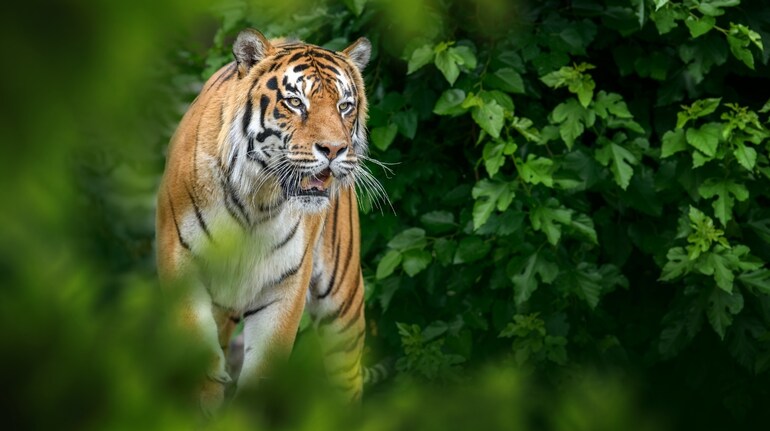

Safari operations at Bandipur and Nagarahole tiger reserves in Karnataka have resumed in a phased manner after being suspended for over 100 days due to a spike in fatal tiger and leopard attacks in parts of the state.
The decision to reopen was confirmed by Forest and Environment Minister Eshwar Khandre at Vikas Soudha, following an interim recommendation submitted by a technical expert committee constituted earlier this year. The panel was formed after the Karnataka State Wildlife Board called for a detailed study on safari vehicle carrying capacity and safety measures in both reserves.
While safaris have restarted, authorities have capped operations at 50% capacity for now. A final decision on restoring full-scale services will be taken only after the committee submits its comprehensive report.
Why were safaris suspended?
The temporary closure was enforced after a series of wildlife-related fatalities involving tigers and leopards in districts bordering the reserves. The incidents triggered safety concerns among local communities and prompted the government to review tourism activities in sensitive forest zones.
During the suspension, tourism activity in neighbouring states such as Kerala and Tamil Nadu reportedly saw an uptick. Industry bodies also indicated that bookings rose in other well-known tiger reserves, including Ranthambore National Park and Jim Corbett National Park.
What are the new safari rules?
Under the revised framework, only half of the vehicles previously deployed for safari services will be allowed to operate in the initial phase. Authorities have also introduced stricter time restrictions and operational curbs:
Impact on tourism and livelihoods
The shutdown had significant economic implications for the region. According to industry estimates, nearly 35 resorts operating in the Bandipur–Nagarahole belt suffered collective losses averaging around Rs 3 crore per day during the suspension.
Approximately 8,000 people — including guides, drivers, hospitality staff and local vendors — are believed to depend on eco-tourism in the area. For many, the halt in safari operations meant a complete disruption of income for more than three months.
Bandipur National Park and Nagarahole Tiger Reserve are among southern India’s most prominent wildlife destinations. Both are known for high densities of Bengal tigers, Asiatic elephants, leopards, deer species and wild dogs, drawing domestic and international tourists throughout the year.
Local concerns persist
The reopening has not been universally welcomed. Farmers in border villages adjoining Bandipur have voiced concerns over safety and have reportedly planned protests, including a proposed siege of the forest office at Melukamanahalli.
They argue that wildlife movement in fringe areas has increased and fear that resuming safaris could divert attention from conflict mitigation measures.
Bandipur, Nagarahole safaris reopen with new limits
Karnataka’s decision to resume safaris at Bandipur and Nagarahole signals a cautious return to normalcy for the state’s eco-tourism sector. With vehicle caps, reduced hours and additional restrictions in place, the government appears to be prioritising safety while gradually reviving a key revenue stream.
For travellers planning a wildlife getaway, safaris are now operational — but with limited slots and tighter rules. Advance bookings and adherence to new guidelines will be essential in the coming weeks.

Discover the latest Business News, Sensex, and Nifty updates. Obtain Personal Finance insights, tax queries, and expert opinions on Moneycontrol or download the Moneycontrol App to stay updated!
Find the best of Al News in one place, specially curated for you every weekend.
Stay on top of the latest tech trends and biggest startup news.





